352,000: The Russian Casualty Reckoning in Ukraine, Four Years In
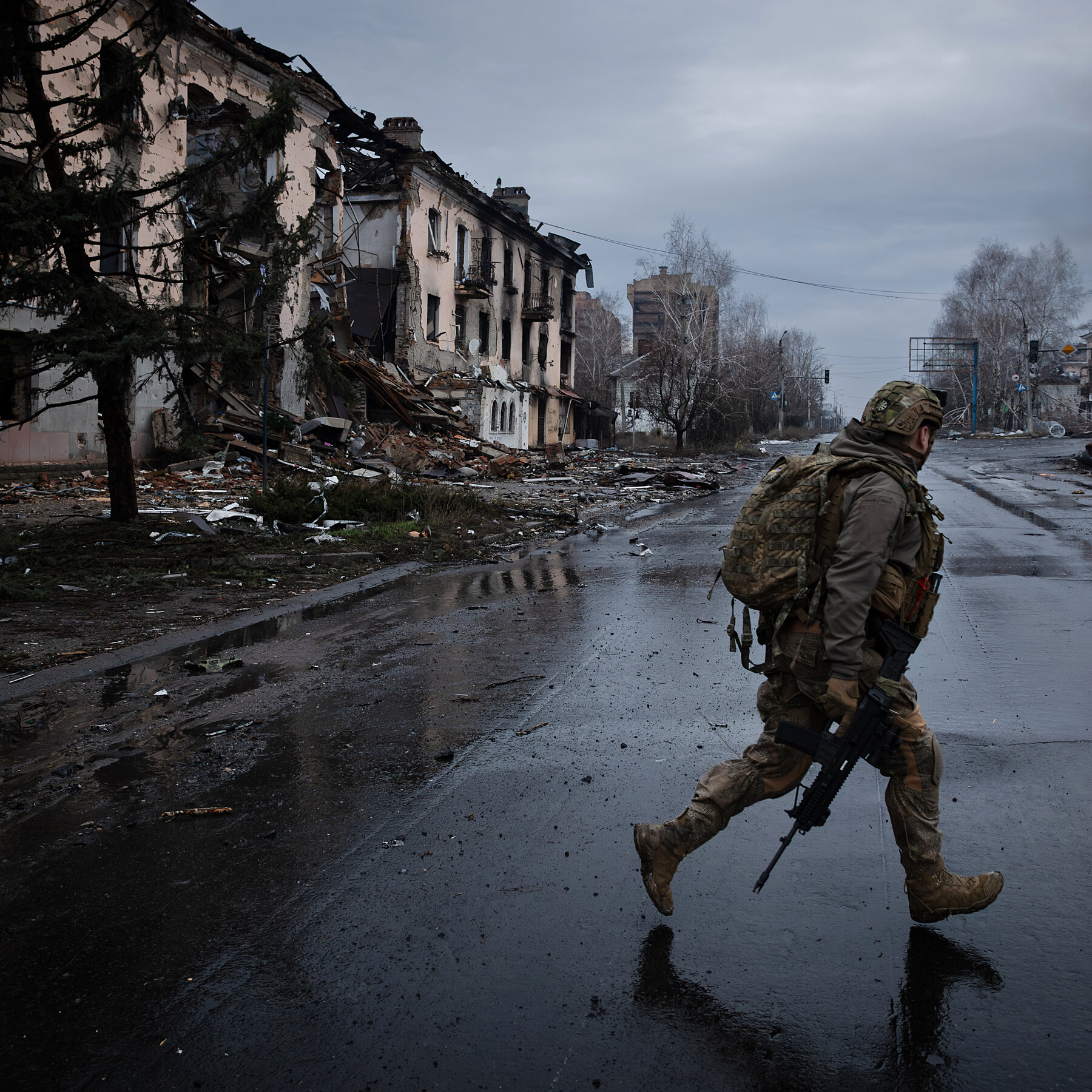
The figure that independent Russian-language outlets Meduza and Mediazona have published as their count of Russian military dead in Ukraine stands at 352,000 — a number large enough to strain the language of ordinary casualty reporting, to crowd out names and faces, to become a statistic in the most literal sense. The outlets, working with a methodology that cross-references death records and inheritance data filed in Russian state systems, arrived at this figure through a process of elimination: identifying military-age men missing from civilian administrative records, accounting for natural and accidental deaths, and attributing the remainder to the conflict.
That count, first reported via the open-source research channel WarTranslated on 9 May 2026, covers four years of large-scale combat following Russia's full-scale invasion of Ukraine in February 2022. It is, by any measure, the most systematic independent accounting of Russian losses produced to date — more granular than Ukrainian General Staff tallies, which have historically cited higher aggregate figures, and more methodologically transparent than the partial disclosures that have periodically leaked from Russian official channels.
The number demands context it rarely receives in wire-service summaries, which tend to deliver it as a single figure without the architecture of how it was assembled. Meduza and Mediazona's approach — tracing individuals through state systems — has limits that the outlets have been transparent about. It captures deaths that generated a paper trail: men who were mobilised, whose families filed inheritance paperwork, whose deaths were registered in ways that left traces. It undercounts men who died without entering formal records, whose bodies were not recovered, whose families did not file inheritance documents, or who were enrolled as contract soldiers but whose enlistment was never formalised in the databases the researchers were able to access.
The Russian government has not published a casualty update since September 2022, when it acknowledged 5,937 dead — a figure that even at the time was disputed by Western intelligence assessments, and which subsequent battlefield reporting rendered obviously implausible. Since then, official silence has been the policy. The Kremlin has declined to correct inflated figures circulated by state-linked Telegram channels; it has declined to provide families with reliable accounting. What Meduza and Mediazona have produced is, in effect, an attempt to do what the Russian state has refused to do for its own population.
The counter-narrative, such as it exists, comes from a different direction than the Russian state. Russian-language military bloggers with large audiences — channels like Rybar and WarGonzo, which operate with varying degrees of state tolerance — have periodically disputed figures they consider inflated, arguing that Western and Ukrainian estimates overcount to damage morale. Their critiques tend to focus on specific incidents rather than aggregate methodology. The structural reality is that independent verification of casualty figures in a conflict where one party refuses to release data is extraordinarily difficult: both the Ukrainian and Western figures, and the independent Russian-language tallies, are estimates built from incomplete information.
What is not in dispute is the scale. Even undercounting by the methodology's own acknowledged gaps, the figure represents a losses-per-month rate that no conflict Russia has experienced since 1945 approaches. It exceeds Soviet losses in the Soviet-Afghan war by a large multiple. It exceeds Russian losses in both Chechen wars combined. The comparison that most observers reach for is the Second World War, and it is not inappropriate: theVKontakte-era demographic gap left by that conflict is a subject of Russian public demography; a new one, of comparable depth, is being opened.
The demographic consequences extend well beyond the casualty count itself. Each death removes not only an individual from the working-age population but, in many cases, a family unit that had been structured around that person's earning and child-rearing. Inheritance filings tracked by Meduza and Mediazona provide a proxy for household disruption. The figures also capture, imperfectly, the toll on non-combat roles — logistics personnel, drivers, support staff — who appear in the data but rarely in the public framing of the conflict, which tends to focus on infantry positions and frontal assaults.
The structural frame that the independent tally offers is not simply a numbers story. It is a story about information architecture: what a state chooses to measure, what it chooses to publish, and what it leaves its own citizens to piece together through administrative residue. Russia, unlike the Soviet Union in its foreign wars, has maintained a near-total blackout on individual losses. Families have organised informal networks to share information; memorial groups have tried to compile their own registers; independent journalists have attempted to confirm individual deaths reported through local sources. Meduza and Mediazona's work is the most systematic institutional effort to do what the state has refused to do.
The stakes of the figure are different for different audiences. For Ukrainian policymakers, a confirmed high-loss figure for Russia shapes calculations about battlefield pressure and the plausible duration of Russian mobilisation capacity. For Western governments providing military support to Ukraine, the same figure informs assessments of whether Russian forces are being degraded at a rate that justifies continued assistance. For Russian society — those families who have not received official confirmation — the 352,000 figure represents something close to an answer, even if they cannot verify it completely against their own experience. What they know, individually, is that someone did not come home.
What remains uncertain is the precise split between mobilised reservists, contract soldiers, volunteers, and regular conscripts within that figure — a distinction that matters for understanding both the social contract around military service and the Kremlin's political calculus in managing public acceptance of ongoing losses. The methodology captures individuals, not categories. That gap in the data is not a failure of the outlets; it is a structural consequence of a conflict in which one side has made systematic opacity a policy instrument. The figure stands as the best available approximation until such time as the Russian state decides, if ever, to account for what it has asked of its own people.
This publication's count of 352,000 reflects the Meduza-Mediazona methodology and its acknowledged limitations. Independent verification of individual cases cited by families and memorial groups suggests the figure is not implausible in either direction. The exact number, as with all contested figures in this conflict, will remain disputed. What is not in dispute is that the conflict has produced a loss of life on a scale that demands accounting — and that, four years on, the only serious attempts at that accounting have come from outside the state that launched the invasion.
Wire provenance
This editorial synthesis draws on the following public wire/social posts:
- https://t.me/wartranslated/352000
- https://twitter.com/wartranslated/status/20530