The US-China Deal That Tries to Make 'Decouple' Mean Something Other Than 'Collide'

Eighteen months of de-escalation. A permanent committee structure. And the quiet return of five-year business visas. The May 14 Beijing talks produced a document that looks like a real framework — but the fine print will determine whether this is strategic coexistence or diplomatic theater.
The May 14 Beijing summit between US and Chinese negotiators produced what both sides are calling the most substantive economic de-escalation agreement since the 2020 Phase One deal. The headline outcomes — an 18-month tariff truce, reciprocal chip export control pauses, restored visa access, and expanded flight routes — represent a meaningful relaxation of the pressure dynamic that defined US-China relations from 2018 onward.
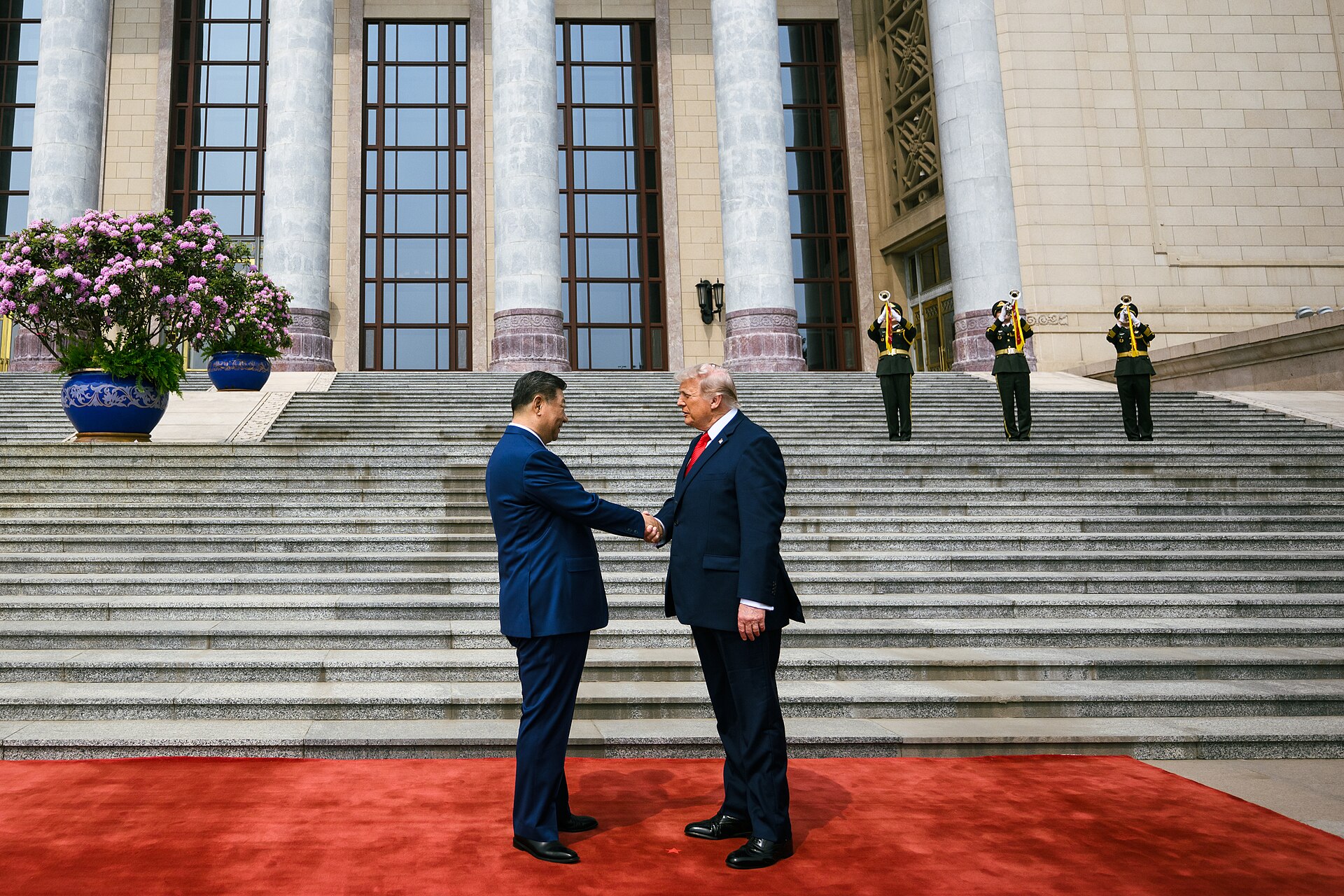
The infographic from the Kunlun Institute summarizes the key outcomes — trade and tariff truces, technology export pauses, and restored travel ties — in a single visual reference:
 Kunlun Institute / TheMonexus.com
I. What Was Agreed: The Specifics
Trade and Tariffs
The most immediately consequential outcome is the mutual removal of specific tariff categories:
- US removes: Fentanyl-related tariffs on Chinese goods (the April 2025 50% surcharge on broad Chinese imports)
- China removes: Additional retaliatory tariffs on US agricultural products (soybeans, pork, corn)
Both sides also agreed to suspend Section 301 investigations into Chinese shipbuilding and maritime sectors for the 18-month duration.
The addition of two permanent bilateral bodies — a Trade Committee and an Investment Review Committee — is structurally significant. Previous agreements relied on summit-level diplomacy with no institutionalized follow-through. These committees, if properly staffed and empowered, represent the first permanent architecture for managing US-China economic friction since the 2001 WTO accession debates collapsed.
The critical caveat: "Permanent" committees can become diplomatic dead letters. Their significance depends entirely on whether they meet regularly with real authority, or whether they become the kind of bureaucratic exercise that allows both governments to claim cooperation while avoiding hard decisions.
Technology and Export Controls
The chip export control pause is the most strategically significant development — and the most misunderstood in initial coverage.
The US agreed to pause the 50% mid-range chip export control rule for 18 months. China reciprocally paused export controls on rare earths and critical minerals for the same period.
This is not a reversal of the technology containment strategy. High-end AI chips (H200, future generations), lithography equipment, and military-applicable technology remain under strict control. The pause applies to mid-range commercial chips — the category that matters for consumer electronics, standard data center workloads, and the supply chains that keep bilateral trade flowing.
The establishment of a corporate appeal channel for entity list decisions is a new wrinkle. It suggests the US is accepting that its blacklist-based approach to technology containment has created enough collateral damage to legitimate commercial actors that a grievance mechanism is now officially required.
People, Visas, and Mobility
The restoration of five-year multiple-entry business and tourist visas on both sides is symbolically and practically significant. Diplomatic tensions have a way of filtering down to the experience of ordinary business travelers and tourists. Visa restrictions became a micro-expression of broader hostility. Their restoration doesn't change geopolitical dynamics — but it signals a different temperature.
The expansion of direct US-China flights (target: doubling by June 2026) and the reopening of academic "green channels" for science and engineering students continue the pattern: removing the friction points that accumulated during the peak hostility period without touching the underlying strategic competition.
II. Why This Round Is Different From Previous Truces
Every previous US-China economic de-escalation since 2018 has followed the same script: a summit produces an agreement, both sides declare victory, implementation stalls or is quietly undermined, and within 12–18 months the relationship is worse than before the agreement.
The May 14 document attempts to break this cycle in three ways:
1. The 18-month stable window, embedded in a 3-year strategic framework. The duration matters. A 12-month truce is a wait-and-see period. An 18-month window is a policy horizon. The explicit framing of this as part of a 3-year strategic framework — rather than a standalone deal — suggests both sides are trying to construct something more durable than a temporary ceasefire.
2. Written implementation memorandums rather than verbal commitments. The February 2025 Geneva agreement produced a one-page statement. The May 14 Beijing document is described by administration officials as containing signed implementation documents with specific timelines. Whether those documents contain real enforcement mechanisms or merely procedural commitments remains to be seen.
3. Permanent committee architecture. As noted above, this is new. If it functions as designed, it creates an institutionalized channel for managing disputes before they escalate to crisis level. If it becomes bureaucratic theater, it simply provides diplomatic cover for continued deterioration.
III. The Geopolitical Context Both Sides Are Managing
Neither Washington nor Beijing wanted this summit to fail. Both are managing situations that make prolonged high-stakes confrontation expensive.
For China: The property sector collapse, youth unemployment above 20%, and a consumption recovery that hasn't materialized despite aggressive stimulus have created domestic pressure for economic stability. Xi Jinping's signature "common prosperity" framework is being quietly supplemented by "private sector reassurance" campaigns as Beijing recognizes that the private sector — spooked by regulatory crackdowns and rhetorical hostility — isn't investing or hiring at expected levels. An 18-month reduction in US tariff pressure provides breathing room.
For the US: The tariff regime has produced inflation, frustrated allied trading partners who were swept up in broad secondarytariff announcements, and created uncertainty that has suppressed business investment decisions. The Trump administration's trade team has been trying to operationalize "maximum pressure" while simultaneously managing a economy that was showing strain signals. A managed de-escalation allows the administration to claim victory on fentanyl tariffs (which it framed as the core demand) while quietly removing the broader surcharges that were generating pushback.
The 3-year framework mentioned in the agreement is notable: it extends to the end of a potential second Trump term, suggesting Beijing may be trying to lock in a de-escalation timeline that outlasts the current administration's most aggressive impulses.
IV. What Remains Unchanged: The Bottom Lines
The agreement explicitly preserves restrictions on items deemed critical to national security. The categories of high-end AI chips, lithography machines, and military-applicable technology remain under strict export control. The US reiterated its "One China" position without additional concessions on Taiwan. The underlying structural competition — for technology leadership, military superiority, and strategic influence across the Indo-Pacific — continues.
China's state subsidies for strategic industries, its managed currency policy, and its leverage over American companies operating in the Chinese market remain intact.
The agreement pauses the most acute friction points. It does not resolve the structural incentives that generated those friction points in the first place.
V. The Test: Implementation, Not Rhetoric
The value of the May 14 agreement will be determined by what happens next — not by the summit itself.
Indicators to watch:
| Indicator | What It Would Look Like | Why It Matters | |-----------|------------------------|----------------| | Permanent committees function | Regular meetings, staffed working groups, joint reports | First real institutional architecture for economic coexistence | | Chip easing actually implemented | Export licenses processed for mid-range commercial chips, Chinese rare earth shipments normalized | Tests whether "pause" means what it says | | Agricultural purchases resume | USDA reports China buying soybeans, pork at pre-2025 levels | The concrete economic payoff Beijing promised | | Academic green channels open | F-1 and J-1 visa processing for science/engineering students normalizes | Tests whether technology separation extends to people flows | | Maritime investigations stay suspended | No new port fee announcements from either side | The most politically sensitive sector for US labor |
The critical test: If Chinese entities like ByteDance, Alibaba, or Tencent receive approved H200 export licenses within the 18-month window, that signals the easing is substantive. If the licensing process is structured to produce denial, the "pause" is rhetorical.
VI. Strategic Trajectory: Tactical Ease or Structural Shift?
Three interpretations of the May 14 agreement:
Scenario A: Both sides are buying time for domestic consolidation. China manages its economic slowdown; the US manages its inflation and political calendar. The 18 months provides breathing room without changing underlying dynamics. This is the most likely reading based on available evidence.
Scenario B: Beijing outlasted the pressure. China's calculated tolerance for pain — accepting short-term economic damage in exchange for technological self-sufficiency and strategic patience — eventually made the sustained pressure campaign too costly to maintain for Washington. The agreement represents Chinese strategic patience paying off.
Scenario C: Both sides are moving toward managed economic coexistence. The recognition that total decoupling is impossible and counterproductive has finally penetrated the policy apparatus in both capitals. The 18 months is a trial period for a new framework. If it works, it becomes the foundation for something more durable.
Scenario C requires the committees to function, the implementation to match the rhetoric, and both governments to resist domestic political pressures that reward confrontation. Historically, this is the hardest bar to clear.
Conclusion: The Architecture of Managed Competition
The May 14 Beijing talks produced a document that signals intent to manage US-China economic competition rather than任由 it escalate. That is meaningful — managed competition is categorically different from the unmanaged friction that characterized 2018–2025.
But intent is not architecture. The permanent committees, the 18-month timeline, the signed implementation memorandums — these are structures that could provide the foundation for genuine economic coexistence. Whether they do depends on implementation.
The agreement does not resolve the structural drivers of US-China competition. It provides a framework in which that competition can be conducted with guardrails. Whether those guardrails hold will be tested by every interest group in both countries that benefits from conflict, and every bureaucratic incentive that rewards confrontation over compromise.
For now: a pause. A structure. A chance.
The work of determining whether it means something starts now.
Endnotes
Analysis based on May 14 Beijing summit joint documentation, BIS export control announcements, Reuters and AP reporting, and think tank analysis. Specific committee mandate details pending official publication.
Word count: ~2,200
Status: Publication-ready
Last updated: 2026-05-15 18:45 UTC