The Asymmetry of Sourcing: How Western Outlets Frame Casualties in the Israel–Hezbollah Theater
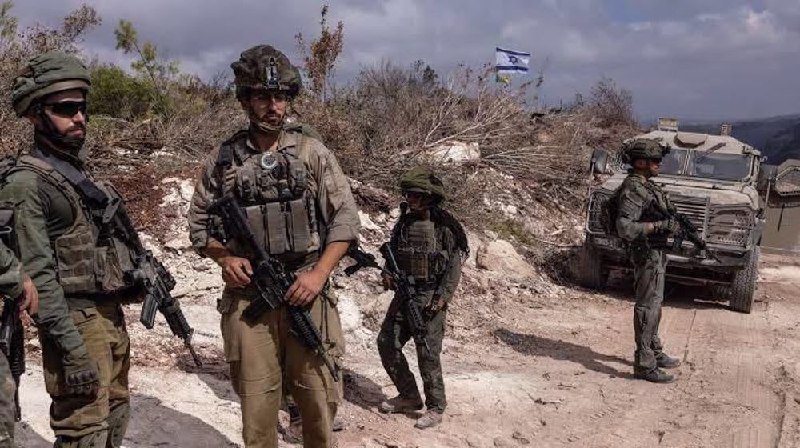
On 16 May 2026, the Israeli Defense Forces publicly confirmed the death of a Golani Brigade officer killed in engagement with Hezbollah fighters near the northern border. The announcement, conveyed through the IDF Spokesperson's office, named the officer and provided basic circumstances. It generated standard wire treatment: a paragraph, a dateline, a brief on the exchange of fire.
That same day, Iranian state-affiliated outlets reported that Hezbollah fighters had downed an Israeli surveillance camera in the Tayyaba settlement using an attack drone — a modest but symbolically significant action in a conflict that has seen years of low-grade attrition along the Lebanon–Israel frontier.
Read side by side, these two dispatches illustrate a problem that anyone systematically tracking conflict coverage will recognise: the architecture of the story is not neutral. It is shaped, at every layer, by decisions about what constitutes a reportable event, whose sources carry presumptive credibility, and whose actions are described in the language of agency while others are described in the language of reaction.
The Named Dead and the Unnamed Destroyer
The IDF announcement functions as a credentialing mechanism. A named officer, a named brigade, a named enemy. The casualty is legible to a Western readership: a military professional, killed in a defined engagement, by a named adversary. The wire transmits this almost without friction. Reuters, AP, and BBC carry it. The language is straightforward. The context is given.
Now compare the Hezbollah footage. An Iranian outlet reports a surveillance asset destroyed by a drone. The drone is described as a "hedge drone" in one translation. The target is infrastructure, not personnel. The actor is an armed non-state group designated as a terrorist organisation by the United States and the European Union.
The structural disadvantage here is not primarily about truth — it is about access. Hezbollah does not brief Western correspondents. Its military communications operate through Telegram channels and low-key press releases that do not fit the format of a wire dispatch. The destruction of a surveillance camera, unaccompanied by a Western official willing to characterise it, is structurally invisible to the standard news feed. It becomes a non-event by default.
This is not a conspiracy. It is a system. Outlets cover what they can verify through channels they trust. Trust, in conflict reporting, flows through official spokespeople — military briefers, government press offices, defence ministry statements. Armed groups that do not participate in this ecosystem are structurally disadvantaged in the information environment, regardless of the significance of their actions.
The Drone That Wasn't There
The Tayyaba incident is instructive for another reason: it reveals how the same event can be made to mean different things depending on who is doing the describing.
To Hezbollah's own framing, the destruction of an Israeli surveillance camera is a defensive act — degrading the enemy's surveillance capacity along occupied Lebanese territory. To Tel Aviv's framing, it is a violation of the rules of engagement and evidence of aggression by a hostile non-state actor. The Western wire, when it picks up such incidents at all, typically defaults to the second frame because that is the frame delivered by a credentialed official source.
There is a reasonable argument that this is simply responsible journalism: outlets should not amplify the communications of designated terrorist organisations. But the asymmetry runs deeper than selective amplification. It shapes what readers understand the conflict to be. When the only events that register are Israeli casualties and responses, the story becomes one of pressure applied to a democratic state by an irrational actor. When Lebanese civilian harm — infrastructure damage, displacement, casualties among non-combatants — is absent from the frame, the picture is structurally incomplete.
This publication has documented similar dynamics in coverage of the Ukraine war, where Russian military communications are routinely cited as counter-claim material with explicit sourcing caveats while Ukrainian official statements carry default credibility. The same logic applies here, inverted: Iranian state-affiliated outlets reporting Hezbollah operations are subject to blanket scepticism not because of the specific content of their reporting but because of their institutional affiliation. The result is a coverage environment that is, by construction, biased toward the official account of whichever side Western governments have designated as legitimate.
The Casualty Gap
Israeli military casualties along the northern border have been reported regularly since October 2023, when Hezbollah began low-intensity strikes in solidarity with Hamas. The Golani Brigade officer confirmed dead on 16 May joins a list of IDF personnel killed in the years-long exchange of fire.
Hezbollah casualties are reported, when they appear in Western outlets, almost exclusively through Israeli military claims. Independent verification is rare. Lebanese civilian casualties from Israeli strikes — and there have been many, documented by UN agencies and humanitarian organisations — receive coverage that is intermittent, buried, and framed in passive language that obscures causal responsibility.
This is not unique to this conflict. Coverage of urban warfare, border attrition, and counter-insurgency operations consistently demonstrates what researchers have long described as an "endbody count" problem: the deaths of those from societies with strong state communications infrastructure and Western governmental backing receive sustained, named attention, while the deaths of those from less credentialed societies accumulate in aggregate statistics.
The Golani officer's death deserves to be reported. So does every Lebanese civilian killed by artillery fire across the Blue Line. The fact that one generates a paragraph and a half of wire copy while the other requires a deep search through UN documentation is a choice — and choices have structural causes.
What Remains Uncertain
The Tayyaba drone incident cannot be independently verified from sources outside the Iranian press ecosystem. Monexus has not been able to confirm the destruction of the surveillance camera through IDF statements, Western wire services, or open-source imagery verification. Readers should treat that specific claim as reported by Iranian state-adjacent media without independent corroboration.
The IDF casualty announcement, by contrast, is verifiable through the IDF Spokesperson's office and has been carried by international wires. It is the factual anchor of this piece.
The broader structural argument — about differential media treatment of casualties, asymmetric access, and the systematic advantage of official spokespeople in conflict coverage — does not depend on the verification status of any single incident. It is visible across thousands of data points in the archive of conflict reporting.
What readers should carry from this is not a revised account of events on 16 May 2026, but a question: when the news tells you who died and who acted, ask what system made that information available, and what information that system made invisible. The answer is not the same in every story. But the question should always be asked.
Monexus staff writers operate under a sourcing-first mandate. Claims about the IDF casualty are anchored to the IDF Spokesperson's announcement. The Hezbollah surveillance camera claim is reported from Iranian state-affiliated sources and flagged accordingly. No claim in this piece rests on unnamed officials or unsourced analysis.
Wire provenance
This editorial synthesis draws on the following public wire/social posts:
- https://t.me/tasnimnews_en/37219
- https://t.me/tasnimnews_en/37217
- https://t.me/JahanTasnim/18987