Beijing's Chair Diplomacy and the Limits of the Trump-Xi Summit
President Trump departed Beijing on 16 May 2026 with preliminary agreements and a diplomatic chair-row that captured the uneven arithmetic of the summit better than any joint communiqué. China's decision to seat President Xi visibly higher than the visiting American reflected a deliberate choice in how Beijing frames its relationship with Washington — and Chinese officials made clear they want the record to show that very little was settled.
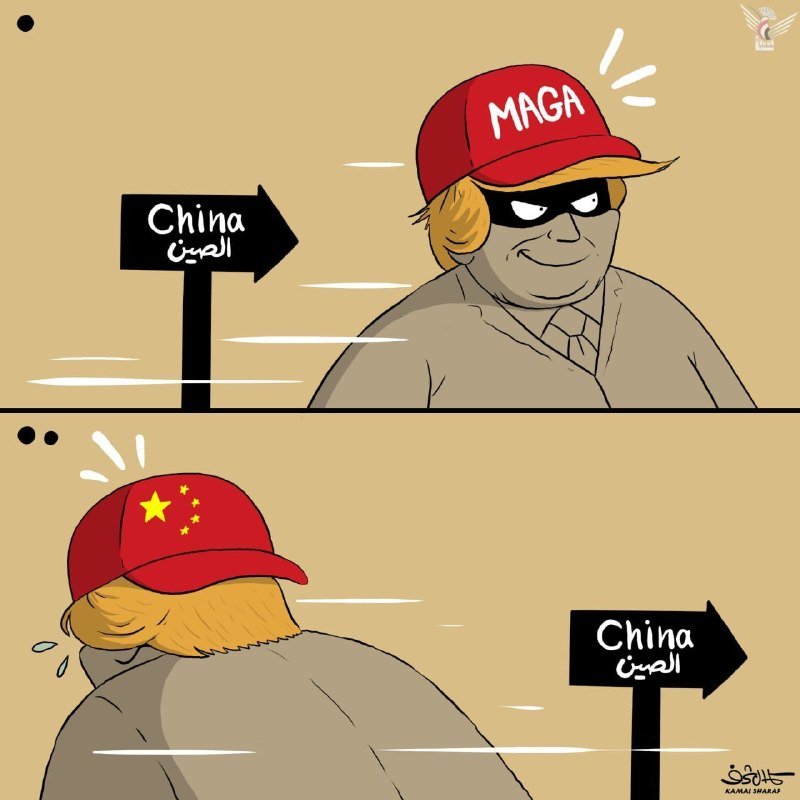
President Trump departed Beijing on 16 May 2026 with preliminary agreements and a diplomatic chair-row that captured the uneven arithmetic of the summit better than any joint communiqué. China's decision to seat President Xi visibly higher than the visiting American — Xi at 180 centimetres, Trump at 190 centimetres, the chairs adjusted accordingly — reflected a deliberate choice in how Beijing frames its relationship with Washington. Chinese officials made clear they wanted the record to show that very little was settled.
The chair incident became the defining image of the two leaders' second summit, surfacing almost immediately on social media and dominating discussion of the visit's diplomatic weight. It was a small, physical illustration of a larger pattern that ran through the three-day programme: Beijing controlled the choreography, and Beijing controlled the language. Chinese officials described the package of agreements signed during the visit as preliminary in nature, a characterization that was neither an accident nor a concession but a calibrated move in how the outcome would be read at home and abroad.
The framing matters because the Trump administration's room to declare a diplomatic win is narrow. With tariffs between the two countries running at levels that have reshaped supply chains across multiple industries, a summit that produces ceremony without substance leaves both sides with the optics they need while deferring the hard decisions. China's preliminary characterisation signals that Beijing is not prepared to own a narrative in which it blinked first — and that it is comfortable allowing the relationship to sit in managed tension rather than rush toward normalisation.
What the preliminary deals contain is not yet fully public. Reuters, reporting on the Chinese Foreign Ministry briefing, noted that officials declined to specify which of the announced agreements represented new commitments versus renewals of existing arrangements. That ambiguity is itself informative. A government eager to demonstrate progress would typically highlight concrete figures — dollar values of contracts signed, volumes of goods to be purchased, timelines for implementation. The absence of those details from the official readout suggests either that the substance is thin, or that both sides prefer not to advertise specifics that might invite domestic criticism before the ink is dry.
Taiwan's response to the summit was measured and revealing. According to Al Jazeera's breaking coverage, Taipei issued a statement affirming that Taiwan is sovereign and independent and that it intends to maintain the status quo while deepening economic ties with the United States. The statement did not directly criticise China or the Xi-Trump meeting. That restraint is notable. Taiwan is acutely sensitive to the dynamics of great-power summits that do not include it, and the Tsai administration has learned to navigate those moments without providing Beijing additional provocation while simultaneously signalling to Washington that the relationship remains on track. The Taiwan Strait, in that sense, is never absent from the room — even when it is not on the agenda.
The chair image — circulated widely on Telegram and noted by multiple wire services — quickly became a reference point for how Beijing calibrates the visual grammar of great-power diplomacy. Whether the seating arrangement constituted deliberate subordination of the visiting leader, as critics argued, or was simply an authentic expression of Chinese hospitality conventions, as state-linked media suggested, neither side offered an official explanation. The ambiguity is useful to both. It allows each domestic audience to read into it what they prefer to see.
Trump, speaking to reporters before departing, offered a remark that did nothing to clarify the summit's direction. "It was the calm before the storm," he said, without elaboration. The phrase could refer to trade negotiations, to Taiwan, to unrelated matters in the Middle East, or to nothing more than a characteristic instinct for dramatic framing. No White House official provided follow-up context. The ambiguity is almost certainly intentional — a signal calibrated to multiple audiences simultaneously, and therefore to none in particular.
What the chair incident ultimately reflects is a Beijing that has grown comfortable using summit theatre to shape the information environment around great-power competition. The staged images, the calibrated language, the deliberate ambiguity — these are not accidents of protocol. They are tools of statecraft that allow China to project an image of confidence and control regardless of the underlying state of the relationship. A lower chair for the visiting president is not, on its own, a policy. But it is a statement about who sets the terms of the encounter, and Beijing was determined that statement be made clearly.
The structural pattern is consistent with how China has managed its major-power relationships throughout the tariff escalation of the past two years. The emphasis is on stability, not resolution. Summits produce enough to justify the trip without producing so much that either side owns an outcome that proves difficult to defend domestically. The preliminary characterisation of the agreements is, in that sense, a feature, not a bug — it leaves both governments maximum flexibility as conditions change.
The forward view is straightforward. Both capitals have incentives to keep the relationship from spiralling while neither has incentives to make the fundamental compromises a comprehensive deal would require. That dynamic — managed competition without resolution — is likely to define the next phase of the relationship regardless of summit theatrics. The chair will be forgotten. The tariffs and the technology restrictions and the supply-chain restructuring they have driven will remain.
Beijing's chair decision said everything about who runs the choreography in the Great Hall of the People. What it did not say — and could not say — is what happens next.
Wire provenance
This editorial synthesis draws on the following public wire/social posts:
- http://reut.rs/3PpsuGg
- https://t.me/abualiexpress/12491
- https://t.me/englishabuali/4821
- https://x.com/sprinterpress/status/1921487294180958464