The ceasefire that isn't: Lebanon and the architecture of managed conflict
Washington extended a ceasefire on 16 May 2026 even as the IDF struck Hezbollah infrastructure in southern Lebanon, killing medics. The formal language conceals a structural reality: the arrangement preserves Israeli freedom to act.
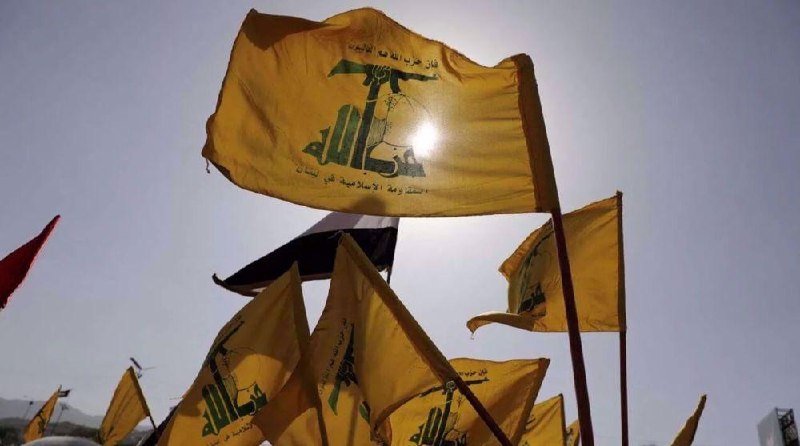
The formal record reads like a contradiction. On 16 May 2026, Washington extended what it described as a ceasefire along the Israel-Lebanon border. Within hours, the IDF had launched a new wave of airstrikes against Hezbollah infrastructure in several areas of southern Lebanon, according to statements and reporting from the Israeli Defence Force, Liveuamap, and regional monitors. Israeli strikes killed at least two medics, the Palestine Chronicle reported, citing local sources. The ceasefire was extended. The strikes continued. The framing held.
That framing deserves scrutiny.
The grammar of deference
Israeli military statements issued on 16 May were precise in their language. The IDF described its targets as Hezbollah infrastructure sites. It said it had begun striking those sites in several areas in southern Lebanon. It did not characterise the operation as a violation of any arrangement, because under the operative diplomatic definition, it was not one. Washington extended the ceasefire. The IDF used it. This is the grammar the arrangement runs on: the ceasefire exists because one side retains the capacity and the political cover to keep striking, and that side is not Lebanon.
The striking of what Israel defines as infrastructure is not new to this moment. Reporting from early 2026 documented a pattern of IDF operations under the ceasefire's formal umbrella, each time prompting a statement from Washington affirming the broader cessation's continued validity. Hezbollah has responded in limited fashion on each occasion. The ceasefire has held, in the sense that a wider war has not resumed. It has held, in the sense that matters less: as a managed suppression of conflict rather than its resolution.
The asymmetry beneath the architecture
Israel's characterisation of its targets as infrastructure warrants examination. The term covers a spectrum from weapons depots and tunnel networks to command-and-control nodes and installations in populated areas. Each category carries different legal and civilian-harm implications. Without independent on-the-ground verification — difficult to obtain in southern Lebanon under current access conditions — the IDF's own framing remains the primary record.
The structural logic, however, is consistent. Israel's strategy under the ceasefire has been to degrade Hezbollah's capacity through sustained attrition while preserving freedom of action against what it defines as emerging threats. This is not ceasefire behaviour as the term is conventionally understood. It is deterrence-plus: the threat of escalation held permanently in reserve, deployed in precision increments.
The geopolitical backdrop matters. Iran is navigating its own pressures — internal succession questions and external sanctions geometry that constrain direct resupply. Syria remains fragmented. Hezbollah has been depleted through sustained attrition since October 2023. Israel is operating from a position of relative advantage it has spent two and a half years constructing. The operation on 16 May fits that pattern: pressure without wider war, degradation without the political costs of full-scale re-invasion.
What the ceasefire conceals
The death of medics in the 16 May strikes does not appear in Israeli military statements. It is reported by regional monitors and independent outlets operating with limited access. This is not unusual in the coverage of the Israel-Lebanon frontier: the information environment is asymmetric, with Israel's official communications receiving disproportionate weight in Western diplomatic coverage.
Lebanon's position in this architecture is structurally subordinate. The state's institutions are weak, its economy under severe strain, and its enforcement capacity limited. The ceasefire functions not because both parties have equal incentive to maintain it, but because Hezbollah's ability to retaliate at scale has been systematically degraded while Israel's ability to strike has been preserved. What looks like equilibrium is something closer to managed domination.
Washington's extension of the ceasefire under these conditions reflects a policy preference — the avoidance of a second major war in the region — rather than a resolution of the underlying conflict. This is a legitimate diplomatic goal. It is not the same thing as peace, and conflating the two in formal language does a disservice to what is actually being maintained on the ground.
The structural pattern and what follows
The ceasefire architecture was designed not to resolve the Israel-Hezbollah confrontation but to suppress it. Each iteration follows a recognisable sequence: an IDF strike, a Hezbollah response calibrated below the threshold of full escalation, and a diplomatic statement from Washington affirming the broader arrangement's continuity. The ceasefire holds because it is structured to hold on terms that favour one party.
Israel's calculus is coherent within its own terms. A permanent state of degraded tension is preferable to a formal peace that acknowledges Hezbollah as a negotiating equal. Lebanon is left to absorb the consequences: ongoing strikes, civilian harm, and an economy that cannot function under perpetual pressure. Hezbollah is left with the choice between accepting managed subordination or triggering a conflict it cannot win.
The 16 May strikes are not an aberration. They are the arrangement working as designed. The ceasefire will be extended. The language will hold. The question worth asking is what the international community's acceptance of this arrangement costs — in Lebanese lives, in regional stability, and in the credibility of diplomatic frameworks that describe dominance as peace.
Wire provenance
This editorial synthesis draws on the following public wire/social posts:
- https://t.me/idfofficial/12345