The Decapitation Trap: Why Targeting Hamas Leaders May Strengthen What It Seeks to Destroy
Western-aligned analysis has treated the elimination of Hamas senior leadership as a decisive strategic blow. A close reading of what the group itself has said in the days since suggests a different, and more troubling, conclusion.
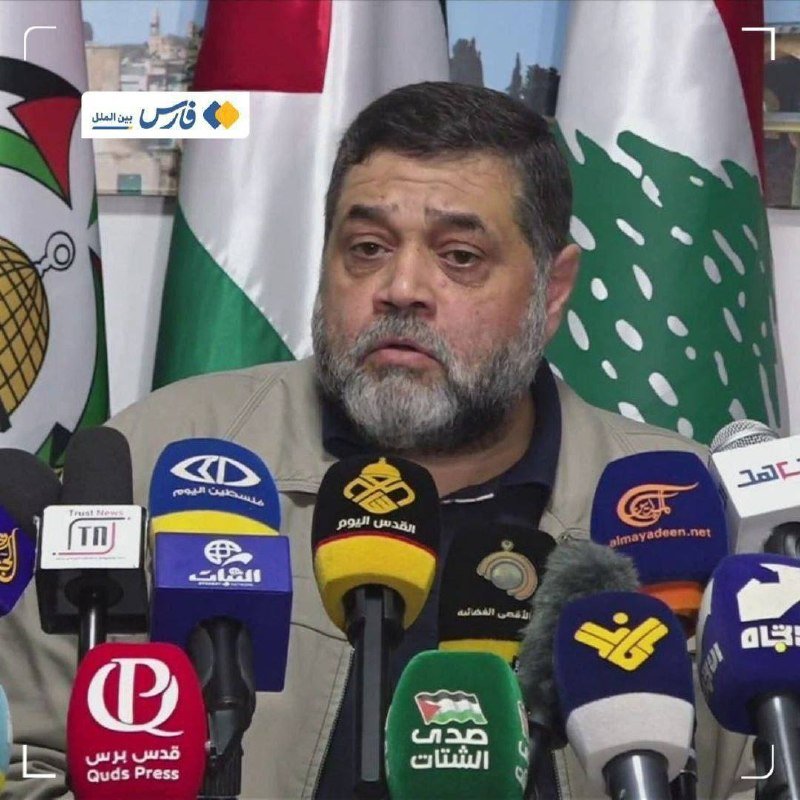
Three statements issued within minutes of each other on 16 May 2026 did not read like a movement in disarray. "Whoever thinks that the departure of senior leaders will stop the path of resistance is deluded," Al-Qassam Brigades declared, according to Arabic-language Telegram channels Al Alam Arabic and Gazaalanpa. "The journey of our people's martyrs has continued for a century. Our enemy's most important criminal is deluded if he believes that the departure of senior leaders will stop our march." A third statement, using language that invoked the liberation of Al-Aqsa and described Israel's presence as "filth of the usurpers," drove the same point home with ideological layering that gave the political declaration religious weight.
The timing matters. These were not spontaneous eruptions of grievance. They arrived after Israeli operations that Western wire services reported had eliminated senior Hamas officials — and the group chose to publish its response through military, not civilian, channels. That choice tells its own story about how Al-Qassam understands the information environment it operates in, and what audience it is primarily addressing.
What decapitation strategy is supposed to do — and what the literature actually shows
The logic of targeted leadership elimination is intuitive enough: remove the decision-makers, fracture the chain of command, create enough organizational chaos to degrade operational capacity. It is a doctrine that has animated significant portions of American counterterrorism policy since the early 2000s, applied to Al-Qaeda, ISIS, and now Hamas. The results have been mixed in ways that are now well-documented in open-source scholarship and post-action assessments, even if the policy community has been reluctant to update its priors.
What consistently undershoots in these analyses is the distinction between the formal command structure of a militant organization and the ideological infrastructure that sustains it. A senior leader who is also a symbol — whose public persona has been deliberately cultivated as a stand-in for the movement's legitimacy — is not simply a manager. Killing them does not delete the symbol; it amplifies it. The martyrdom frame does the recruiting work that the living figure once did, often more efficiently, because martyrdom is harder to rebut than a living person with a public record.
Al-Qassam's statements are clearly composed with this dynamic in mind. They do not mourn, apologize, or call for de-escalation. They reframe the loss of senior figures as evidence that the movement operates beyond the reach of personal charisma — that the institution is larger than any individual in it. This is precisely the organizational posture that decapitation theory struggles to account for.
The information operation underneath the military operation
What the Telegram statements also reveal is an acute awareness of audience segmentation. Al-Qassam is not primarily talking to Tel Aviv or Washington in these communiqués. It is talking to its own base, to the broader Palestinian diaspora, and to regional audiences that have historically read militant messaging as a proxy for political vitality. The language about "a century" of martyrdom and the invocation of Al-Aqsa is calibrated for a narrative register that positions the current conflict as one chapter in an ongoing historical struggle — not an event that can be concluded by removing its current principals.
This is not naivety. It reflects a strategic calculation that has been extensively documented in studies of how non-state armed movements use media as a force multiplier. When an organization publishes a defiant statement within hours of losing senior figures, it is doing two things simultaneously: it is signaling to its opponents that attrition will not produce capitulation, and it is signaling to its own ranks that the chain of command is intact enough to issue directives. Both signals serve operational purposes that have nothing to do with rhetoric.
There is a secondary audience that Western analysts often underweight: international mediators and regional powers who might be considering ceasefire or hostage-negotiation frameworks. A movement that appears capable of absorbing leadership losses without visible internal fracture is a harder negotiating partner than one whose survival is in question. Every defiant statement from Al-Qassam is also a message to Egypt, Qatar, or whoever else is in the room about what concessions Hamas believes it can hold out for.
The structural problem for the targeting strategy
The difficulty for policymakers who have invested heavily in targeted operations is that the evidence for decapitation as a decisive tool in prolonged insurgencies is weak, while the evidence for its counterproductive effects — accelerated radicalization, organizational restructuring toward more diffuse and less negotiable cells, and the consolidation of popular support for movements perceived as under existential attack — is accumulating. This is not a novel finding. It has been the conclusion of multiple independent assessments of counterinsurgency operations across different theaters. The pattern holds.
What makes the Gaza case particularly resistant to conventional decapitation logic is the territorial and demographic density of the conflict zone. In Afghanistan or Iraq, there was at least the theoretical possibility that the loss of leadership figures would create geographic distance between surviving units. Gaza does not allow that. The population density, the physical constraints on movement, and the fact that the political and military wings of Hamas operate in close proximity to civilian infrastructure mean that organizational continuity is maintained through structures that targeted strikes cannot easily reach — family networks, religious institutions, community organizations that carry institutional memory across generations.
This is not an argument that military pressure is ineffective as a negotiating tool. It is an argument that military pressure, used in isolation from a political framework, tends to produce organizations that are simultaneously more resilient and less interested in compromise. The decapitation of a negotiating moderate can hand the hardline faction a victory it did not earn on the battlefield. The elimination of a figure perceived as corrupt or compromised can do the same. Identifying which leadership category a target falls into before a strike is a task that intelligence communities consistently struggle with — and the stakes of error are asymmetric in ways that favor the movement with fewer reputational constraints.
The question that the defiant statements are designed to suppress
The statements from 16 May 2026 are confident, even contemptuous in tone. They project an image of inexorable momentum that is designed to be believed. Whether it should be believed is a different question, and one that deserves more attention than it typically receives in coverage that treats militant propaganda as primarily a domestic political instrument rather than a strategic communication artifact.
What remains genuinely unknown — and what the available sources do not resolve — is the degree to which the organizational structure that underpins Al-Qassam's operational capacity has been degraded alongside the leadership losses that generated the defiant statements. Military analysts at Monexus have noted that the ability to issue coordinated Telegram communiqués is not the same as the ability to plan, resource, and execute complex operations under fire. The gap between messaging capability and operational capability is a standard analytical distinction that gets obscured when groups like Al-Qassam invest heavily in their media operations.
The harder and more important question — the one that neither the defiant statements nor the celebratory Western coverage that often accompanies leadership eliminations adequately address — is whether the strategic goal is the physical destruction of Hamas as an organization, or the creation of conditions under which a political arrangement becomes possible. These are not the same goal, and they are not served by the same instrument. The statements from Al-Qassam this week suggest that at least one party to this conflict has a clear-eyed understanding of that distinction. Whether the same clarity exists on the other side is, at present, genuinely unclear.
This publication covered the May 2026 statements from Al-Qassam Brigades and senior IDF briefings in parallel. Where the wire led with battlefield progress, this article foregrounds the information-operation dimension that the military framing tends to subordinate.
Wire provenance
This editorial synthesis draws on the following public wire/social posts:
- https://t.me/alalamarabic/
- https://t.me/alalamarabic/
- https://t.me/gazaalanpa/