Drone warfare and air defence interceptions mark new phase in Israel-Lebanon exchange
The Israeli Air Force intercepted two hostile aircraft on 16 May 2026 as Hezbollah released footage of a drone strike on an Israeli military vehicle in southern Lebanon, in one of the most active periods of cross-border exchange since the 2023 Gaza conflict.
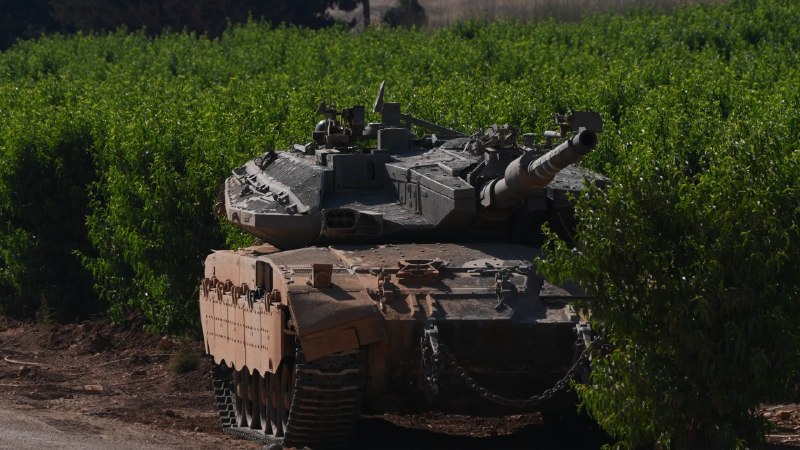
The Israeli Air Force intercepted two hostile aircraft on the evening of 16 May 2026, following sirens that sounded across several areas of northern Israel. The IDF confirmed the interceptions shortly after the alerts, marking the fourth significant air defence activation in the region that week. Separately, a video published by Press TV showed Hezbollah resistance forces deploying an attack drone against an Israeli military vehicle in southern Lebanon. Observers on the ground reported intense Israeli airstrikes on southern Lebanese positions, with the sounds of bombardment audible as far north as the Israeli border towns.
The dual incidents — an attempted aerial penetration by incoming craft and a successful offensive drone strike in the opposite direction — illustrate how the Israel–Lebanon frontier has entered a qualitatively different phase of conflict. The technology driving this shift is the same on both sides: commercially derived unmanned systems, increasingly adapted for precision strike and reconnaissance, combined with layered air defence architectures designed to counter them.
Precision strike from the south
Hezbollah's release of drone footage targeting an Israeli military vehicle in southern Lebanon fits a pattern the group has refined over the past eighteen months. The attack drone, filmed from the device's own camera before impact, represents a class of weapon once associated almost exclusively with state militaries. Today, non-state actors operating from territory within a few kilometres of Israeli positions can deploy them with minimal warning. The IDF has not issued a formal statement attributing a specific level of damage from the strike, but the operational footage circulating on Telegram channels indicates a direct hit on a moving vehicle.
The implications for ground force operations are significant. Israeli units operating along the northern border have had to incorporate drone-detection and countermeasure protocols into routine patrol planning. Sources familiar with IDF operating procedures note that the threat environment has forced a doctrinal shift: what was previously an exceptional counter-drone scenario is now a daily planning consideration for small-unit commanders.
The cost equation of air defence
Israel's interception of the two inbound aircraft underscores the continued reliability of the country's multi-layered air defence network, which combines the Iron Dome short-range system, David's Sling medium-range platform, and the Arrow long-range interceptor. The IDF confirmed the interceptions successfully neutralised the threat, and no damage to civilian areas was reported.
But each interception carries a material cost. Iron Dome interceptors are estimated at tens of thousands of dollars per launch; Arrow interceptors cost substantially more. When hostile aircraft or drones are deployed in volume — a scenario defence analysts have increasingly flagged as plausible — the economics of defence become acute. Hezbollah and allied networks have demonstrated the ability to launch multiple unmanned systems in a single engagement, forcing Israeli air defence to prioritise and, in some cases, absorb some incursions to conserve interceptors for higher-value targets.
The IDF has declined to specify the type of aircraft intercepted on 16 May, citing operational sensitivity. Military analysts tracking the northern front estimate that a significant proportion of hostile air activity involves unmanned systems rather than manned aircraft, reflecting a broader shift in how adversarial forces probe Israeli airspace.
Escalation and restraint in parallel
Both incidents occurred against a backdrop of intensified cross-border exchanges that have tested the framework agreed between Israel and Hezbollah in the months following the 2023 Gaza conflict. Neither the interceptions nor the drone strike appears to represent a deliberate escalation by either party, but each action reinforces a dynamic of calibrated provocation and measured response that has come to define the current equilibrium.
Israeli officials have privately indicated that the threshold for a full-scale response to a drone strike is higher than for a rocket or missile attack, reflecting both the lower casualty profile of unmanned systems and a desire to avoid the international diplomatic cost of a major military operation in Lebanon. Hezbollah, for its part, has publicised drone footage to demonstrate operational capability rather than to provoke a specific Israeli reaction. The framing in Iranian state media of the southern Lebanon strike as a demonstration of resistance capacity reflects a strategic communications logic — signalling to regional audiences that the group remains operationally active and technologically capable — rather than an explicit call for escalation.
What comes next
The trajectory is toward more frequent, more technologically sophisticated drone operations from Lebanese territory. Hezbollah has a documented pipeline of unmanned systems, and Iranian support for the group's drone programme remains a point of contention in ongoing nuclear negotiations. For Israel, the challenge is not primarily one of interception failure — the systems work — but of sustainable defence economics and force posture.
The IDF has accelerated deployment of the Iron Beam directed-energy weapon system, which is designed to intercept short-range drones and rocket salvoes at a fraction of the per-shot cost of kinetic interceptors. Operational testing of Iron Beam has been conducted under live conditions, and defence officials have suggested initial field deployment may come within twelve months. If the system performs reliably, it would address the cost imbalance that non-state actors currently exploit — but it would also raise the technical bar for adversaries seeking to maintain a drone threat.
The next phase on the northern frontier will be defined by which side adapts faster: Israel in its layered defence and counter-drone architecture, or the networks operating from southern Lebanon in their ability to mass unmanned systems at sufficient scale to saturate those defences. The interceptions and the drone strike on 16 May are individual data points in a contest that is, ultimately, technological and economic — not merely military.
This publication's coverage of the northern Israel air defence activations centres on IDF-sourced confirmation of the interceptions and the operational footage circulated by resistance channels — a framing that reflects the asymmetry of available information rather than any editorial preference. Wire services with field reporters in northern Israel would offer a more complete picture of civilian impact and unit-level conditions along the border that Telegram wire channels do not capture.
Wire provenance
This editorial synthesis draws on the following public wire/social posts:
- https://t.me/idfofficial
- https://t.me/presstv
- https://t.me/wfwitness