Escalation as Policy: How the Israel-Hezbollah Border Became a Permanent Crisis
Cross-border exchanges on May 16 underline a pattern of mutual strikes that have become normalised rather than resolved, raising questions about whether either side genuinely seeks de-escalation or has simply grown accustomed to low-intensity war.
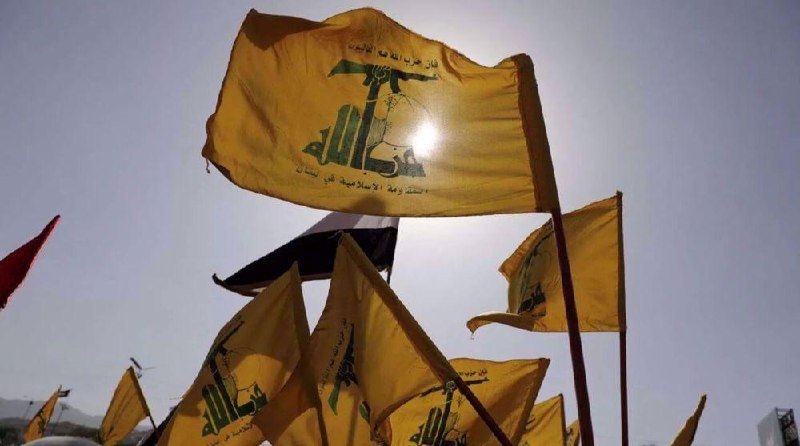
On May 16, 2026, the Israel-Lebanon border repeated a pattern that has become its own news item. Hezbollah launched missile strikes toward northern Israel, activating air-raid sirens in the Al-Jalil (Galilee) region. The Israeli military confirmed the death of an officer from the Golani brigade in fighting with Hezbollah fighters. Within hours, Israeli aircraft struck the city of Sour (Tyre) in southern Lebanon, with reports of civilian casualties. The exchange — one of dozens of such incidents over recent months — was reported with the perfunctory language of routine, a conflict that has ceased to shock because it never quite escalates into the full-scale war both sides periodically threaten.
The problem with this normalisation is that it obscures what the pattern actually represents: not a border in stasis, but a border in managed deterioration. Each round of strikes is calibrated to wound without provoke, to demonstrate capability without triggering the threshold that would draw in regional or international actors. The result is an equilibrium of attrition — acceptable to neither side in principle, yet tolerated by both as preferable to the alternatives.
The Calibration Problem
Israel's dilemma is genuine. Hezbollah's missile arsenal — substantially larger and more sophisticated than it was during the 2006 war — represents a credible threat to Israeli population centres in the north. Israeli military assessments have long held that a full-scale Hezbollah offensive could overwhelm Iron Dome batteries through sheer volume, and the IDF's May 16 announcement of a Golani brigade officer killed in the exchange underscores that ground-level risk is not theoretical. Israel's right to respond to threats on its northern border is not disputed by any credible observer. The strikes on Sour, however, occurred in a densely populated urban area, and the civilian casualties reported by some accounts raise the same proportionality questions that have shadowed Israeli operations throughout the current conflict.
What remains unclear from available reporting is whether the civilian harm was incidental or whether Sour was selected as a target of sufficient significance to deliver a political message. Military necessity and collective punishment are legally distinct categories, and international humanitarian law treats them differently. The sources reviewed do not provide sufficient detail to adjudicate that distinction in this specific instance.
The Hezbollah Calculus
From Hezbollah's perspective, the strikes serve multiple functions simultaneously. They demonstrate continued operational capacity despite sustained Israeli pressure. They signal to Tehran that the Lebanese front remains an active lever in the broader regional contest. And domestically, they position Hezbollah as the one actor in Lebanon visibly engaging Israel's military — a posture that carries political weight even in a country exhausted by economic collapse and state fragmentation.
The reporting reviewed here comes predominantly from Iranian state-linked outlets, which frame the exchanges in terms of resistance and martyrdom. That framing warrants the same scrutiny applied to any official government account. But the underlying facts — strikes, casualties, counterstrikes — are consistent with what independent wire services have reported across the region. The interpretation is contested; the events are not.
Why Resolution Remains Elusive
A ceasefire along the Lebanon border would require an agreement on the relationship between that front and the broader Gaza conflict. Hezbollah has explicitly conditioned any de-escalation on a ceasefire in Gaza; Israel has conditioned any Gaza ceasefire on the elimination of Hamas's military and governing capacity. These positions are not symmetrical — one side is the aggressor in an internationally recognised invasion, the other is resisting it — but they share a structural feature: neither party controls the timeline of the other.
The international community's capacity to broker a separate Lebanon track is limited by the same arithmetic. Washington retains leverage over both parties, but using that leverage to compel de-escalation requires offering something to the party being asked to stop first. In the absence of a credible sanctions or diplomatic mechanism that would make restraint more attractive than continuation, the pattern repeats.
There is also a domestic political dimension on the Israeli side that the coverage rarely foregrounds. Northern border communities have been displaced for months; their return is contingent on security guarantees that current military posture cannot fully provide. A government that negotiates a ceasefire risks the perception of having accepted a reduced threat horizon rather than eliminating it. That political risk creates incentive to maintain the option of further strikes — even as civilian populations on both sides of the border absorb the consequences of the stalemate.
What Comes Next
The escalation of May 16 follows months of sustained cross-border exchanges that have produced casualties on both sides and displaced tens of thousands of civilians from northern Israel and southern Lebanon. The trajectory points toward either a managed ceasefire — temporary, conditional, subject to reactivation — or an eventual larger confrontation that neither side currently wants but both continue to prepare for.
The international framework for addressing this outcome is thin. UN Security Council Resolution 1701, which ended the 2006 war, proved insufficient to prevent Hezbollah's subsequent military entrenchment. A successor framework would require enforcement mechanisms with teeth: credible monitoring, robust inspection rights, and consequences for violations that are currently absent. Whether any party with the capacity to impose such mechanisms has the political will to do so is, at present, unclear.
What is clear is that the normalisation of border exchanges as a form of ongoing policy — rather than a crisis to be resolved — carries its own costs. Each strike reinforces the other side's rationale for maintaining military readiness. Each casualty deepens the grievances that sustain political support for continued confrontation. The border has become a pressure valve that releases tension without reducing it, and that is a form of stability that satisfies no one.
Wire provenance
This editorial synthesis draws on the following public wire/social posts:
- https://t.me/FarsNewsInt/125432
- https://t.me/tasnimnews_en/89421
- https://t.me/JahanTasnim/67211
- https://t.me/FarsNewsInt/125428