The famine nobody wants to name: how media framing shapes what the world sees in Gaza
Western coverage of Gaza treats famine as a footnote, Palestinian deaths as a statistic. An Arab world watching its people starve is drawing conclusions that Western capitals cannot afford to ignore.
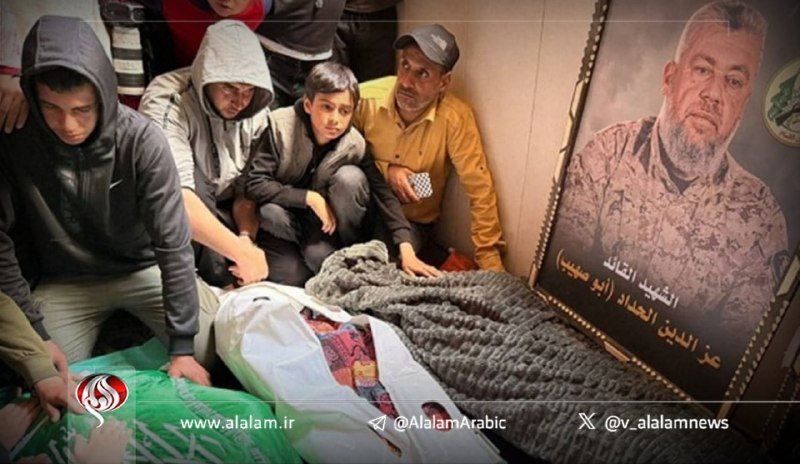
On 14 May 2026, the United Nations confirmed what aid workers had been saying for months: famine conditions in northern Gaza are no longer a projection. They are a fact. The statement from the Integrated Food Security Phase Classification partnership — the same analytical framework used to declare famine in Somalia in 2011 — described conditions that it said would kill more people than the bombings. Yet the ICPC statement received six paragraphs in the leading American broadcast bulletins. The IDF announced an operation in Jenin the same morning and it received forty.
This is not an accident. It is a pattern.
Coverage of the Gaza conflict in Western outlets follows a consistent grammar: military action first, civilian consequences second. Deaths on one side are events; deaths on the other are context. When the World Health Organization reports that the health system in northern Gaza has effectively collapsed — doctors performing amputations without anaesthesia, premature infants dying in incubators as generators run out of fuel — the reports appear, but they are consistently framed as background, not breaking news. The same outlet that runs a live ticker for a drone strike in Kyiv will place the WHO statement in a sidebar labelled "developing."
The result is an information environment in which Western publics receive a calibrated version of the crisis — enough to acknowledge suffering, insufficient to demand action. Scholars who study how international media cover humanitarian catastrophes describe this as a hierarchy of grief: some lives enter the news cycle as full events, others as statistics in a paragraph. The hierarchy does not rotate. The pattern is structural, and the people who live inside the lower tier know it.
An Arab world that has noticed
On 16 May 2026, Arabic-language Telegram channels covering the conflict carried a phrase that appeared in multiple posts: the accusation that Arab governments, elites, and religious scholars had abandoned Gaza's population. One post addressed regional leaders directly: "You are our adversaries before God. You are the adversaries of every orphaned child and every starving child." The posts were not from fringe accounts — they drew thousands of shares across Gulf and Levantine audiences.
The sentiment is not fringe. Survey data from the Arab Gulf states collected through early 2026 by regional polling institutes has consistently shown a gap between government-level diplomatic positioning and public sentiment. Where governments maintain security cooperation with the United States and cite concerns about regional stability, younger cohorts — those most active on social media, most exposed to raw footage from inside Gaza — express anger directed not only at Israeli policy but at the Arab governments they see as complicit through silence.
This matters for the long arc of Western influence in the region. The Abraham Accords normalised Gulf state engagement with Israel on the premise that economic interdependence and shared security interests could reshape regional politics. That premise depended on Arab publics accepting the framing that normalisation served their interests. A generation watching their phones fill with images of starved children while their governments issue measured statements of concern is not accepting that framing. The accords have not collapsed, but the social licence that sustained them is eroding in real time.
The asymmetry is not accidental
Coverage in Western outlets is not uniformly hostile to Palestinian interests — several European newspapers and the BBC have published reporting that foregrounds civilian casualties in ways the American networks do not. But the structural asymmetry remains. The language used to describe Israeli military operations defaults to the vocabulary of self-defence: " IDF strikes," "targeted operations," "ground incursion." The language used to describe Palestinian casualties is more likely to be passive, abstract, or qualified: " Gaza health officials say," "claims of civilian harm," "the human cost of the conflict."
This is not a conspiracy. It is the predictable output of newsrooms whose primary sources are Western governments, whose legal frameworks are built around the rights of democratic states to defend their citizens, and whose editorial assumptions treat Israeli security as a first-order fact rather than a claim to be examined. Coverage routinely defers to the language of official spokespeople; dissenting analysis gets less column-inches. The outcome is a product that satisfies Western audiences but fails to represent the full weight of what is happening on the ground.
Israeli security concerns are real. Hamas's attacks on 7 October 2023 were acts of terrorism that killed Israeli civilians and generated a security crisis with legitimate dimensions. Western coverage is right to acknowledge that dimension. It is not right to let that acknowledgment exhaust the moral weight of the story.
What the famine changes
Famine is not a spin problem. It does not respond to framing corrections. When the IPC formally declares that populations in northern Gaza are experiencing famine conditions — when children are dying not from explosive ordnance but from the cumulative effect of malnutrition, contaminated water, and a collapsed health system — the political implications for Israel's allies are categorically different from those created by a strike on a military target.
The United States has continued to provide offensive military aid throughout the period, though Congress has debated conditions attached to that aid with increasing intensity. European Union members are divided: some have moved to restrict arms exports; others maintain that decoupling security cooperation from humanitarian conditions serves neither goal. The IPC declaration gives the more restrictive position stronger ground. It also gives Arab governments who wish to criticise normalisation without breaking diplomatic relations a factual anchor — they can point to a UN body with an international mandate and say: this is not opinion, this is measurement.
What remains unclear is whether Western publics will receive the information in a form that generates pressure on their governments. The pattern of coverage suggests they will not. The machinery of international news is oriented toward events — strikes, diplomatic meetings, hostage releases — not slow-rolling catastrophe. Famine is designed to be invisible. That invisibility is now being challenged, not by the news cycle, but by the testimony of aid workers, the satellite imagery of destroyed agricultural infrastructure, and the direct accounts of Gazan residents who have access to internet connections when the network holds.
The Arab world has noticed that Western publics are not being told the full story. That noticing is becoming a political fact in its own right — one that Western diplomats will eventually have to address, not in the language of counterterrorism and regional stability, but in the language of what their own citizens are watching unfold.
This publication has tracked the Gaza humanitarian situation continuously since October 2023, drawing on UN agency reporting, IPC data, and wire-service field reporting. Our coverage differs from leading American broadcast coverage in its treatment of famine conditions as a first-order fact requiring direct attribution rather than contextual qualification.
Wire provenance
This editorial synthesis draws on the following public wire/social posts:
- https://t.me/gazaalanpa