Gaza's Hidden Death Toll: Why School Strikes Keep Escaping Scrutiny
Reports of strikes near Abu Hussein School in Jabalia camp on 16 May add to a grim pattern of civilian infrastructure casualties that receive fraction of the attention devoted to high-profile hostage moments.
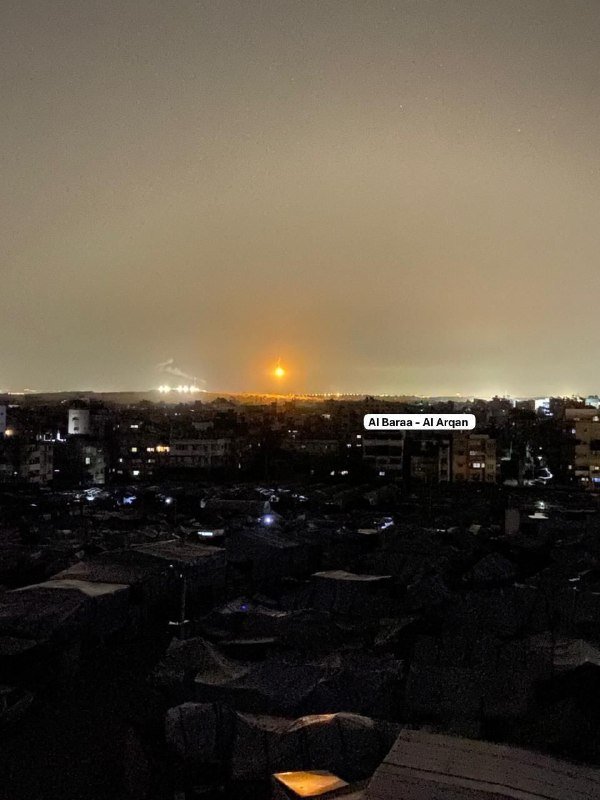
When an Israeli strike hits a school sheltering displaced civilians, the international press machinery whirs briefly and then moves on. The pattern is so entrenched it barely registers as a scandal anymore. On 16 May 2026, according to hospital sources cited by Al Alam Arabic and Gazaalanpa, at least eleven people were killed and more than sixty injured in Israeli raids across Gaza City and the northern Gaza Strip since the preceding Friday evening. Among the incidents reported that day: a strike near Abu Hussein School in the Jabalia camp, which left at least one dead and several wounded, including civilians gathered in front of the institution.
The specificity of location—school, camp, residential block—has become almost redundant in the dispatches. These are not collateral estimates or contested figures in the fog of war. They represent people who were, by definition, in a place designated for protection. The fact that such strikes recur with mechanical regularity across multiple reporting cycles raises a question the dominant frame rarely engages: what exactly is the threshold for sustained international attention?
The Asymmetry of Attention Economics
Coverage of the Gaza conflict follows a predictable topography. High-profile events—hostage releases, diplomatic summits, military offensive announcements—receive sustained global coverage. The slow accumulation of civilian deaths at known protected sites generates shorter news cycles, smaller typeface in the broadsheets, and terse paraphrases of official spokespeople that do most of the argumentative work for the reader. A statement from the Israeli military that a strike targeted militants operating from a civilian structure carries enormous institutional weight in wire reports, even when independent verification remains incomplete.
This is not a phenomenon unique to the current conflict. Coverage routinely defers to the language of official spokespeople; dissenting analysis gets fewer column-inches. But the asymmetry becomes more acute when the structural conditions that produce repeated civilian casualties—urban density, displacement concentrations, the practice of sheltering in schools designated under international humanitarian law as protected spaces—remain outside the editorial frame. The question is not simply whether a particular strike was justified but whether the conditions that make such strikes inevitable have been adequately interrogated.
What the Numbers Cannot Capture
The casualty figures cited in reports from 16 May—eleven dead, sixty injured in the northern Gaza operations alone—are aggregates that obscure as much as they reveal. Each number represents a specific person in a specific location at a specific moment. The strike near Abu Hussein School occurred, according to the sourcing, as civilians gathered in front of the institution. Hospital sources in Gaza reported the toll. These details matter because they distinguish between a statistic and a human event that might, under different structural conditions, have been prevented.
The difficulty is that precision in reporting often works against the interests of those most affected. A strike on a school that kills twelve people generates less sustained coverage than a single dramatic incident of comparable scale but higher symbolic resonance. This is not a criticism of individual journalists but of the media ecosystem that rewards episodic intensity over structural pattern.
The Structural Framing That Isn't Made
The structural argument—that Israeli military operations in Gaza produce predictable civilian harm not because of individual tactical failures but because of the density, displacement patterns, and absence of viable safe zones—rarely makes it into the opening paragraphs of wire reports. It appears, if at all, in analysis pieces that then circulate in a different informational register, read by those already sympathetic to the critique rather than those whose assumptions the framing most directly challenges.
What would it mean to center that structural argument? It would require acknowledging that strikes near schools, shelters, and hospitals are not anomalies requiring individual investigation but features of an operation conducted in one of the most densely populated territories on earth, where the space between combatants and civilians is measured in meters rather than miles. It would require treating the protection obligations under international humanitarian law not as technical legal questions but as operational constraints that, when systematically overridden, constitute a pattern worthy of the same scrutiny given to deliberate targeting decisions.
That framing is available in the reporting. It is present in the UN agency statements, in the International Committee of the Red Cross assessments, in the analyses published by organizations with field access. It is not present, at equivalent weight, in the dominant wire coverage.
The Stakes of Inattention
The consequences of this asymmetry are not abstract. Each strike near a school that receives brief coverage and then fades from view normalizes the proposition that civilian infrastructure casualties are an acceptable cost of military operations. It reduces the pressure on governments that supply arms and diplomatic cover to account for how those arms are used. It shapes the informational environment in which decisions to continue or pause operations are made, by establishing a baseline of acceptable civilian harm that shifts incrementally with each incident.
This publication has reported extensively on the military dimensions of the conflict. The operational assessments, the strategic calculations, the diplomatic maneuvering—all have their place. But the failure to treat civilian casualties at protected sites as events of first-order significance, rather than as footnotes to the main narrative, is a choice. It is a choice that has consequences for the people whose names appear in hospital source reports rather than in headline bylines.
On 16 May 2026, according to the sourcing available, at least eleven people died in Israeli operations across northern Gaza. Among them, at least one was killed near Abu Hussein School in Jabalia. The international press registered the fact. Whether it registers the pattern is a separate question—one whose answer shapes what happens next.
Wire provenance
This editorial synthesis draws on the following public wire/social posts:
- https://t.me/alalamarabic/108947
- https://t.me/gazaalanpa/89234
- https://t.me/gazaalanpa/89238