Hamas Vows Resistance Will Not Surrender After Senior Commander Assassination
Senior Hamas official Osama Hamdan rejected any notion of surrender following the killing of a senior commander from the movement's military wing, as Israeli forces continued operations across Gaza on 16 May 2026.
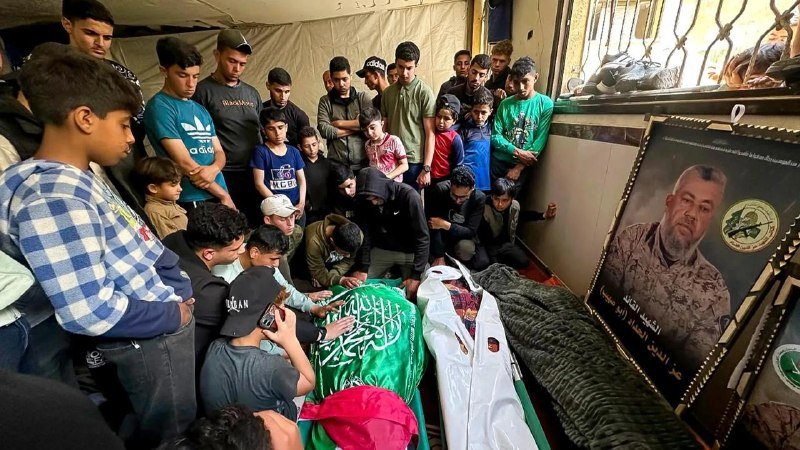
Senior Hamas official Osama Hamdan declared on 16 May 2026 that no Palestinian would accept surrender or a declaration of defeat, a day after Israeli forces killed a senior commander from the movement's military wing. The statement, delivered to Al Jazeera, came as diplomatic efforts to broker a ceasefire faced mounting strain and as Israeli ground operations continued across northern and southern Gaza.
Hamdan, a senior member of Hamas's political bureau based in Beirut, said the assassination of the commander—identified by Hamas as Ezz ad-Din al-Haddad—was carried out with the explicit aim of compelling the resistance to capitulate. "One of the objectives of the occupation in striking this commander is to put pressure on the resistance to surrender," Hamdan told Al Jazeera. He added that Israel had shown no commitment to any ceasefire proposal, including the framework advanced by the United States. "The enemy wants the resistance to surrender and has no commitment to the plan," he said.
The Assassination and Its Immediate Aftermath
The killing of al-Haddad marks the latest in a series of targeted strikes that have depleted Hamas's senior military leadership over the course of the offensive that began in October 2023. Hamas's armed wing, the Izz al-Din al-Qassam Brigades, confirmed al-Haddad's death but provided no further details on the circumstances or location of the strike. Israeli military officials have not formally commented on the operation as of this publication.
The assassination complicates ongoing ceasefire negotiations, which have stalled repeatedly over the past several months. American officials have pushed a phased framework that envisions a temporary ceasefire followed by negotiations on a permanent end to hostilities. Hamdan's explicit assertion that Israel has shown no commitment to the American plan underscores the depth of mistrust between the parties.
Hamas's Position: No Capitulation
Hamdan's remarks reflect a consistent stance maintained by Hamas throughout the conflict: the movement will not agree to terms that amount to a surrender of its military capacity or a permanent cessation of resistance. "No Palestinian will accept surrender and the declaration of defeat," the senior official said, framing the conflict as one in which the resistance commands broad popular backing.
That framing has internal coherence. Hamas officials have repeatedly argued that any deal perceived as capitulation would undermine the organisation's credibility with its base and within the broader Palestinian political landscape. What is less clear from the available sourcing is whether the movement's position reflects genuine strategic assessment or rhetorical posturing calibrated for public consumption—a distinction that matters considerably for anyone attempting to forecast whether talks will resume in any substantive form.
The Diplomatic Dimension
The Trump administration's ceasefire framework has been the dominant diplomatic vehicle for the past several months, with American envoys engaging separately with Israeli and Hamas representatives. Senior American officials have publicly expressed frustration at the pace of progress while continuing to assert that a deal remains within reach.
The assassination of a figure as senior as al-Haddad, however, resets whatever negotiating goodwill may have existed. Targeted killings of this kind are typically understood in Tel Aviv as pressure tactics designed to degrade adversary leadership and, in some cases, to force political concessions. The historical record of such operations is mixed: they can disrupt command structures, but they can also harden resistance and undermine intermediaries who might otherwise counsel compromise.
Hamas has in the past shown an ability to absorb leadership losses and maintain operational continuity, a resilience that regional analysts have attributed to the movement's distributed structure and the relative depth of its bench. Whether al-Haddad's death materially affects the movement's military capacity or its willingness to negotiate remains unknown based on current reporting.
Regional Repercussions
Turkey and Qatar—both of which have served as diplomatic interlocutors—have expressed concern in recent weeks that targeted killings are undermining the environment for talks. Iranian-backed regional groups allied with Hamas have issued statements in recent days reaffirming commitment to what they describe as the axis of resistance, though the degree to which those statements translate into material support for Hamas's battlefield posture is not verifiable from open sources.
Egypt, whose intelligence services have played a central role in backchannel negotiations, has not issued a public statement on the assassination as of late afternoon on 16 May. Egyptian officials have historically been sensitive to any outcome that might destabilise the Sinai Peninsula or produce a prolonged breakdown in negotiations that Cairo is expected to manage.
What the sources do not specify is whether the killing of al-Haddad was the product of intelligence gained through the ceasefire negotiation process itself—a concern that has surfaced periodically in reporting on earlier rounds of talks. That question, if it is ever answered authoritatively, will reshape how the current diplomatic architecture is perceived by all parties.
Monexus is covering this story from the perspective of Hamas's stated position and diplomatic reaction. Western wire reporting on Israeli military operations in Gaza is being incorporated as verification where available.
Wire provenance
This editorial synthesis draws on the following public wire/social posts:
- https://t.me/englishabuali/8472
- https://t.me/abualiexpress/9231
- https://t.me/tasnimnews_en/4521
- https://t.me/JahanTasnim/2341