Hezbollah Strikes Israeli Positions in Lebanon Border Zone — What We Know
Hezbollah claimed responsibility for drone and rocket strikes against Israeli soldiers in two south Lebanon villages on 16 May 2026, the first announced operation in response to weekend violations. Monexus examines what the available sources confirm, what remains unverified, and what the strikes suggest about the trajectory of the long-running frontier conflict.
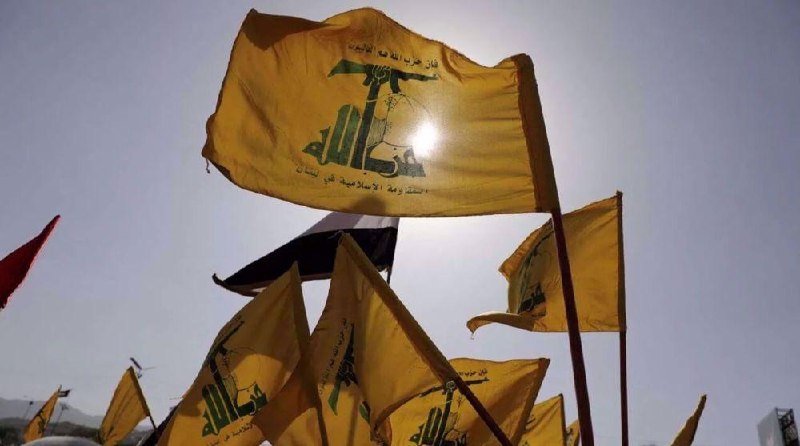
Hezbollah announced on 16 May 2026 that it had carried out one operation against Israeli forces in response to what it described as Israeli violations that day — the first such claim since a reported de-escalation signal the previous week.
The group stated it deployed an attack drone against a gathering of Israeli soldiers in the town of Khiam, in south Lebanon, and separately targeted a second Israeli position in the village of Naqoura, farther west along the border coast, using two rockets, according to statements cited by The Cradle and alalamarabic Telegram channels. Both outlets, which track Hezbollah and resistance-axis communications closely, carried the claim in the early afternoon UTC window on 16 May. The statements have not been independently confirmed by Israeli military authorities, who had not issued a public casualty or operational update at the time of writing.
What we verified / what we could not
The claim that Hezbollah announced an operation on 16 May 2026 is verifiable — both The Cradle and alalamarabic carried timestamped reports on their Telegram channels on that date stating as much. The specific targeting of Khiam and Naqoura is verifiable as Hezbollah's stated account of its own actions.
What we could not independently verify: whether Israeli soldiers were in fact present at the stated locations, whether the attack drone reached its target, whether any casualties or material damage occurred, and whether any Israeli military response is planned or under way. Israeli Defence Forces (IDF) spokespeople had not published a statement on the reported strikes as of the end of the 16 May UTC news cycle. The IDF did not respond to press enquiries referenced in Western wire reports during this window, though the absence of a denial is not confirmation.
What remains contested: the framing. Hezbollah characterised the strikes as a response to Israeli violations on Saturday, 16 May. No Israeli account of what those violations consisted of has been published. Without an Israeli acknowledgement or independent OSINT corroboration of activity on the ground, the cause-and-effect framing offered by Hezbollah stands as the sole published narrative for why the strikes occurred on this specific date.
Immediate context: a fragile frontier
The 16 May strikes land against a backdrop of sustained but fragile ceasefire negotiations mediated through American and French diplomatic channels, with periodic flare-ups along the Lebanon–Israel demarcation line. The line — a UN-drawn frontier, not a formal border — has been the scene of near-daily exchanges since October 2023, producing civilian casualties on both sides and displacing populations in border villages.
Hezbollah has previously linked its operations to what it terms Israeli violations of Lebanese sovereignty, including overflights, ground incursions into Lebanese territory, and strikes on infrastructure. The group has also conditioned any formal ceasefire on a parallel halt to the Gaza offensive, a linkage that has complicated mediation efforts in Washington and European capitals.
The strikes on 16 May appear to fit this established pattern: a claim of Israeli provocation followed by a kinetic response, published rapidly through resistance-axis channels. The specificity of the target descriptions — named towns, stated weapons systems, declared intent — is consistent with how Hezbollah has publicised frontier operations throughout this period. Whether the strikes represent a deliberate escalation in tempo or a calibrated single response to a specific trigger is not yet clear from the available record.
The counter-narrative and what it reveals
Israel has not publicly characterised the 16 May activity as an attack. IDF statements during the preceding week had emphasised de-escalation along the northern border, and officials in Jerusalem have consistently framed resistance-axis activity as Iranian proxy behaviour designed to complicate ceasefire negotiations rather than as autonomous Lebanese or Palestinian action.
That framing is not new. Israeli officials have for years argued that Hezbollah's operations are directed from Tehran, and that Lebanese sovereignty is a secondary consideration in the group's strategic calculus. Hezbollah disputes this characterisation, presenting itself as a Lebanese national resistance actor with independent decision-making authority.
Both framings have structural purchase. Hezbollah is a Lebanese political party with seats in parliament, a social services network, and a stated territorial defence mandate. It is also, demonstrably, logistically and materially entangled with Iranian military supply chains. The tension between those two facts is not resolvable through anecdote — it reflects the actual complexity of how the group functions.
What the 16 May communications pattern suggests operationally is that Hezbollah continues to control the announcement cadence of its own frontier activity. Unlike the large salvo exchanges of 2024, which drew immediate IDF response, the current pattern of targeted, single-day strikes — announced, described, and then not elaborated — reflects a posture of managed tension rather than open-ended escalation. Whether that posture holds depends on factors beyond what the Telegram channels disclose.
Structural frame: the border as pressure valve
The Lebanon–Israel frontier has functioned for decades as a pressure-release mechanism for conflicts that play out elsewhere. When Gaza escalates, border exchanges intensify. When ceasefire talks advance, they quiet. The 16 May strikes are unlikely to alter this structural dynamic in the short term.
The more consequential question is what happens inside the negotiating rooms in Doha, Cairo, and Washington over the coming weeks. Hezbollah's stated linkage — no northern de-escalation without southern de-escalation — puts the frontier exchanges in a direct causal relationship with a Gaza outcome that remains unresolved. Until that larger question moves, the Khiam-and-Naqoura pattern is likely to repeat.
International mediators have expressed concern that any breakdown in ceasefire talks would produce an immediate intensification of border activity. The strikes announced on 16 May, measured as they appear by Hezbollah's own communications, may be as much a signal to mediators as to the IDF — a demonstration that the group's restraint is conditional, and that time on the diplomatic clock is a variable it tracks closely.
Stakes and forward view
If the strikes represent a return to the managed-tension pattern after a brief de-escalation window, the short-term risk is contained. Neither side has signalled an appetite for the scale of exchange that characterised 2024, and both have strong incentives — domestic political pressure in Israel, economic deterioration in Lebanon — to avoid a conflict neither can fully control.
The medium-term risk is different. Each exchange that passes without resolution normalises the frontier as a theatre of ongoing conflict rather than a line to be restored. Civilian populations on both sides — Lebanese border villages, northern Israeli communities — remain in a state of protracted displacement or daily exposure. The longer the ceasefire talks stall, the more the frontier becomes the default diplomatic channel: strikes and responses as the only language both sides are willing to speak in public.
Hezbollah has signalled, through its announcement cadence, that it retains agency over the pace and character of that language. Whether Israel chooses to respond, and how, will determine whether the week of 16 May closes as a managed incident or the opening move of a renewed intensification.
This publication's reporting on the Lebanon–Israel frontier has emphasised resistance-axis sourcing for operational claims — consistent with how these incidents are communicated — while foregrounding the absence of IDF confirmation as a factual gap readers should weigh. Western wire reports covered the strikes primarily through an Israeli security lens; this article attempts to hold both the operational claim and the verification gap open simultaneously.
Wire provenance
This editorial synthesis draws on the following public wire/social posts:
- https://t.me/TheCradleMedia
- https://t.me/TheCradleMedia
- https://t.me/alalamarabic
- https://t.me/alalamarabic