The Houthi Narrative Trap: Why Gaza Amplifies Tehran's Regional Reach
Ansar Allah's May 16 statement revealingly conflates Palestinian suffering with its own regional ambitions. The logic reveals more about how Gaza has become a lens for every conflict in the Middle East.
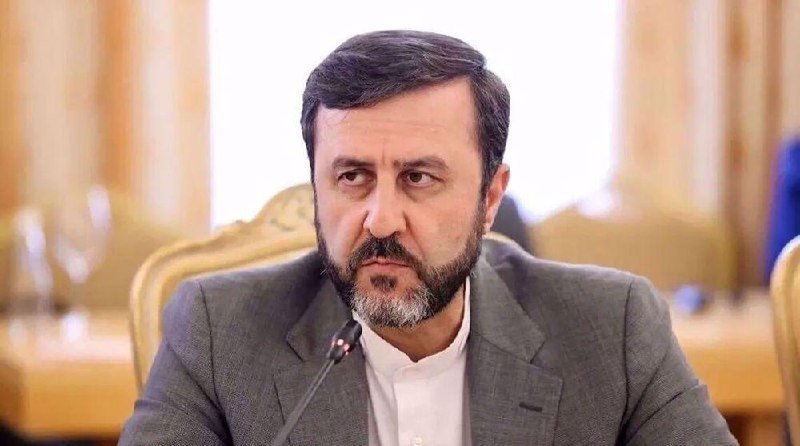
On 16 May 2026, the Political Bureau of Ansar Allah — the Houthi movement that controls much of northern Yemen — issued a series of statements charging that the "international community" and the United Nations act only when "the Zionist entity" faces danger. The statements, disseminated via the Iranian state-affiliated Al Alam Arabic channel, also condemned renewed Israeli operations in Gaza and offered condolences to Palestinian resistance fighters following the killing of Commander Izz al-Din al-Haddad.
The framing is deliberate. It positions the Houthis as defenders of a Palestinian cause the group claims the world has abandoned. What the statements actually reveal is something more structural: how the war in Gaza has become the primary lens through which every conflict in the Middle East is now refracted — by actors who benefit from that refraction.
The Resistance Vocabulary
Ansar Allah has long anchored its legitimacy in opposition to Israel and solidarity with the Palestinian people. That rhetorical commitment preceded the current Gaza war. What has changed is the international context. The destruction in Gaza since October 2023 has generated sustained global attention — protests, legal proceedings at the International Court of Justice, UN General Assembly resolutions, and an International Criminal Court arrest warrant application — that has no parallel in recent decades for a Middle Eastern conflict outside the Israeli–Palestinian frame.
The Houthis have not been passive observers of this attention. They have sought to attach themselves to it. Their ballistic missile and drone strikes on commercial vessels transiting the Red Sea — dozens of attacks since late 2023 — were explicitly framed as acts of solidarity with Gaza. The stated logic: if international shipping profits from a global order that enables Gaza's suffering, international shipping is a legitimate target.
This is not altruism. It is narrative leverage. By positioning their regional challenge to Saudi Arabia, their long-standing conflict with Israel, and their efforts to solidify control over Yemen's north under the banner of Palestinian resistance, the Houthis have imported the only conflict currently capable of generating genuine international scrutiny and transformed it into a shield against accountability for their own conduct.
Selective Outrage and Its结构性 Consequences
The Houthi statement's central claim — that the international community acts only when Israeli security is imperiled — is not unique to Ansar Allah. Versions of it circulate across Tehran, among Lebanese Hezbollah-aligned media, in parts of the Arab street, and in Global South diplomatic corridors. It is a claim grounded in pattern recognition, not conspiracy theory.
The structural reality it identifies is real: international attention to Middle Eastern crises is not distributed evenly. A war that disrupts global energy markets and threatens the Suez Canal generates more diplomatic urgency than conflicts in Sudan, Myanmar, or the Sahel that produce comparable or greater civilian casualties. The correlation between a conflict's disruption of Western interests and the volume of international response it receives is well-documented across decades of UN Security Council dynamics.
What the Houthi framing obscures is the agency's of the actors making this argument. Ansar Allah does not invoke the principle of equal concern for all civilians in the abstract. It invokes it instrumentally — to legitimise attacks on maritime commerce that have raised insurance costs, delayed shipments, and contributed to price inflation in European and Asian markets. The same logic that condemns selective Western attention to Gaza simultaneously exploits that selectivity for strategic gain.
The American Anchor and Its Discontents
The third Houthi statement from 16 May charged that "the Israeli enemy relies on open American support in continuing the aggression and disavowing pledges and covenants." This too is not a fringe analysis. The Biden administration's continued weapons transfers to Israel — despite internal dissent within the Democratic Party, formal arms pause decisions, and ongoing ceasefire negotiations — have provided a durable foundation for critics across the region and beyond.
The United States finds itself in a position where its commitment to a regional ally is generating diplomatic costs with adversaries and nominal partners alike. Washington has sought to broker a ceasefire while simultaneously maintaining the military conditions that enable Israel's operations. That incoherence is not hidden; it is cited by Ansar Allah, by Iranian officials, by Turkish and Malaysian leadership, and by a growing cohort of Global South governments who view the Gaza war as a test of whether the post-1945 international order's human rights commitments are universally applied or selectively enforced.
This does not make Ansar Allah a principled actor. The Houthis' own conduct — arbitrary detentions, restrictions on humanitarian access in territory they control, and attacks that have endangered maritime crews — sits uneasily alongside their humanitarian framing. But the incoherence of American policy does provide the structural preconditions for that framing to resonate beyond its natural audience.
What the Statements Actually Signal
Ansar Allah's May 16 statements are not primarily communications with the international community. They are communications with regional audiences, with constituencies inside Yemen, and with the Iranian axis that has provided the movement with missiles, drones, intelligence support, and diplomatic cover. The specific targets — commanders killed in Gaza, renewed Israeli operations, American backing for those operations — are calibrated to reinforce the axis narrative that the struggle is unified, that one front's battle is every front's battle.
This has material consequences. It raises the political cost of any independent Saudi or Emirati engagement with the Houthis, because such engagement can be portrayed as capitulation to an enemy targeting Palestinian civilians. It complicates UN Special Envoy Hans Grundberg's efforts to advance any political process that does not explicitly link Yemen to Gaza. And it positions Ansar Allah to extract concessions — recognition, the lifting of movement restrictions, economic relief — in exchange for de-escalation commitments that can be framed as solidarity gestures rather than compromises.
The Houthi statements from 16 May deserve scrutiny not because they are uniquely cynical — cynicism is standard currency in regional conflict framing — but because they are effective. They succeed in inserting the Gaza context into every diplomatic equation in which the Houthis appear. That insertion is a strategic asset worth more than the statements' rhetorical content.
What remains unresolved, and what the sources do not fully illuminate, is whether the internal pressures on Ansar Allah — economic deterioration in Houthi-controlled areas, internal dissent, the movement's dependence on Iranian patronage — are beginning to constrain or accelerate its regional adventurism. The statements are posture, not evidence of capacity. The gap between the two is where serious analysis must operate.
This desk chose to report Ansar Allah's framing without treating it as news in itself — the statements are publicly available propaganda. The structural analysis of how Gaza reshapes regional diplomatic equations reflects this publication's assessment of the pattern the statements illustrate, not an endorsement of the messenger.
Wire provenance
This editorial synthesis draws on the following public wire/social posts:
- https://t.me/alalamarabic/78942
- https://t.me/alalamarabic/78943
- https://t.me/alalamarabic/78944