Iran's Diplomatic Pivot to BRICS Is Real — but the Club Itself Is Still Learning to Walk
Tehran's foreign minister flew to New Delhi to attend a BRICS summit, framing it as a bid to restore the bloc's credibility. The ambition is genuine. The delivery mechanism remains deeply uncertain.
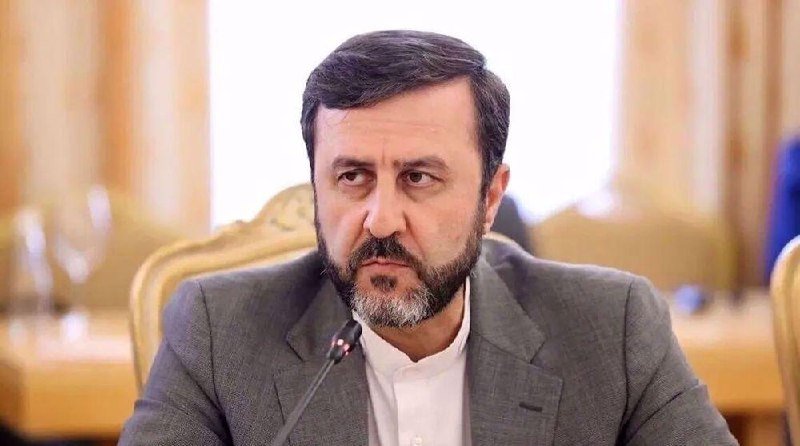
When Seyyed Abbas Araghchi touched down in New Delhi in mid-May 2026, he did not arrive empty-handed. The Iranian foreign minister carried a message for a roomful of counterparts from the world's most ambitious informal club: BRICS, he argued, had the latent capacity to rebuild something the current order had broken — trust. The framing was deliberate, the venue calculated, and the urgency unmistakable.
That urgency deserves scrutiny. Tehran has spent years navigating a web of Western sanctions that has progressively severed its access to SWIFT, dollar-denominated trade, and conventional diplomatic channels. A pivot toward a BRICS-mediated alternative is not a rhetorical flourish — it is structural necessity for a government that has watched its oil revenues collapse and its banking correspondent relationships evaporate. Araghchi's appearance in India, then, is less a charm offensive than a survival strategy dressed in the language of multilateralism.
The question is whether the vehicle can carry the load Tehran is loading onto it.
The sanctions-weary logic
Iran's courtship of BRICS is rooted in a calculation that no longer feels theoretical. The Islamic Republic has watched successive rounds of US and EU sanctions tighten around its energy sector, its central bank, and its shipping networks. The nuclear Joint Comprehensive Plan of Action, which once offered a sliver of legitimate commerce, collapsed under the weight of maximum-pressure campaigns. What remains is a bilateral trade architecture built increasingly on yuan-denominated oil contracts, rupee-rial exchange mechanisms with India, and a growing web of barter arrangements that bypass the dollar entirely.
BRICS, in this framing, is less a political movement than a functional workaround — a club of states willing to transact outside the systems that have been weaponized against Iran. The bloc's expanding membership, which now includes Saudi Arabia, the UAE, Egypt, Ethiopia, and a handful of other Global South economies, represents precisely the kind of alternative trade ecosystem Tehran needs. Araghchi's argument in New Delhi was not abstract: he was asking a room full of potential trading partners to treat BRICS as a credible platform, not a talking shop.
BRICS as counter-architecture — the structural claim
The appeal of BRICS as an alternative financial architecture is well-documented, but its institutional delivery remains lagging. The New Development Bank, the BRICS Payment System working group, and various proposals for a common settlement currency have all advanced incrementally without achieving the kind of transaction-level integration that would allow a sanctions-targeted state to reroute its commerce at scale. There is a meaningful gap between the aspirational rhetoric of a "multipolar financial order" and the actual plumbing of a BRICS-based settlement system that Iranian exporters could use to get paid reliably.
This is where Araghchi's framing — that BRICS must be activated to "restore credibility" — is most revealing. The admission that credibility itself is in question is a significant tell. A bloc with genuine market depth and settlement infrastructure would not need to frame its work as a restoration project. The fact that Iran is making this argument to its BRICS partners, rather than presenting them with a fait accompli, suggests the structural alternatives Tehran needs are not yet fully operational.
What Delhi brings to the table
India's role in this calculus is not passive. New Delhi has its own history of navigating US sanctions pressure — particularly regarding Russian crude purchases — and has demonstrated a willingness to use national currency settlement mechanisms when the diplomatic temperature rises. For India, hosting Araghchi and positioning itself as a BRICS convener serves multiple interests simultaneously: it burnishes Delhi's credentials as a Global South leader, provides cover for its ongoing energy relationship with Iran, and reinforces a broader foreign policy that resists being boxed into a Washington-centric framework.
This is not altruism. India has quietly maintained its oil trade with Iran through various sanction cycles, using rupee-rial mechanisms and creative banking arrangements to keep the relationship above the SWIFT line. A stronger BRICS architecture that includes reliable settlement options would make that trade cleaner and more defensible for New Delhi. The convergence of Iranian necessity and Indian self-interest is not incidental — it is the operating logic of the bloc.
The credibility gap that remains
The honest observation — and Araghchi's own framing concedes it — is that BRICS has not yet demonstrated the institutional capacity to be what Tehran needs it to be. The bloc's members have divergent interests, different relationships with Western financial systems, and no shared consensus on how to operationalize a currency alternative at transaction scale. Saudi Arabia and the UAE, for instance, maintain deep ties to dollar-denominated trade that they are unlikely to sever quickly, regardless of BRICS declarations.
The sources do not indicate what specific agreements Araghchi reached in New Delhi, what commitments India or other BRICS members made regarding settlement mechanisms, or whether the bloc's working groups on financial architecture advanced beyond prior position papers. That gap matters. A photo opportunity is not a payment system. A communique is not correspondent banking access.
Tehran's diplomats are not naive about this. The Instagram caption framing BRICS as an instrument to "restore trust" reads more as an internal pitch to skeptical bloc members than a claim to have already achieved that restoration. The question is whether the bloc's institutional development can move fast enough to meet Tehran's structural need — before the next round of sanctions designations further narrows the alternatives.
Stakes and what comes next
If BRICS delivers on its institutional ambitions — a real settlement layer, operationalized currency swaps, correspondent relationships among member central banks — then Araghchi's trip will have been a genuine strategic hedge. If the bloc stalls at the level of communiques and photo summits, Iran will find itself more isolated than the diplomatic theater suggests. The costs of that scenario are not abstract: reduced oil revenue, further erosion of banking access, and greater dependence on opaque bilateral arrangements that carry their own fragility.
For the United States and its partners, the signal from New Delhi is also worth reading carefully. India hosting Iranian diplomacy within a BRICS framework is not a coincidence of logistics — it is a statement about where a significant emerging power sees its long-term interests lying. The dollar-centric order has not been displaced. But it is being systematically hedged against, and the pace of that hedging warrants closer attention than the official summits suggest.
Wire provenance
This editorial synthesis draws on the following public wire/social posts:
- https://t.me/presstv/145678
- https://t.me/JahanTasnim/892341