Ceasefire in Name Only: The Numbers Washington Won't Cite
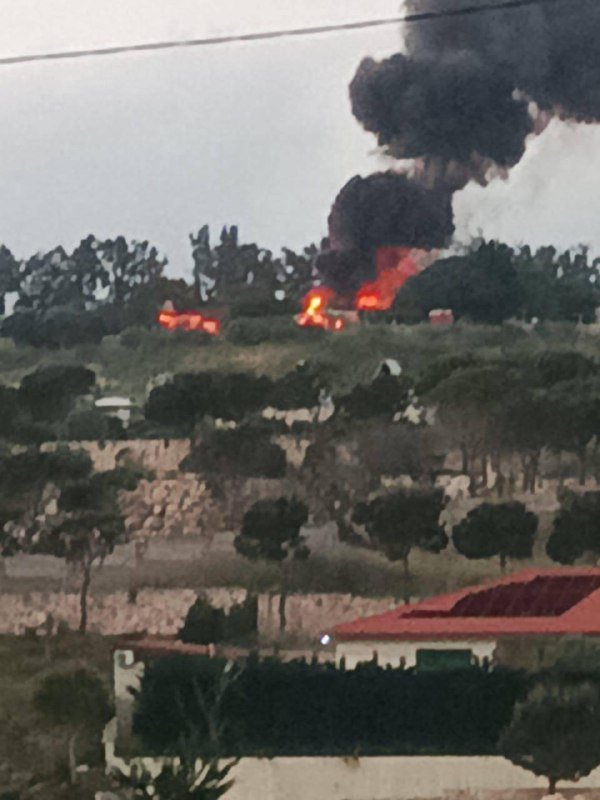
On 16 May 2026, Lebanese authorities reported six people killed in an Israeli strike — the same day the United States announced a ceasefire extension with Beirut. The juxtaposition would be farcical if the dead were statistics rather than people. According to reporting by The Cradle Media, Israeli attacks since the original truce have claimed nearly 3,000 Lebanese lives. The BBC confirmed that President Trump announced the agreement last month, yet both Israel and Hezbollah have continued exchanging fire throughout the period the deal was meant to hold.
This is what diplomatic language produces when the gap between announcement and reality grows too wide to paper over. An extension, by definition, implies the original arrangement was functional. It was not. Calling this a ceasefire — even with the qualifier — insults the families of the dead and rewards the logic that produced them.
The Translation Problem
American diplomatic communication operates in a register that has very little to do with what people on the ground experience. "Ceasefire extension" signals to Washington audiences that a crisis is being managed. It signals to Israeli audiences that operational latitude remains intact. It signals to Lebanese audiences that the international community is watching, which is not the same as protecting.
The word "ceasefire" itself carries an implied contract: all parties stop, the killing ends, civilians sleep without hearing drones. When that contract is violated systematically — as The Cradle's reporting makes clear it has been — the word stops meaning what it claims. You get what diplomats call a "technical extension" and everyone else calls a fiction.
Coverage routinely defers to the language of official spokespeople. The State Department announces an extension. The White House frames it as progress. The language enters the wire as fact, and the human cost of the gap between language and reality becomes background noise. That background noise is, by the most recent accounts, nearly three thousand people.
Who Benefits From the Label
There is a structural reason the ceasefire label persists even when the substance does not. Every party to this arrangement has an interest in appearing to pursue peace while continuing the work of war. Washington can tell Congress it is protecting its regional ally and its diplomatic credibility simultaneously. Tel Aviv maintains operational tempo under the cover of an agreement it never genuinely intended to honour in full. Hezbollah preserves the narrative of resistance without bearing the full cost of full-scale conflict.
Lebanon gets the dead.
This is not a bilateral dysfunction. It is a multilateral convenience, and Lebanese civilians are paying the subscription. The ceasefire architecture, such as it exists, was never built around Lebanese interests. It was assembled between Washington and Tel Aviv, with Beirut's consent extracted under duress. That is not a peace process. It is a containment mechanism with a humanitarian fig leaf.
The six people killed on 16 May — confirmed by the BBC — are not anomalies. They are the expected output of a framework designed to manage conflict, not resolve it. The number will rise. The extensions will continue. The language will stay the same.
The Multipolar Counter-Argument
There is a version of this critique that reads as anti-American — the familiar argument that US diplomacy is cynical by design. That reading is too simple and too comfortable. The more uncomfortable point is structural: Washington is not uniquely cynical here. Every great power manages conflict through managed language. The frameworks produced by BRICS-aligned mediation, by Chinese-brokered ceasefires elsewhere, by Russian-negotiated pauses — they all carry the same essential logic. The party with the most leverage sets the terms. The party with the least leverage absorbs the cost.
What distinguishes the US position is not its cynicism but its reach. American diplomatic announcements travel faster, land with more weight in Western media, and shape the terms of reference for coverage that then cycles globally. When the State Department calls something a ceasefire extension, that framing reaches every newsroom on earth within hours. The three thousand dead in Lebanon arrive as a statistic in paragraph four, if they arrive at all.
This is not a conspiracy. It is the ordinary operation of soft power through language, and it works precisely because it is ordinary — because it is the expected form, and deviation from the expected form reads as eccentricity or hostility. Challenging the ceasefire label is not hostile. It is accurate.
What Resolution Actually Requires
The honest assessment is that nothing currently on the table resolves this conflict. A ceasefire that kills six people on its own extension day is not a mechanism for peace. It is a pause in paperwork. The conditions that produced the original hostilities — disputed territory, Lebanese state fragility, Israeli security demands treated as non-negotiable — remain intact. They have not been addressed. They will not be addressed by language that avoids naming them.
If the international community — and specifically the United States, which holds the most leverage over Tel Aviv — genuinely intends to stop the killing, the announcement format must change. Specific, verified, enforced commitments rather than aspirational language. Consequences for violations rather than quiet acceptance as the price of keeping parties at the table. A process that includes Lebanese civilian protection as a first-order objective, not an afterthought.
None of that serves the current electoral or diplomatic interests of the actors involved. That is precisely the problem. The ceasefire survives because it is useful, not because it works. Nearly three thousand Lebanese dead is what "useful" looks like on the ground. The next extension is presumably already being drafted.
Monexus is covering the Lebanon ceasefire extension as a diplomatic story rather than a conflict-of-interest story, consistent with our approach to coverage of active hostilities. The civilian death toll and the discrepancy between diplomatic language and verified ground conditions are editorial facts, not political positions.
Wire provenance
This editorial synthesis draws on the following public wire/social posts:
- https://t.me/TheCradleMedia/12487
- https://t.me/thecradlemedia/12488
- https://t.me/BBCWorldoffl/9182