Musk vs Altman: What the OpenAI Trial Reveals About the AI Industry's Governance Crisis
A San Francisco jury now deciding whether Elon Musk's allegations against Sam Altman have merit has surfaced deeper questions about how the world's most powerful AI companies are structured, funded, and governed.
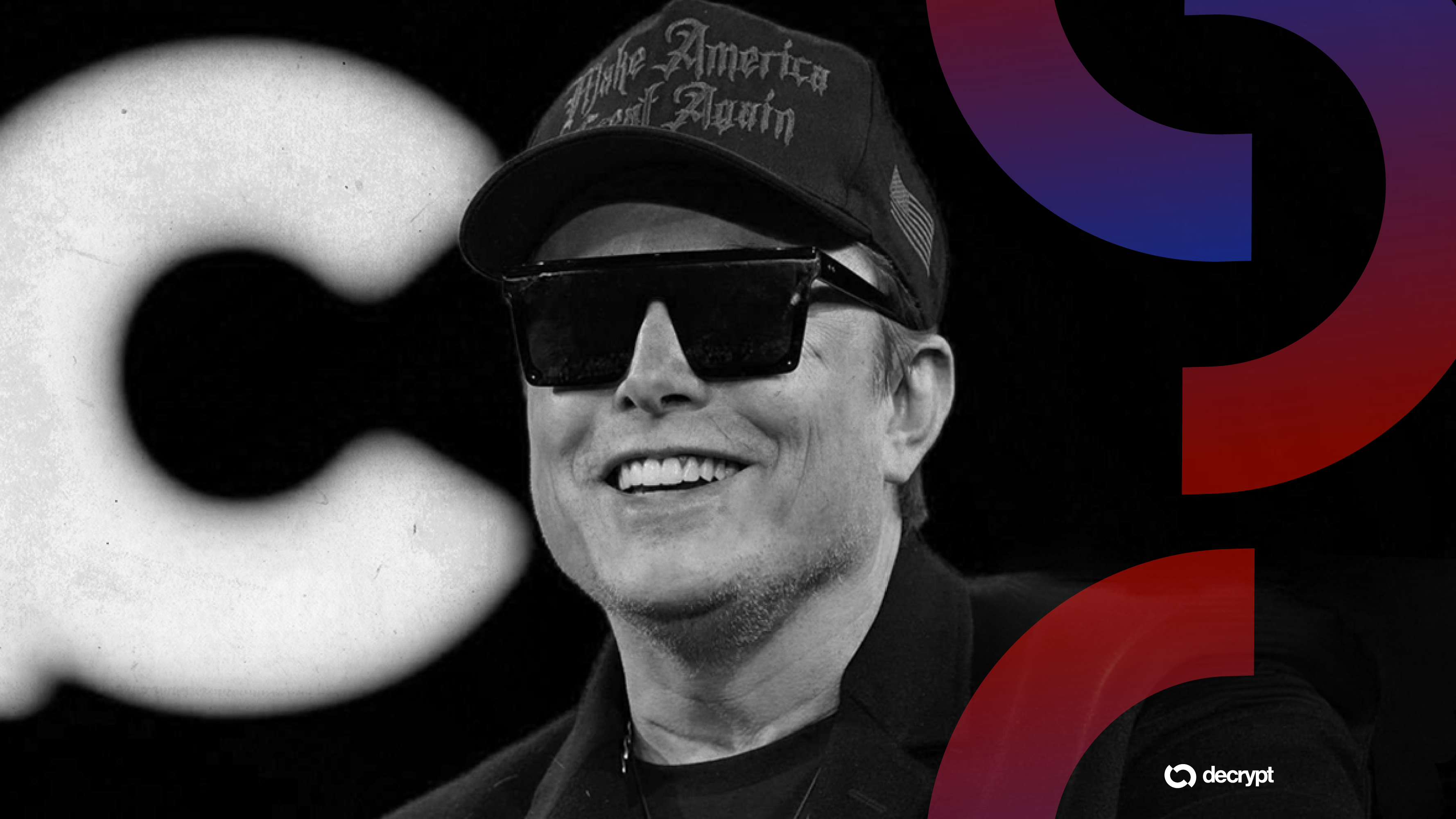
The courtroom where Elon Musk's lawsuit against OpenAI and its co-founders is being heard could scarcely contain the stakes involved. Nine jurors, empaneled in a San Francisco federal court on 16 May 2026, are now tasked with deciding whether Sam Altman and other OpenAI principals breached founding agreements that the company's mission would remain charitable and open. For Musk, who helped create OpenAI in 2015 and donated tens of millions of dollars before walking away in 2018, the case is about the betrayal of a stated mission. For Altman, who has run OpenAI into a commercial juggernaut with Microsoft's backing and a proposed restructuring that would reward investors before charity, the case is an existential threat to a company now valued at roughly $300 billion.
The core allegation is not subtle. Musk contends that OpenAI's leadership made a deliberate pivot away from its non-profit founding documents and toward a for-profit structure that enriches insiders at the expense of the public-benefit mission that justified its tax-exempt status. The trial, expected to run for several weeks, will examine internal communications, board deliberations, and the specific agreements that governed OpenAI's earliest years. What is at stake extends well beyond the personal animus between two of Silicon Valley's most prominent figures.
The Mission That Changed
OpenAI was established in December 2015 as a non-profit research laboratory. Musk, Altman, Greg Brockman, and several others signed a founding charter promising that the organisation would prioritised humanity's long-term safety over commercial interests. The idea was that an AGI built under such constraints would be developed responsibly, with benefits distributed broadly rather than captured by shareholders. That framing has since been strained repeatedly.
When OpenAI created a capped-profit subsidiary in 2019 to attract capital, the arrangement was marketed as necessary to compete with Google and Meta in the race to build large language models. Microsoft invested $13 billion, then another $20 billion, and OpenAI's commercial operations expanded rapidly. The for-profit entity now employs the vast majority of the company's workforce and generates the revenue that sustains its research. The non-profit parent board, nominally still in control, has found itself repeatedly outmanoeuvred by the commercial pressures its subsidiary generates.
Musk's legal team has argued that this arrangement violates the original charter's commitment to remain a "humanity-serving" entity rather than an investor-serving one. The courtroom drama has surfaced internal debates about whether OpenAI's board ever genuinely controlled the company or whether the commercial subsidiary, backed by Microsoft's capital, effectively ran the organisation with limited oversight from the non-profit structure above it. Three board members who had raised safety concerns — including Ilya Sutskever — have already departed.
The For-Profit Pivot
What makes this case unusually significant is not the personal drama between Musk and Altman, though that drama is considerable. The legal outcome will determine whether the for-profit restructuring OpenAI announced in late 2024 — a plan that would convert the company into a public benefit corporation with equity awards for employees and a path for investors to liquidate holdings — is permissible under the agreements Musk signed a decade ago. A Delaware judge previously dismissed several claims, but a breach-of-contract claim and a claim related to unjust enrichment survived to reach the jury.
The commercial pressures driving OpenAI's transformation are not unique to that company. Anthropic, Cohere, Mistral, and dozens of other AI developers have faced the same structural tension: frontier model training costs hundreds of millions of dollars per cycle, investors expect returns, and the non-profit form is poorly suited to delivering them. Anthropic adopted a hybrid structure from the outset. Several European AI companies have explored similar arrangements. The governance question — how to build powerful AI systems while maintaining meaningful accountability — is industry-wide, and the San Francisco jury's decision will set a precedent that other companies are watching closely.
The broader context is a regulatory environment still catching up to the pace of development. The EU AI Act, which entered into force in August 2024, requires high-risk AI systems to meet transparency and safety requirements, but does not directly address the corporate governance structures that determine who controls powerful AI systems. The US has moved more slowly, with executive orders and NIST guidelines creating frameworks but not binding legal obligations for frontier AI developers. In that vacuum, the internal documents and founding agreements that governed companies like OpenAI become the primary mechanism for accountability — which makes the courtroom proceedings more consequential than they might initially appear.
What the Trial Surfaces About Power
Silicon Valley's AI sector has evolved from a research community into a geopolitical asset class. Governments are building frameworks around it, alliances are forming around AI governance standards, and the companies themselves are making decisions that affect national competitiveness, labour markets, and information ecosystems. The concentration of frontier AI capability in a handful of private companies — most of them American, most of them controlled by a small group of founding executives — reflects a structure that has no precedent in industrial history. There is no public utility framework, no international body with binding authority, and no antitrust regime designed for a technology whose competitive dynamics favour scale to an extraordinary degree.
Musk's lawsuit, whatever its outcome, surfaces a question that the industry has largely avoided: what accountability mechanisms exist when the people building the most powerful AI systems are also the people who set the terms of their own oversight? The OpenAI board, even before the departures, was small, composed largely of individuals with financial or reputational ties to the company, and operating under a governance structure that many corporate law scholars have described as unusually opaque. Microsoft's position — as a dominant investor, a cloud provider, and a commercial partner with its own AI ambitions — created conflicts of interest that the board was not well positioned to manage.
The trial record will include testimony and documents that illuminate how those decisions were made, who was consulted, and who was excluded from deliberations. That record will be useful not only to the jury deciding Musk's claims but to policymakers, regulators, and competitors attempting to understand how frontier AI governance actually functions in practice. The question is not simply whether OpenAI breached a contract with Musk — it is what the contract reveals about how the most consequential companies in the world make decisions.
The Stakes Beyond the Courtroom
The jury will decide specific claims under specific legal standards. But the broader implications extend further. If the court finds that OpenAI's restructuring violated founding agreements, it creates precedent for similar challenges to other hybrid entities in the AI sector. If the court finds in OpenAI's favour, the for-profit transformation path becomes more navigable, potentially accelerating consolidation as smaller companies seek the investor protections that a for-profit structure provides.
For policymakers, the trial offers a case study in governance gaps. The companies building frontier AI systems are making decisions about their structure in a legal environment that was not designed for the specific challenges that software-based, capital-intensive, mission-critical technology presents. The question of who controls OpenAI — and whether that control serves public interests — is ultimately a question about the adequacy of existing institutional frameworks for technology governance. Courts decide individual disputes. The structural question of whether democratic societies have adequate mechanisms to hold AI developers accountable is one the trial cannot answer.
The nine jurors in San Francisco will not resolve that larger question. But the evidence they hear — the board minutes, the internal debates, the specific decisions that led from a non-profit research lab to a $300 billion commercial enterprise — will make it more difficult to pretend that AI governance is simply a technical matter for engineers and investors to handle privately.
Monexus coverage of the OpenAI trial foregrounds the governance structures that the wire services treated as background context. The business press framed Musk's lawsuit as a personal feud; this piece traces the structural questions that the lawsuit surfaces.