The Southern Lebanon Front Nobody Wants to Cover
Three separate incidents along Lebanon's southern border on 16 May 2026 received minimal wire traction — a pattern that reveals more about Western editorial priorities than about the dangers facing Lebanese civilians.
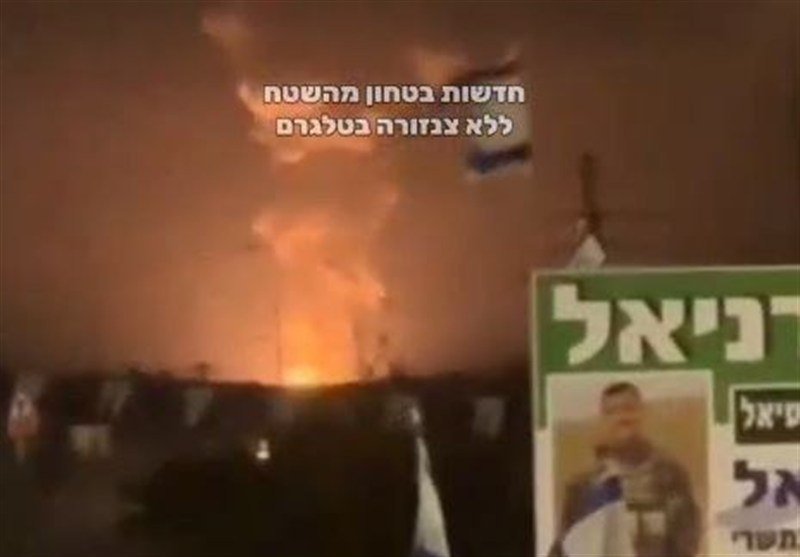
On a single afternoon in mid-May 2026, Israeli aircraft struck three separate locations across southern Lebanon. The town of Tirdaba was hit by warplanes at 15:04 UTC. Forty minutes later, the outskirts of Tyre — a city of considerable historic and cultural weight — found itself in the blast radius of another strike. By 16:10 UTC, Lebanese territory near Bayada had been targeted as well. Three incidents. One afternoon. Largely absent from the leading sections of Western news platforms.
That disparity is not accidental.
The geography of indifference
Western wire coverage of Middle Eastern conflict follows a discernible logic. Strikes in Gaza generate 24-hour rolling coverage. Strikes in Lebanon, when they do not produce immediate footage of mass casualties, tend to surface in longer-form analysis pieces — if they surface at all. The threshold for attention appears calibrated not to the fact of violence but to its spectacle value, a calculation that says more about editorial economics than about the human stakes on the ground.
The communities of southern Lebanon are not unfamiliar with this calculus. Tirdaba, Tyre's outskirts, Bayada — these are not unnamed coordinates. They are towns where people sleep, send children to school, and maintain the intricate social fabric of a region that has absorbed repeated incursions across decades. That they can be struck in sequence on a single day and not anchor a single Breaking Alert on major English-language platforms is a function of bandwidth, not of consequence.
What the resistance framing obscures
Iranian state media's framing of the same incidents — calling the Bayada action a "resistance" targeting of Israeli army positions — requires the same scrutiny as any official spokesperson's language. The term "resistance" is not neutral. It carries strategic and ideological weight, positioning actors as legitimate combatants rather than militia forces operating from civilian-adjacent territory. Neither characterization is complete.
The relevant fact is that southern Lebanon has functioned as a secondary front in an ongoing regional confrontation, with actors on multiple sides conducting operations that carry risk for non-combatant populations. To frame this as a story of heroes and villains — whether through the lens of "Israeli defense" or "Arab resistance" — is to simplify what is structurally a multi-party deterrence collapse in slow motion.
The structural silence
Coverage of the Lebanese-Israeli border operates in a peculiar middle ground. It is too active for the story to be considered closed, as Gaza coverage sometimes implies. But it is not dramatic enough — in the narrow, viewership-driven sense of that word — to command sustained wire attention. The result is reactive journalism: a strike happens, a Telegram post circulates, wire services may carry a brief item, and the cycle moves on without the contextual scaffolding that readers outside the region require to understand what they are looking at.
That scaffolding matters. Without it, the public in Western capitals receives a fragmentary picture: occasional strikes, no clear narrative arc, no obvious resolution. The implicit message is that this conflict is static, contained, and not worth their sustained attention. Each of those assumptions is contestable.
Stakes that do not announce themselves
What the 16 May incidents represent is not a new outbreak of violence but a continuation of a pattern that has defined the Lebanese-Israeli border for years: tit-for-tat operations, strikes calibrated below the threshold of full escalation, and a civilian population in southern Lebanon that absorbs the residual risk of a confrontation between actors who have not formally been at war since 2006. The lack of a ceasefire architecture with enforcement mechanisms means these incidents recur without resolution.
For Lebanon, the stakes are immediate: communities in the south face ongoing destruction of infrastructure, displacement, and the psychological toll of living under regular aerial surveillance and periodic strikes. For Israel, the operational calculation is about neutralizing perceived threats before they materialize — a logic that produces strikes whose targets may be legitimate military objectives but whose effects rarely stay within the boundaries those objectives imply. For the wider region, each incident adds friction to diplomatic efforts that are already navigating severe headwinds.
The afternoon of 16 May 2026 produced three strikes, three Telegram posts, and minimal wire follow-through. The people of Tirdaba, Tyre's outskirts, and Bayada woke up the next morning to the same uncertainty that has defined their lives for years. Whether Western audiences ever learn the names of these towns is, ultimately, a question about editorial choices — and the reasons those choices are made deserve at least as much scrutiny as the strikes themselves.
This publication's coverage prioritizes incidents across the Middle East equally by civilian impact, not by spectacle threshold.
Wire provenance
This editorial synthesis draws on the following public wire/social posts:
- https://t.me/alalamarabic
- https://t.me/wfwitness
- https://t.me/alalamarabic