Tehran Calls for 'Reason' as Washington Labels Its Response Unacceptable
Iran's Foreign Minister appeals for rational dialogue while US officials publicly dismiss Tehran's response as unacceptable — yet American intermediaries are reportedly back in the channel. The disconnect between public posture and private messaging defines a negotiating posture neither side seems willing to abandon.
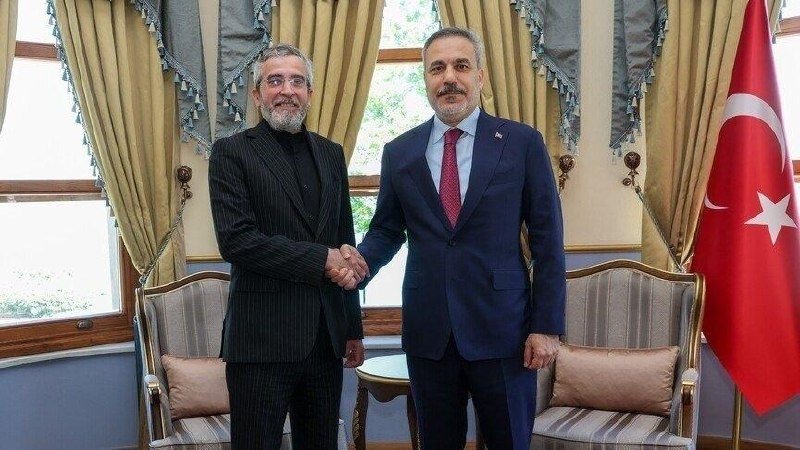
On 16 May 2026, Iranian Foreign Minister Abbas Araqchi went on a Syrian-state-affiliated Arabic-language channel and said what a senior Iranian official says in almost exactly these circumstances: he expressed the hope that "reason and logic will return to the White House." The phrasing is formulaic by now — part of the ritualised vocabulary both capitals deploy when talks sour. What is less routine is what Araqchi said next. According to posts on the same Telegram channel, he described how, hours earlier, the Americans had sent messages to Tehran expressing their desire for continued engagement. The public dismissal and the private outreach had arrived within the same 24-hour window.
This publication reads that sequence as the most recent data point in a pattern that is structural, not incidental. Neither Washington nor Tehran wants to be seen doing the deal. Both sides, for entirely separate domestic reasons, need the other side to be the unreasonable party. Araqchi's public appeal for rationality is addressed as much to his own hardliners as to the administration in Washington. The American characterisation of Iran's response as unacceptable performs a similar function on the other side — a signal to regional allies and domestic constituencies that no capitulation has occurred, that the pressure posture holds. The fact that the messages keep flowing through intermediaries is treated as corroboration of the pressure thesis rather than evidence of its limits.
The Shape of the Standoff
The immediate context is a familiar grind: Washington issues a set of demands framed as non-negotiable; Tehran responds with a counter-proposal framed as reasonable flexibility; Washington rejects the counter-proposal, sometimes in carefully calibrated language, sometimes not. The current exchange appears to have followed this arc. Araqchi described a sequence in which Trump called Iran's response unacceptable, and then American interlocutors reached out to convey something different — a desire to continue, a willingness to stay in the channel. Whether those messages contained new proposals, restatements of the original demands, or simply a request for patience is not clear from the sourcing available to this publication.
What is clear is that the cycle has not broken. The absence of a complete rupture matters. In negotiations between parties that have no formal diplomatic relations, no established precedents of trust, and fundamentally opposed interests in the regional sphere, the maintenance of a back-channel is itself a substantive act. It means neither side has concluded that the other is acting in bad faith. That threshold — not goodwill, not agreement, simply the continued willingness to talk — is what the public language obscures.
What the Posture Costs
There is a real argument that the theatrical dimension of this exchange is not merely decorative. When senior officials in Washington dismiss Iranian responses as unacceptable, they are not only communicating with Tehran. They are communicating with the Gulf states, with Israel, with a US Congress that has historically imposed automatic sanctions sunsets on any Iran deal, and with an American electorate whose exposure to Iran coverage runs almost entirely through the frame of regional rivalry. The cost of appearing flexible is real and measurable in political terms. The cost of appearing inflexible — of being the party that walked away — is harder to price but not zero.
Tehran faces a parallel calculation. The Islamic Republic's negotiating team has never had a unified mandate; the range of actors with veto power over any agreement runs from the Supreme Leader's office through the Revolutionary Guard to the parliamentary foreign policy committee. A public American dismissal gives each of those constituencies something to point to. It reinforces the thesis that Washington is not a serious negotiating partner, that the pressure campaign is the real policy and diplomacy is cover for it. That framing has domestic utility even if it forecloses diplomatic progress.
The Structural Trap
What this publication identifies as the structural dimension is the feedback loop between public posture and domestic politics on both sides. American hardliners — and they are present in significant numbers across both parties — view any Iranian diplomatic success as a failure of the maximum pressure campaign. Tehran's hardliners view any American diplomatic opening as evidence that the pressure is working and should be intensified. Each side's most conservative constituency reinforces the other side's most conservative constituency. The result is that negotiators on both ends find themselves with very narrow bands of acceptable compromise, and those bands may not overlap.
The question is whether the intermediaries who carry the private messages can bridge that gap. In previous rounds — the JCPOA negotiations of 2013-2015, the Vienna talks of 2021-2022 — the answer ultimately was yes, but only after years of shuttle diplomacy, near-collapses, and moments when the back-channel was the only thing keeping the process alive. What is different now is the volatility of the American interlocutor. A president who describes his own negotiating team's work as unacceptable, and then sends intermediaries to continue talking, creates a signal ambiguity that is genuinely difficult to manage from Tehran's side.
What Remains Uncertain
The Telegram posts do not specify the content of the American messages Araqchi described, nor do they indicate whether Tehran has responded. The framing of the Iranian statements — released through a Syrian-state-affiliated outlet — carries its own editorial intent and should be read as a positioning move as much as a factual account. It is possible, and perhaps likely, that the release was coordinated to reach both American audiences and the domestic Iranian constituency before the next round of public exchanges. This publication has no independent confirmation of the American messages from a US or Western-wire source. That gap in the sourcing ledger is worth flagging.
What can be said with the evidence available is that the pattern persists: public rejection, private outreach, a gap between the voice that speaks to cameras and the voice that speaks to intermediaries. Whether that gap is a negotiating technique, a structural consequence of the two systems, or simply the normal noise of adversarial diplomacy is a question the available evidence does not resolve. The one thing the evidence does not support is the reading that either side has given up on the channel entirely. Araqchi's hope for reason in the White House is performative. So, apparently, is Washington's rejection. Neither word is final.
The Al Alam Arabic Telegram posts — from the same channel, separated by minutes on the morning of 16 May 2026 — carry Iranian government framing and should be read as such. Monexus presents them here as the primary source for Araqchi's statements without independently corroborating the American-side descriptions from a Western or US-government adjacent outlet. Where reporting permits, this publication will continue to track the back-channel for factual substance beneath the diplomatic theatre.
Wire provenance
This editorial synthesis draws on the following public wire/social posts:
- https://t.me/alalamarabic/
- https://t.me/alalamarabic/
- https://t.me/alalamarabic/