The Blast Nobody Is Allowed to See
When an explosion rocks a populated area and emergency crews are barred from the scene, the gap between official framing and on-the-ground reality tells its own story. Beit Shemesh on 16 May 2026 is a case study in opacity masquerading as security.
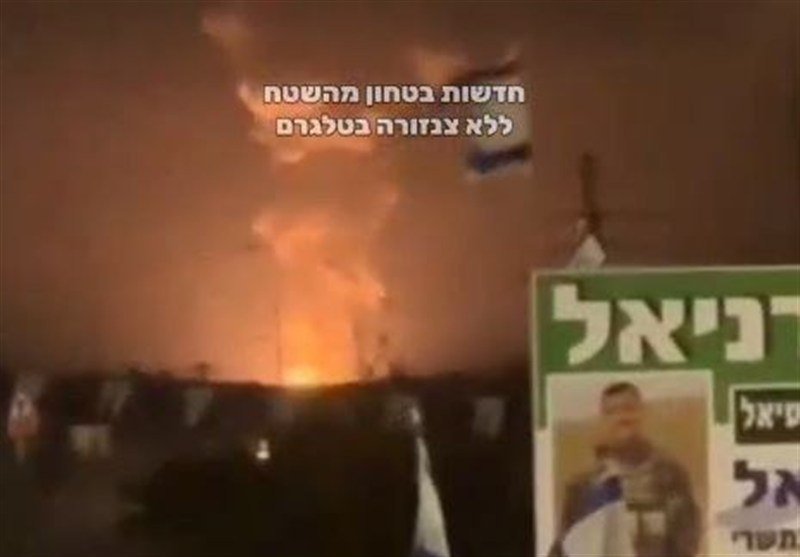
At 20:07 UTC on 16 May 2026, multiple Telegram channels carried the same fragmentary report: a large explosion near Beit Shemesh, a city of roughly 100,000 people in central Israel, followed by a bright flash and a fireball visible across the Judean hills. Fire and rescue services were not permitted to approach the site. By 20:15 UTC, the dominant framing had shifted — it was a "controlled explosion," according to updates from the same channels. The official translation moved fast enough to seem choreographed.
That sequencing is the story.
What the channels reported — and what they buried
The Telegram posts from WF Witness and the Middle East Spectator on the evening of 16 May described an event that, in any other democratic society, would generate a press conference within the hour. Instead, the information ecosystem produced two competing framings in the space of fifteen minutes: first a mystery explosion in a populated corridor between Jerusalem and Tel Aviv, then a sanitised rewrite. The shift from "massive explosion" to "controlled explosion" is not incidental. It recasts the event from something that happened to the public — a blast requiring an emergency response — into something done for them, by an authority acting within its mandate.
The sources do not identify which agency ordered the access restriction. They do not state the nature of the target or facility involved. They do not specify whether any injuries or structural damage occurred off-site, what radius the emergency exclusion zone covered, or what legal authority was cited for blocking medical and rescue personnel from a civilian zone. These are not rhetorical questions. They are the questions a reader in Beit Shemesh, or a parent whose child attends school nearby, would ask first.
The problem with instantaneous re-framing
Military and security establishments have always managed information during operations. What has changed — and what is worth examining without recourse to any particular theoretical lens — is the velocity at which an event can be re-narrated through social channels designed to look like independent reporting. A "controlled explosion" framing does not emerge spontaneously from a chaotic incident scene. It requires either prior knowledge that the event would occur, or rapid coordination between operational command and the information apparatus that feeds these Telegram channels.
Neither possibility is flattering to the transparency premise. If the channels knew in advance, the initial "massive explosion" framing was either a deliberate misdirection or an operational failure of messaging coordination. If they did not know, the re-framing was fast enough to suggest embedded access rather than independent observation. Either reading points in the same direction: the channels reporting from the scene are not at arm's length from the operation.
Military communications and the public trust contract
Israel's security apparatus operates under unusually permissive conditions when it comes to what it owes the public in the way of disclosure. The operational logic is real: sensitive sites, counter-terrorism operations, and infrastructure associated with the nuclear programme occasionally require that even nearby residents learn about an event from a noise rather than from a statement. Nobody sensible argues for live-streaming special forces operations.
But the threshold matters. When an incident occurs in a populated area, generates a visible fireball, and results in emergency services being physically barred from responding — that threshold has been crossed. The public is not merely a passive audience awaiting debrief. People in Beit Shemesh heard and saw something that night. Some will have footage on their phones. Some will have felt the pressure wave. The information environment that emerged instead — two framings, fifteen minutes apart, both mediated through Telegram channels of unclear provenance — does not serve the relationship between a state and its citizens that depends on mutual confidence.
The specific facility or operation involved may be legitimately classified. The decision to block rescue crews may have been operationally correct. But the absence of any public accountability mechanism — no official statement from the IDF Spokesperson's unit, no update from the Prime Minister's office, nothing verifiable from a primary institutional source as of this publication's deadline — leaves a vacuum that will be filled by speculation, rumour, and the steady erosion of the premise that official accounts can be taken at face value.
The accountability gap
That erosion is not abstract. It compounds with every incident where the gap between what happened and what is officially confirmed grows wide enough to park a truck in. The pattern — an event occurs, a sanitised framing follows within minutes, independent verification is structurally impossible because access was blocked — is familiar from other theatres where security establishments have operated with minimal oversight. It is not unique to Israel. But it is worth naming when it happens in a democracy with a functioning press, because the press has a defined role in exactly this kind of situation: to be the mechanism by which the public verifies that its security apparatus is operating within the bounds it has authorized.
When that mechanism is bypassed — when the first and second accounts both flow through channels that appear to share operational awareness with the forces they describe — the press is not doing its job. And if the press is not doing its job, the public has no means of knowing whether the restriction on rescue services was a necessary security measure or a convenient means of limiting evidence of what actually occurred.
This publication does not claim to know which. The sources for this article do not provide enough material to determine it. That is itself the finding: an event of sufficient scale to warrant a large exclusion zone, a bright flash visible across a populated region, and the physical barring of emergency responders, passed through an information environment on the evening of 16 May 2026 without a single verifiable primary source willing to be identified as the responsible authority. The silence is not empty. It has a shape, and it needs to be filled.
The IDF Spokesperson's unit, the Prime Minister's office, and the Ministry of Defense had not issued public statements as of this article's filing. That absence is a fact. Its implications are for readers to judge.
Wire provenance
This editorial synthesis draws on the following public wire/social posts:
- https://t.me/wfwitness/0000
- https://t.me/Middle_East_Spectator/0000
- https://t.me/wfwitness/0001