Trump's Cryptic Diplomacy and the Manufactured Storm
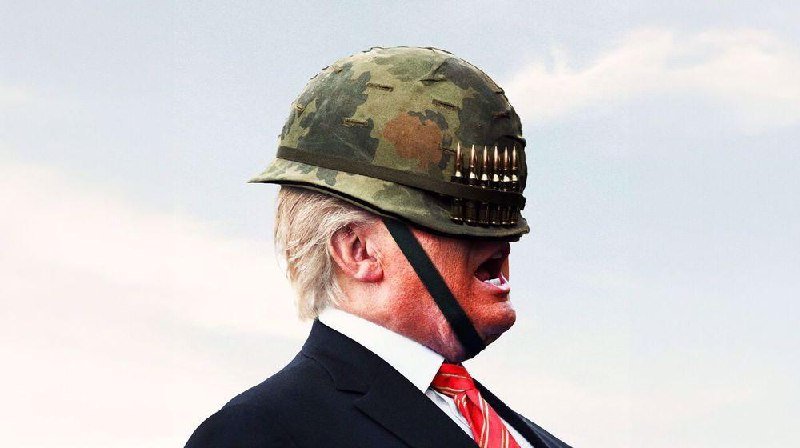
The man who sells the sizzle
On 16 May 2026, President Trump posted a photograph to Truth Social. In it, he stands beside Xi Jinping. The caption reads, in full: "It was The Calm Before the Storm." That is all. No policy announcement, no press conference, no formal joint statement. Just an image, four words, and the internet left to fill the silence. This is now how great-power diplomacy is conducted — not through memoranda of understanding or diplomatic cables, but through curated photographs and cryptograms aimed at cable-news chyrons. Whether one reads this as strategic ambiguity or mere performance depends on how charitable one is feeling toward the concept of American statecraft in 2026.
What the silence is supposed to signal
The phrase "calm before the storm" carries specific freight in American foreign-policy discourse. Rex Tillerson, as Secretary of State, used an identical formulation in October 2017 to describe a meeting with military chiefs — then quietly walked it back days later when journalists noticed the obvious question: storm of what? Trump's deployment of the same language is unlikely to be coincidental. It is a phrase designed to generate a question rather than answer one. The underlying logic, such as it is, runs something like this: if adversaries believe a significant action is imminent, they may be more pliable at the negotiating table. Anxiety is leverage. The Xi photograph adds a secondary signal — that the United States retains the capacity for high-level engagement with Beijing, even as tensions over trade, technology, and regional influence remain unresolved. Whether Xi reads it the same way is a separate matter entirely.
The Iran angle — and why Beijing matters to it
The thread context places this post within the US-Iran frame. Washington has spent the better part of two years oscillating between maximalist demands — full nuclear rollback, cessation of regional militia support, International Atomic Energy Agency access — and the acknowledgment that such demands are not achievable through pressure alone. Tehran's position, as its officials have stated through state media, is that its nuclear programme is entirely peaceful and defensive in nature, a right under the Nuclear Non-Proliferation Treaty that Western sanctions have wrongly foreclosed. Beijing, meanwhile, remains Iran's largest crude-oil customer and a permanent member of the UN Security Council whose cooperation any renewed diplomatic architecture would require. The Xi photograph, read through this lens, may signal that Washington is working the China file as part of its Iran posture — attempting to bring Beijing into a common pressure framework, or at least to neutralise its veto risk. Beijing's own preferences in this scenario are more complicated than a simple alignment with Washington: Chinese energy interests in Iran are substantial, and the bilateral relationship serves strategic purposes that extend well beyond the nuclear question.
The manufactured atmosphere, interrogated
Here is what is genuinely uncertain: whether this post reflects a deliberate diplomatic strategy with defined objectives and off-ramps, or whether it is improvisation dressed as strategy. The sources do not establish which is the case, and it would be irresponsible to assume either without evidence. What can be said with confidence is that the post performs a specific function regardless of intent. It generates coverage. It creates a sense of anticipation. It puts adversaries on notice and allies on edge in roughly equal measure. That atmosphere has value for a White House that derives negotiating leverage from unpredictability. It has costs, too — for partners in the Gulf who base their own security calculations on American reliability, and for allies in Europe who are being asked to maintain sanctions pressure without any visible endgame. The question is not whether manufactured uncertainty is a diplomatic tool. It manifestly is. The question is whether it is the right tool for the specific problems on the table — and whether the accumulated credibility cost of perpetual storm-signalling eventually exceeds the leverage gained.
Stakes
The winners if this atmosphere persists are predictable: defence contractors, Gulf states that purchase American security guarantees, and Iran hawks in Washington who benefit from a threat environment that justifies continued pressure. The losers are less often named in the immediate commentary — Tehran, which faces continued economic strangulation under a posture of implied imminent military action; Beijing, whose interests in a stable Middle East energy market are poorly served by American brinksmanship; and the broader architecture of arms-control diplomacy, which depends on predictability and verified commitments rather than atmospheric pressure. Whether a calmer, more transparent posture would produce better outcomes is unknowable in advance. What is knowable is that the current approach forecloses certain diplomatic pathways — specifically those that require American partners to make concessions based on trust rather than fear.
On the credibility of foreboding
The sources consulted for this piece do not indicate what specific action, if any, the White House is contemplating in the Iran file. They establish only that the President chose to post a photograph and four words. That is the fact of the matter. The interpretation — storm coming, storm averted, storm a metaphor for negotiation rather than conflict — is, for the moment, unknowable. Which may itself be the point. The value of a cryptic post is precisely its resistance to definitive reading. It creates space for adversaries to project their worst fears and for allies to project their hopes. The President occupies that space without committing to anything. Whether this constitutes sophisticated statecraft or an abdication of the clarity that allied confidence requires is a judgment the reader must make — and one the coming days may answer in ways the sources, for now, decline to specify.
Wire provenance
This editorial synthesis draws on the following public wire/social posts:
- https://t.me/wfwitness
- https://t.me/osintlive
- https://twitter.com/visionergeo/status/2055744606847848850/photo/1