Trump's Intervention Calculus: Oil Revenues, Surveillance Cameras, and the Cost of War
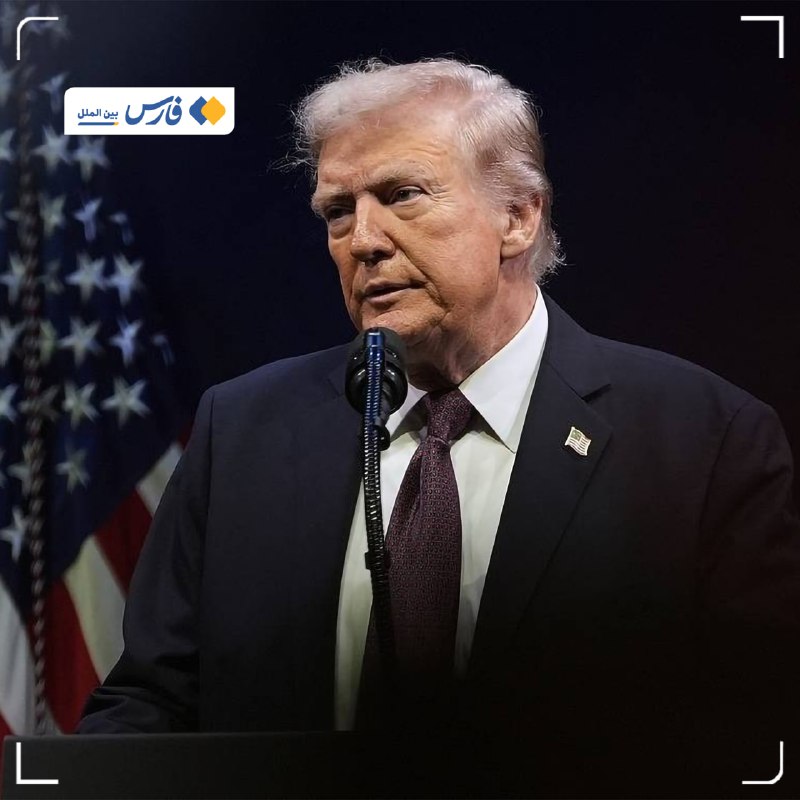
A video circulating on 16 May 2026 shows Trump recounting what he described as a US operation in Venezuela — one that he said lasted "48 minutes and 13 seconds." He followed with a distinct postscript: "And by the way, we made a fortune on their oil." A separate post, also from 16 May 2026, quotes Trump claiming that the US has placed nine cameras inside the facility where Iran's enriched uranium materials are stored, and that American intelligence knows the names of nearby personnel, adding that roughly half carry the name Mohammad.
The same day, Reuters published a dispatch from rural America with a straightforward headline: "Trump says Iran war is worth the economic pain. These rural voters agree." The piece carries the subtext that Trump's framing — casting a potential Iran conflict as a manageable economic cost rather than a catastrophic gamble — has found purchase among constituencies whose livelihoods depend on stable energy markets.
Taken together, the statements constitute something more than loose campaign oratory. They form a pattern in which the justifications for American military power are being reshaped around revenue, surveillance, and voter-aligned cost-benefit calculations rather than the traditional vocabulary of alliance, deterrence, or moral obligation.
The Venezuela Framing
The Venezuela post presents a specific operational claim — a rapid "one-day" armed intervention — followed by an economic dividend: oil revenues. The sequencing is notable. Security and sovereignty are implicitly secondary to the extraction outcome. The framing positions Venezuelan petroleum as American income, regardless of the legal or diplomatic status of whatever operation produced it.
This is not a new logic in American foreign policy circles. The historical record shows recurrent impulses to treat resource-rich jurisdictions as zones where US interests can be secured through direct intervention rather than diplomacy. What differs here is the explicitness — the profit calculus脱口 directly from a major-party candidate's own account, rather than appearing in a policy memo or congressional hearing.
The Reuters piece, which anchors this cycle in domestic political reality, provides the corroborating evidence that such framing is not purely fantastical. Trump has found an audience for the proposition that American military reach pays for itself.
The Iran Intelligence Claim
The Iran posts ratchet the specificity higher. Nine surveillance cameras inside a nuclear enrichment facility. Names of personnel. An explicit assertion that half the identified individuals share a given name. The claim, if accurate, would represent significant intelligence penetration of Iran's most sensitive nuclear infrastructure. If fabricated, it would represent a deliberate act of strategic disinformation — designed either to deter Iranian action or to shape domestic and allied perceptions of American capability.
The sources do not permit a determination between those two scenarios. Reuters, in reporting Trump's broader Iran-war position, does not independently corroborate the surveillance claims. What can be said is that public assertions of covert intelligence are, in the record of American nuclear diplomacy, a departure from standard practice. Intelligence about enrichment sites is typically held close precisely because disclosure risks alerting adversary counterintelligence — or, alternatively, signals willingness to use that intelligence as leverage rather than preserve it as a deterrent.
The phrasing — "50% of them are named Mohammad" — introduces a demographic precision that reads as either authentic operational intelligence or manufactured detail designed to sound credible to a domestic audience. Neither interpretation is flattering to the intelligence apparatus if the latter is true.
Structural Context
What unites the Venezuela and Iran threads is the transaction cost frame. Intervention in Venezuela: profitable because of oil. Conflict with Iran: worth the economic pain because voters agree it is. The implicit equation subordinates strategic and humanitarian rationales to electoral and commercial ones. Security of the American homeland, the preservation of alliances, the maintenance of nuclear non-proliferation norms — none of these appear in Trump's formulation as primary justifications.
The structural implication is significant. If American foreign policy rationales are being narrowed to what can be sold to rural constituencies as financially self-sustaining operations, the diplomatic and legal frameworks that have governed decades of engagement with Latin America and the Middle East become ornamental. The Monroe Doctrine, reinterpreted as a revenue mechanism rather than a security architecture. The Iran nuclear deal's architecture of constraints, replaced by a surveillance claim that may be unverifiable bluster or a genuine indicator of what intelligence the US has chosen to disclose.
This reframing has downstream effects on the dollar's role in global energy pricing. Petrodollar hegemony depends partly on the perception that US security commitments are credible and consistent — that American military presence stabilises markets rather than exploits them. A framing that positions American power as extraction-oriented may erode that perception among allied governments whose buy-in the system requires.
Stakes and Forward View
The immediate stake is informational: whether the surveillance claims represent genuine capability disclosure or a strategic information operation designed to shape perceptions ahead of any Iran contingency. The intelligence community's response — whether through official denial, corroborating leaks, or silence — will clarify which interpretation holds.
The medium-term stake is diplomatic. American allies in the Gulf and Europe are navigating their own economic dependencies on Iranian oil-adjacent stability and their own security relationships with the US. A public framing that treats conflict with Iran as a cost that "voters agree" to bear — rather than a calibrated deterrence calculus shared with partners — undermines the consultative architecture those alliances depend on.
The longer-term stake is definitional. If the proposition that American military power exists to generate revenue becomes normalised in political speech, it reshapes what constitutes a legitimate foreign policy debate. The question shifts from "should the US intervene?" to "does the intervention pay?" — and the latter question, once accepted as primary, changes who gets to answer it and how.
What remains open in the available sources is whether these statements represent a consistent policy position or a series of improvisations calibrated to different audiences. The Reuters piece suggests at least one audience — rural voters — finds the economic framing convincing. The Iran intelligence claim suggests a different calculation entirely, one aimed at demonstrating reach rather than extracting resources. Reconciling those two framings awaits further reporting.
Desk note: Monexus leads with Trump's own public statements as reported across the source outlets. The Reuters dispatch (2026-05-16) provides the domestic-political counterweight — the evidence that this framing is not purely theatrical. Where the X posts make unverifiable operational and intelligence claims, those claims are reported as stated rather than validated. The piece does not speculate on internal administration deliberations absent sourcing.
Wire provenance
This editorial synthesis draws on the following public wire/social posts:
- https://x.com/ekonomat_pl/status/2055541713561686016
- https://x.com/sprinterpress/status/2055668677169516544