The Economic Bill for Trump's Iran 'War of Choice' Is Already Coming Due
Iran's foreign minister has drawn a direct line between Washington's escalating pressure campaign and the price American consumers are paying at the pump. The framing deserves scrutiny from both directions.
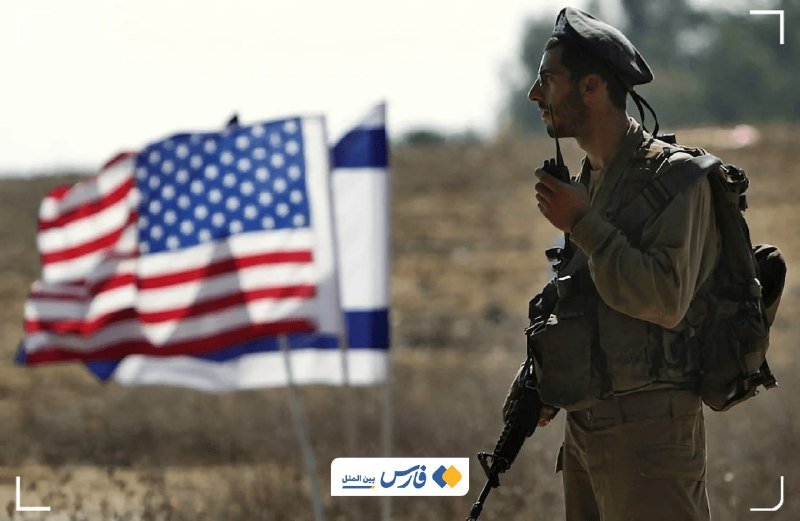
Abbas Araghchi did not reach for diplomatic euphemism. Speaking from Tehran on 16 May 2026, Iran's foreign minister called Washington's sustained pressure campaign a "war of choice" and delivered a pointed warning: American citizens will bear the economic consequences. The language was deliberate. The target audience was not only domestic Iranian consumption — it was calibrated for Western ears, for oil markets, and for the corridors where European governments are quietly recalculating their own exposure.
That calculation is becoming harder to avoid.
The structural problem with 'maximum pressure 2.0'
The Trump administration's renewed Iran posture — intensified sanctions, secondary market pressure, the withdrawal from the nuclear deal's skeletal remains — has always been presented as a leverage play. The premise is that economic suffocation compels concessions. The evidence from the first maximum pressure campaign under the same administration was less kind: Iran did not collapse, did not renegotiate on American terms, and instead accelerated its nuclear programme to the point where Western intelligence assessments now routinely cite enrichment levels that would have been unthinkable in 2018. The current round of pressure arrives against a backdrop where Tehran has watched what happened to Russia's economy under sanctions, drawn different conclusions than Washington apparently intended, and recalibrated its own pain threshold accordingly.
Araghchi's framing of a "war of choice" is not original — it mirrors language Western critics of the Iran posture have used for years — but its deployment from inside the Iranian foreign ministry carries a different function. It is designed to reframe the conflict from a security question into an economic one, placing the burden of proof on Washington to demonstrate that the costs being imposed on American consumers are purchasing something resembling strategic progress.
The domestic economics are not abstract
Oil markets responded immediately to increased uncertainty around the Persian Gulf in recent weeks. Brent crude has traded in a range that reflects genuine nervousness about supply disruption, not merely speculative positioning. American gasoline prices, which move with a lag behind global benchmarks, are beginning to reflect that uncertainty at the pump. For a White House that has staked considerable political capital on economic stability as a metric of success, the irony is not subtle: the same voterbase that was promised cheaper energy as a consequence of diplomatic engagement with Iran is now absorbing the costs of the opposite approach.
The Iranian foreign minister's framing exploits this tension explicitly. By naming American citizens as the party who will "pay the economic price," Araghchi is speaking past official Washington and directly into a political environment where energy costs are a first-order electoral variable. The calculation is that sustained pain at the pump erodes domestic support for the pressure campaign and creates political friction that constrains how far the administration can push.
That calculation has merit, but also limits. American consumers absorb oil price shocks regularly; the political transmission mechanism is not instantaneous, and the current administration has shown willingness to absorb short-term criticism in exchange for what it frames as long-term strategic positioning. The question is whether the price signal — if it continues to climb through the summer driving season — becomes politically unsustainable before Tehran's own economic pressure produces the concessions Washington is seeking.
What Tehran is actually signaling
The "war of choice" language also does something more specific: it draws a distinction between Iran's posture and what it frames as defensive necessity. Tehran has consistently argued that its nuclear programme is a response to existential security threats, not a proactive bid for regional dominance. Araghchi's framing extends that argument by suggesting that Washington's chosen approach — economic warfare rather than diplomacy — is itself the destabilising factor, and that the costs being imposed on American households are the natural consequence of that choice rather than a symptom of Iranian behaviour.
This is argument-as-weapon. It is designed not to persuade Western audiences directly but to arm a domestic Iranian narrative, to speak to the countries of the Global South who are watching the same oil price charts with their own anxiety about what a wider regional conflict would mean for their own energy import bills, and to position Tehran as the reasonable party in a dispute where the costs are falling unevenly. The framing has a clear multipolar dimension: it speaks to countries that have watched American sanctions policy bite across Sub-Saharan Africa, Latin America, and South Asia, where the dollar's weaponisation has been felt in food price inflation and currency instability far beyond the targeted states themselves.
The stakes, plainly stated
What Araghchi is really asking is a question that Western analysts will need to answer honestly: what is the theory of victory here? If maximum pressure is intended to produce Iranian capitulation on the nuclear file, the historical record from 2019 to 2025 suggests the mechanism is unreliable. If it is intended to slow Iran's nuclear progress while a diplomatic off-ramp is preserved for later use, the current trajectory — escalating sanctions, no active negotiations, a renewedIsraeli security calculus in the background — makes that off-ramp progressively harder to reach. If it is intended to degrade Iran's regional influence through economic attrition, the evidence from a decade of Iraq, Lebanon, and Yemen policy suggests that influence has proven remarkably resilient to external pressure.
The American citizen paying the current price at the pump is not the intended target of anyone's strategy. They are the collateral. That collateral accumulates political weight over time, and Araghchi knows it. The question is whether Washington is calculating that cost, and whether it has a realistic off-ramp before the economic and diplomatic terrain shifts further against it.
This publication compared The Cradle's framing of the Araghchi briefing against concurrent wire reporting. The Iranian diplomatic framing carries a clear advocacy dimension that requires reading alongside Western-state assessments of Iran's nuclear trajectory and US Treasury sanctions enforcement data — material that was not present in the source thread and remains necessary for a complete picture.
Wire provenance
This editorial synthesis draws on the following public wire/social posts:
- https://t.me/thecradlemedia/14234
- https://t.me/thecradlemedia/14235