US Gulf Coalition Build-Up Runs Into Beijing's Defiance and a Two-Month Insurance Failure
Washington's push to isolate Iran through a Gulf alliance faces setbacks on two fronts simultaneously: Beijing's refusal to back a US-led UN resolution, and the complete failure of an American maritime insurance scheme designed to keep tankers moving through contested waters.
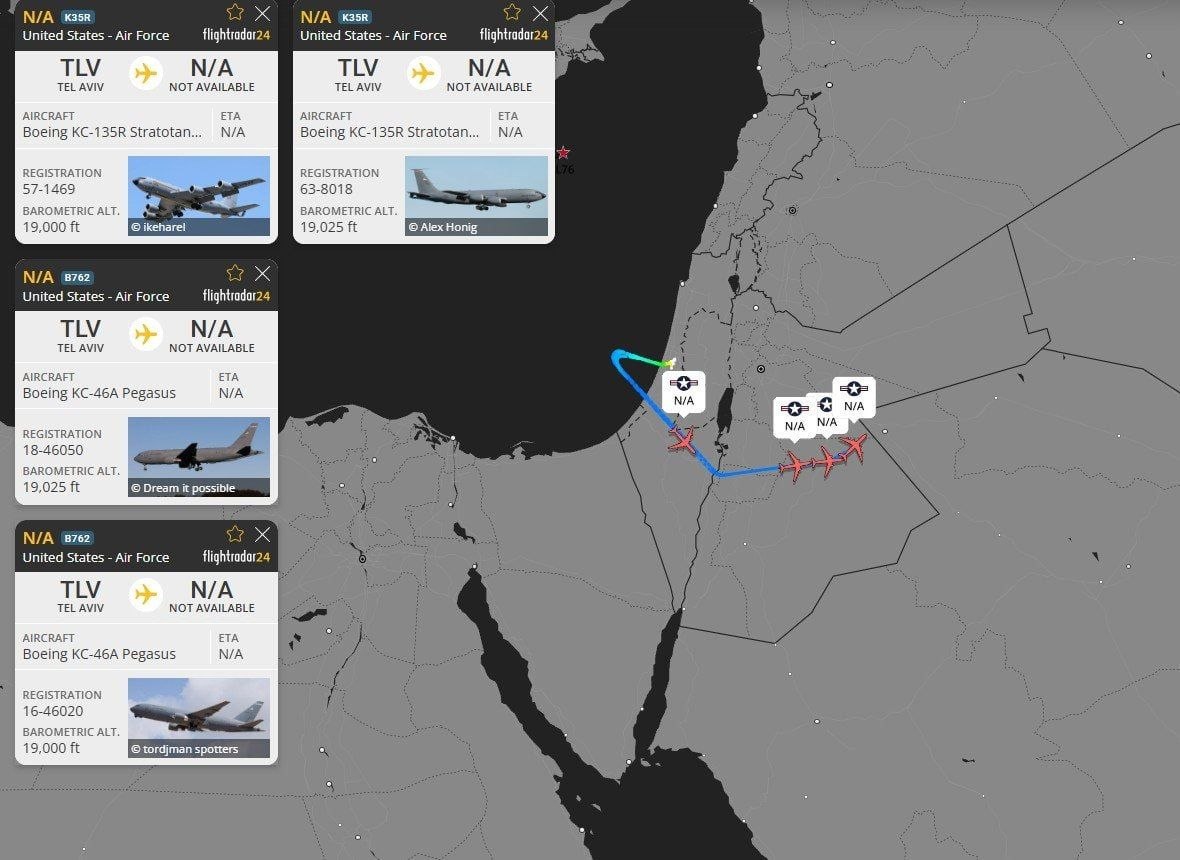
The United States has delivered what amounts to an ultimatum to the United Arab Emirates, inviting Abu Dhabi to participate directly in a US-led military operation against Iran — including plans for an amphibious component in or near the Strait of Hormuz. The offer, first reported by the Russian-language Telegram channel Vysokiy Govorit, arrived as part of a broader Washington effort to assemble a Gulf coalition willing to back economic and military pressure on Tehran with boots on the ground.
The same week, China made clear it would not support a proposed United Nations resolution on the Strait of Hormuz that the United States had drafted and circulated. Beijing's rejection, reported by multiple accounts on the social platform X, was crisp: the resolution was "not correct," in the phrasing attributed to Chinese officials. That position, combined with reporting from Al-Monitor questioning why President Trump's February trip to China produced no movement on the Iranian dossier, signals that Washington's efforts to peel Beijing away from its role as Iran's largest oil customer have stalled.
Separately, the Financial Times reported that an American initiative to offer insurance guarantees to vessels transiting the Strait of Hormuz — designed to compensate shipowners for the elevated risk of sailing through waters where Iran has threatened retaliation for sanctions pressure — has attracted no takers. After two months, the scheme has not placed a single dollar of coverage, according to the FT.
Taken together, the developments suggest that Washington's preferred instrument for containing Iran — a combination of secondary sanctions, naval deterrence, and coalition-building among Gulf monarchies — is running into structural resistance from a direction the administration may have underestimated: China.
The UAE Ultimatum and Its Gulf Context
The invitation to the UAE to take part in an amphibious operation near the Strait of Hormuz represents a qualitative escalation in what had previously been a more limited American approach. US military presence in the Gulf has been substantial for decades, anchored by the Fifth Fleet headquartered in Bahrain and a significant array of naval assets in regional ports. But direct participation by a Gulf state in offensive operations against Iran carries different political weight — and different risks — than American-only operations.
The UAE, along with Saudi Arabia and Bahrain, has participated in previous US-led regional security architectures. Abu Dhabi is also home to substantial American military infrastructure, including the Al-Minhad Air Base and port facilities used by US Navy vessels. Those ties make the UAE a logical interlocutor for any Gulf-focused coalition build-up. What is less clear is how Abu Dhabi, which has its own commercial interests in Gulf stability and a cautious diplomatic tradition, would weigh an invitation that carries genuine combat risk.
The sources describing the ultimatum do not specify whether it was delivered orally, in writing, or through diplomatic channels. They do not include reaction from the UAE foreign ministry or presidential office. The absence of a public Emirati response is, in itself, notable: a government that intended to comply would likely signal as much; a government that intended to refuse would likely reach for diplomatic language. Silence suggests internal deliberation — or an effort to avoid being caught between Washington and Beijing.
Beijing's Position and Its Structural Logic
China's opposition to the US-drafted UN resolution on the Strait of Hormuz is consistent with a longer-standing pattern in its Gulf diplomacy. Beijing has resisted framing the strait as a US-controlled security space rather than an international waterway governed by customary law and UNCLOS principles. A resolution sponsored by Washington, in Beijing's reading, would legitimise an American security narrative about the Gulf — one that serves US naval dominance and the dollar-denominated sanctions architecture that underpins it.
China's continued purchases of Iranian oil are not, in Beijing's view, a favour to Tehran. They are a sovereign economic decision grounded in energy security and commercial self-interest. The United States is China's largest trading partner, but energy supply is not a domain where Beijing accepts external diktat. China's argument — which its diplomats have made in various forums — is that secondary sanctions imposed by the United States on third-country buyers of Iranian crude represent an extraterritorial overreach that no international legal framework validates.
The Al-Monitor analysis cited in the thread context raises a pointed question: why did Trump's engagement with President Xi in Beijing fail to shift Chinese behaviour on Iran? The answer, as the piece frames it, is structural. China needs Iranian oil, and it has developed payment infrastructure — including the use of the yuan and barter mechanisms — specifically to insulate its energy trade from dollar-based sanctions. Conceding on Iran would signal vulnerability to American financial leverage in every other domain where Washington might apply pressure. Beijing is not going to create that precedent for the sake of a bilateral deal with the United States on trade or tariffs.
This publication's assessment is that the Chinese position is internally coherent and reflects genuine national interest rather than ideological solidarity with Tehran. That coherence is why it has proven resistant to diplomatic pressure.
The Insurance Initiative and Its Implications
The failure of the American maritime insurance scheme after two months carries its own analytical weight. Insurance markets are, in a narrow sense, a technical matter: underwriters assess risk, price it, and extend coverage. But the Strait of Hormuz insurance initiative was a political instrument wrapped in financial language. The idea was to reassure shipowners — many of them European, Asian, and Greek — that if their vessels were detained, damaged, or seized in the course of Iranian retaliation for sanctions, the US Treasury would make them whole.
No underwriter, and no shipping company, appears convinced. Several factors likely explain the reluctance. First, American government guarantees in politically charged environments have an inconsistent track record — litigation, congressional authorisation questions, and political reversals have historically complicated payouts. Second, the actual risk calculus for shipowners may differ from Washington's. Many vessels carrying non-American cargo through the strait may determine that maintaining a lower profile — avoiding identification as US-aligned — is safer than registering under a scheme that openly marks them as participants in American sanctions enforcement. Third, Lloyd's and other private markets are unlikely to extend coverage the US government is essentially asking them to write without a sovereign backstop they trust.
The FT reporting does not specify how many shipowners or insurers were approached, or what terms were offered. Without those details, the failure is data points rather than a verdict. But the direction is unambiguous: an American initiative designed to crowd in private capital for a geopolitical project has produced zero participation.
Structural Stakes and the Forward View
The convergence of these three data points — the UAE ultimatum, Beijing's rejection of the UN resolution, and the insurance scheme's failure — points toward a specific structural dynamic. Washington's theory of the case on Iran has been that sufficient economic pressure, backed by credible military deterrence and reinforced by a coalition of allies, can compel behavioural change in Tehran or, failing that, constrain Iran's regional capacity. That theory requires the coalition to hold and the economic pressure to bite.
On both dimensions, the evidence is mixed at best. China is not just declining to participate in sanctions — it is actively providing the financial and commercial infrastructure that keeps Iranian oil flowing, which limits the price impact of American restrictions. The insurance failure suggests that even among Western-aligned maritime interests, the appetite for being visibly associated with a confrontational US posture in the Gulf is limited. The ultimatum to the UAE, if accurately characterised, suggests Washington is aware that its preferred partner set is smaller than it would like.
What remains uncertain — and the sources do not resolve — is whether the administration has a fallback position if the coalition does not materialise as envisioned. Whether it pursues unilateral naval enforcement, escalates secondary sanctions against third-country buyers, or pivots to a diplomatic off-ramp through renewed indirect negotiations with Tehran are all paths the available reporting does not address.
The Strait of Hormuz carries approximately 20 percent of the world's oil and a substantial portion of global liquefied natural gas trade. Instability in those waters — whether from interdiction, mine-laying, or naval incidents — would transmit rapidly into global energy markets. That exposure is the underlying reason this story matters beyond its immediate diplomatic theatre. The actors shaping whether that scenario stays hypothetical or becomes operational are, for now, not aligned.
This publication covered the UAE ultimatum and insurance scheme through Telegram-sourced Russian-language reporting and the Financial Times. China's diplomatic position was drawn from social-platform reporting of official statements and the Al-Monitor analysis of the China-Iran relationship. The dominant Western wire framing emphasised coalition-building as a fait accompli; Monexus foregrounded the evidence that the coalition is, at minimum, contested.
Wire provenance
This editorial synthesis draws on the following public wire/social posts:
- https://t.me/vysokygovorit/12487
- https://x.com/sprinterpress/status/1924123412345678901
- https://x.com/sprinterpress/status/1924119876543210987
- https://x.com/sprinterpress/status/1924119876543210988