The Long Homecoming: Wes Streeting's Brexit Confession and the Cost of Political Denial
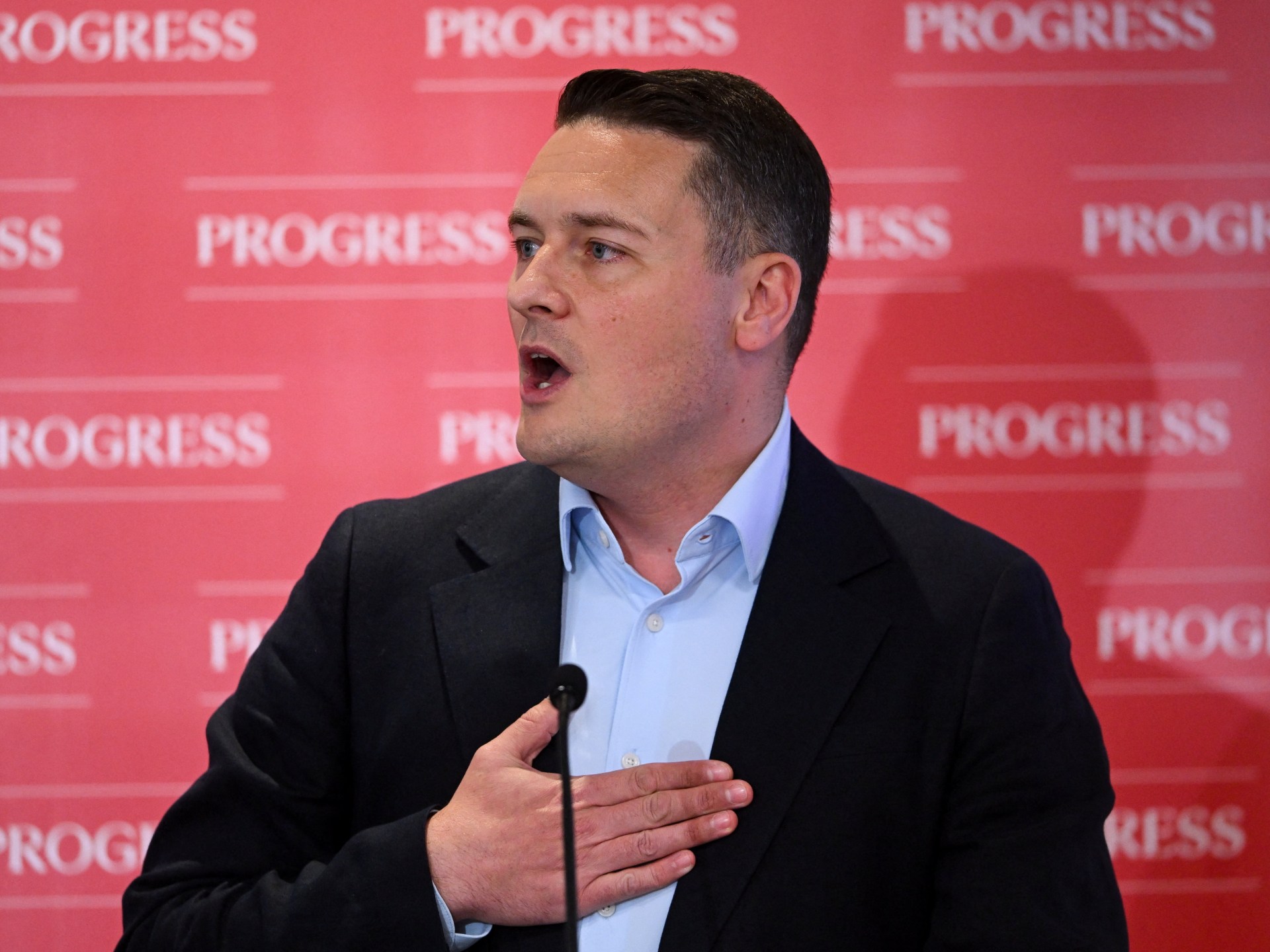
Wes Streeting did not bury the lede. Stepping down as UK Health Secretary on 16 May 2026, the former minister delivered a verdict on the defining political decision of a generation with the bluntness of someone who has run out of patience with diplomatic circumlocution. "Leaving the European Union was a catastrophic mistake," he said. "Britain's future lies with Europe. And one day, one day, back in the European Union." The repetition of that phrase — the stutter, the hesitation before commitment — tells its own story. This is a political class that still cannot quite decide whether it wants to be honest.
The significance of Streeting's intervention lies not in its novelty but in its positioning. He is not a fringe Remain MP or a London-centric metropolitan liberal making a comfortable case from opposition. He served in government. He sat around the cabinet table. And after doing so, he returned to the airwaves to describe the decision he spent years not opposing as a catastrophe. That trajectory — from complicit silence to cathartic confession — is the real story. It is the story of the British political establishment's collective failure to reckon with a decision that has demonstrably weakened the country's economic standing, diplomatic leverage, and social fabric.
The Calculation Nobody Will Name
Britain's retreat from honest Brexit accounting is a collective enterprise. When the 2016 referendum produced a narrow Leave majority, large segments of the political class made a tactical decision: accept the result, manage the implementation, and treat criticism as disloyalty. The civil service absorbed the shock. The Conservative Party fractured over the terms of departure but united around the premise that departure itself was not open to question. Labour, for its part, pursued a strategy of constructive ambiguity — offering the voting public the impression of opposition to a Tory hard Brexit while declining to commit to reversal.
Streeting's party, under Keir Starmer, has maintained that posture into government. Labour entered office in 2024 with a clear majority and a programme that studiously avoided reopening the EU question. The economic headwinds — sluggish growth, shrinking trade volumes with European partners, regulatory friction for financial services, labour shortages in healthcare and logistics — were real and measurable, but naming them as consequences of Brexit rather than of global conditions or Tory mismanagement remained a third rail. Streeting's decision to step on that rail, from within government rather than from the comfort of opposition, is therefore notable. It suggests either a genuine shift in his political calculations or a recognition that the economic damage has become too visible to elide.
The structural consequences are not abstract. The UK economy has underperformed its G7 peers since 2016 on multiple measures. Trade with the EU, Britain's largest bilateral trading relationship, has not recovered the share of total UK exports it held before the referendum, even as trade with non-EU partners has partially compensated. The regulatory divergence demanded by Brexit — celebrated by its proponents as "regaining sovereignty" — has imposed compliance costs on manufacturers and service providers that European competitors do not bear. The NHS, which Streeting once ran as Health Secretary, has been a direct casualty: staffing shortages that predate the referendum worsened as freedom of movement ended and the new immigration system proved slower and more expensive to administer.
The Costs of Delayed Honesty
What makes Streeting's statement remarkable is not the argument itself — economists, trade specialists, and business groups have been making it since before the referendum — but the political cover it provides for others. When a serving minister names the cost, the implicit permission structure changes. Suddenly the trade-off that was once described as the price of sovereignty can be named as what it is: a miscalculation, poorly managed, whose benefits were always more theoretical than the public was told.
The honest case for Brexit was never primarily economic. Its proponents knew, and many acknowledged privately, that short-term economic disruption was likely. The argument was always about sovereignty, migration, and democratic self-determination — concepts broad enough to mean almost anything and resilient enough to survive any empirical setback. But those non-economic rationales have also aged poorly. The "taking back control" promised in 2016 has not obviously manifested in faster policy-making, more responsive governance, or higher public satisfaction with democracy. If anything, the reverse is true: Britain has spent a decade consumed by a single question — how to manage, mitigate, or reverse the consequences of leaving — at the expense of addressing the structural challenges that motivated the Leave vote in the first place.
The question of migration illustrates the gap between promise and delivery. Vote Leave's "Breaking Point" poster — the image that most vividly captured the emotional register of the campaign — promised that leaving would reduce immigration. Net migration has remained at historically high levels throughout the post-Brexit period. The political class that promised control has delivered a different set of migrants, fewer EU nationals and more from the rest of the world, without meaningfully altering the headline numbers. The promises were not delivered; the costs were.
What "One Day" Actually Means
Streeting's invocation of eventual return to the EU was careful in its vagueness. "One day, one day" is not a policy proposal. It is an admission of political reality: the UK is not going back into the EU in this parliamentary term, probably not in the next, and possibly not for a generation. The conditions for a serious re-engagement with European integration do not currently exist in British politics. The Conservative Party remains riven by the question; the electoral base that delivered Brexit is still numerically significant; and the EU, for its part, has shown little appetite to facilitate a process that would require significant institutional concessions and risk empowering its own eurosceptic movements.
But the phrasing matters precisely because of what it does not say. Streeting did not argue that rejoin was imminent or even advisable in the current environment. He argued that the diagnosis of the original decision was correct. That distinction — between the judgment that leaving was wrong and the prescription for what to do about it — is where the most important political work will happen. The question is whether a Labour Party that has spent years refusing to name the problem can now begin to articulate a credible programme for narrowing the costs of Brexit without formally reversing it.
That programme would require acknowledging the regulatory and trade costs of divergence, investing in the diplomatic relationships that were neglected during a decade of EU-centric divorce negotiations, and building a political coalition that can sustain a long-term reorientation toward European structures without triggering the same mobilisation that delivered Brexit in the first place. None of that is easy. Some of it may not be possible in current political conditions. But it is at least a direction of travel — and Streeting's statement suggests that direction is no longer quite so heretical.
The danger is that this moment of honesty becomes another episode in the long British tradition of acknowledging problems without acting on them. The political class that delivered the Brexit referendum, managed its implementation, and is now beginning to describe it as a mistake has a credibility problem that a single resignation statement will not fix. The public, for its part, has been asked to bear the costs of a decision they were told would bring prosperity and control — and has received neither in the quantities promised.
What Streeting offered on 16 May is a beginning, not an ending. The harder question — what the UK actually does with the recognition that the most significant political decision of the last thirty years was wrong — remains unanswered. That question will define British politics for the next decade. The first honest answer is at least a precondition for a better one.
The Monexus desk compared coverage of Streeting's resignation statement against wire reports, which led with his leadership ambitions and the internal Labour contest framing. This article foregrounds the substance of his Brexit remarks, which the faster-moving wire cycle treated as secondary to the political mechanics of his resignation. The structural argument — that the political class's delayed acknowledgment of Brexit's costs is itself a story — reflects a editorial judgment that the political story is better understood by reading against the immediate-news grain.
Wire provenance
This editorial synthesis draws on the following public wire/social posts:
- https://twitter.com/visionergeo/status/2055680981693075728
- https://t.me/osintlive/3728
- https://t.me/ClashReport/8921