500 Drones and the New Calculus of Ukrainian Strikes
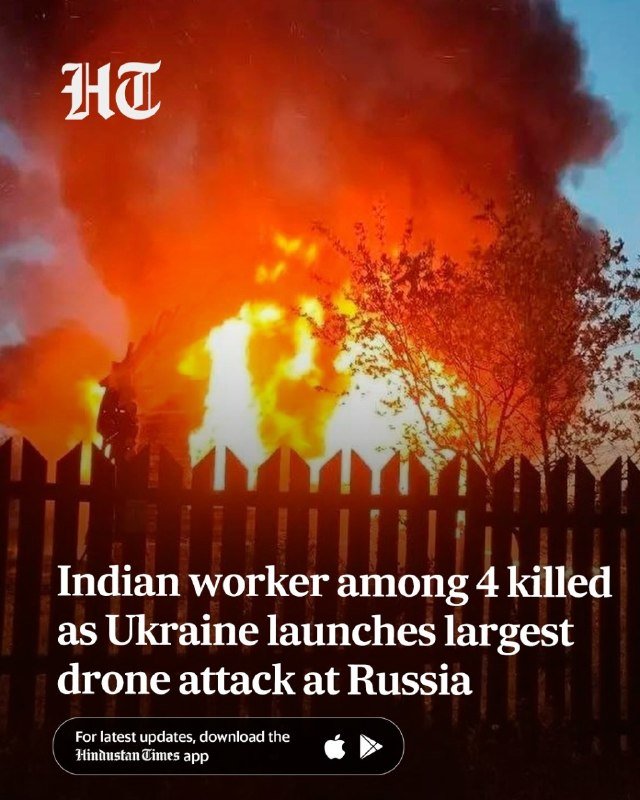
Ukraine launched more than 500 drones across Russia overnight on 17 May 2026 — the largest single combined strike since Moscow's full-scale invasion began — with the Solnechnogorskaya oil loading station near Zelenograd confirmed as a primary hit. More than 100 of those drones targeted the Moscow region itself, an attack vector that would have seemed implausible to Western analysts eighteen months ago and that now appears to be a deliberate, repeatable instrument of Kyiv's strategy.
The strike is not simply a military achievement. It is a statement about what Ukraine believes it can sustain, what it believes Russia can absorb, and what the war looks like when Kyiv stops treating Russian territory as a red line it will not cross.
The Scale of What's Changed
Drone warfare has been a feature of this conflict since its earliest days, but the density and coordination of the 17 May strike represents a step-change in operational ambition. Open-source trackers monitoring Russian air defense networks recorded simultaneous inbound waves across multiple regions — the Moscow region absorbing the heaviest concentration, but drones also logged heading toward central Russian provinces and south through Crimea. The Solnechnogorskaya facility, which stores and transports petroleum products for regional distribution, joins a growing list of energy infrastructure targets that have survived previous waves of Ukrainian strikes.
What distinguishes this event is not the individual hit but the breadth. Previous large-scale attacks have typically focused on energy infrastructure in border regions orCrimea — targets within reach of systems Kyiv could field in quantity. The Moscow region sits deep within Russia's air defense umbrella. Hitting it at scale requires a logistics and engineering posture that suggests Ukrainian drone production has matured far beyond the improvised arsenal of 2023.
What the Kremlin Is Forced to Absorb
Russian state media acknowledged the attack but framed it through the familiar lens of intercepted threats — emphasizing successful interceptions rather than the penetration that preceded them. This is a revealing posture. The Kremlin has calibrated its domestic narrative around the premise that Russia's air defenses are adequate and that the conflict remains, in official language, a manageable "special military operation." Each successful strike on the Moscow region erodes that framing in ways that raw casualty counts do not.
The oil loading station strike is specifically awkward. Energy infrastructure is not a soft target in the way that residential areas would be — it is dual-use, connected to civilian fuel supply networks, and its disruption registers materially in regional logistics and industry. Russian authorities will find it difficult to dismiss as collateral when the facility itself is the named target. The choice of target, then, is not incidentally provocative — it is structurally so.
The Strategic Logic Below the Noise
The pattern of Ukrainian strikes has shifted in ways that resist easy summary as mere retaliation. Kyiv has progressively extended its reach: first border oblasts, then Crimea, then airfields and naval assets, and now critical infrastructure within satellite range of Moscow. Each extension required solving a different engineering and logistics problem. The cumulative result is that Ukraine has demonstrated an operational reach that did not exist twelve months ago.
This matters beyond the immediate tactical picture. The war's dynamic has been shaped for two years by Western debates over whether to permit long-range strikes inside Russia. Kyiv proceeded anyway, not by persuading skeptical capitals but by building the systems that made the debate somewhat academic. The 17 May strike is the latest iteration of that logic — a reminder that the limits of Ukrainian capability are set in Kyiv and at Ukrainian manufacturing benches, not in Washington or Berlin.
The Stakes for Everyone Else
The implications radiate outward. For NATO members, the strike reinforces a structural tension that has defined alliance support since 2022: the more successful Ukraine becomes, the more the question of what success looks like shifts from theoretical to operational. Ukraine has shown it can sustain deep strikes. The question now is whether the Western alliance wants to shape that capability — through射程-capable systems, through intelligence sharing, through drone component supply chains — or wants to remain spectators to a capability they helped enable but do not control.
For Russia, the operational reality is stark. Air defense networks have finite capacity. The 17 May wave saturated not just the Moscow region but multiple simultaneous approaches — a distribution pattern that suggests Ukrainian planners were testing how comprehensively Russian systems can respond to multiple simultaneous threats. If the answer is "not comprehensively," then the strategic calculus for infrastructure investment, for energy sector redundancy, and for the broader war economy changes materially.
The strike on the Solnechnogorskaya facility will not end the war. It will not produce immediate battlefield results that journalists can photograph. But it adds another data point to the picture that Kyiv's military leadership has been building for two years: that Russia is not unreachable, that its infrastructure is not sacrosanct, and that the geography of this conflict has become something neither side fully controls.
Kyiv launched 500-plus drones at Russia overnight, with the Solnechnogorskaya oil station near Zelenograd confirmed struck. Monexus framed this as a capability story — the maturation of Ukrainian drone production into a repeatable deep-strike instrument — rather than as a single tactical event.
Wire provenance
This editorial synthesis draws on the following public wire/social posts:
- https://t.me/noel_reports/8471
- https://t.me/wartranslated/8912
- https://t.me/wartranslated/8911