The Art of the Weakened Deal: How Beijing Read Trump and What It Reveals About Shifting Power
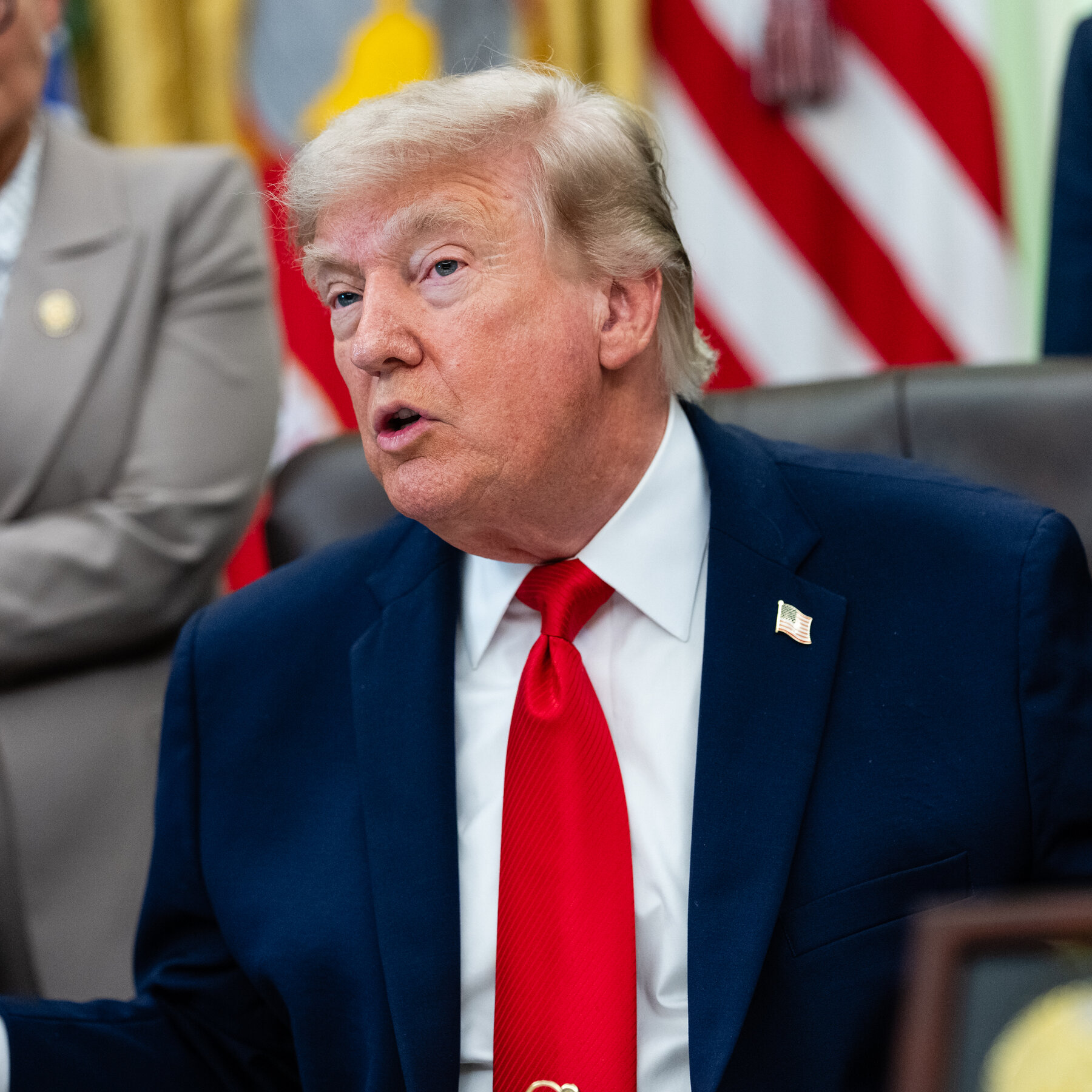
The scene played out across screens in Zhongnanhai in the spring of 2025. In Washington, a president who had promised tariff dominance was visibly struggling to hold his coalition together — legislators breaking with the White House, courts pausing executive actions, allies publicly questioning American reliability. From Beijing's vantage point, the image was unmistakable: a declining power projecting strength while its foundations buckled.
The trade negotiations that followed were not, at their core, about tariffs. They were an exercise in reading room temperature — in assessing whether the man across the table could deliver what he promised. By almost every account, Xi Jinping concluded that he could not.
The Deal That Wasn't
In May 2025, the world watched as the United States announced what was initially framed as a breakthrough trade agreement with China. The announcement was carefully choreographed: Rose Garden optics, claims of a comprehensive framework, suggestions that the worst of the tariff war was behind both governments.
The Atlantic, citing reporting from Beijing at the time, described a very different read coming out of the Chinese capital. Rather than celebrating a diplomatic victory, Chinese officials saw a American president whose authority was visibly eroding — and adjusted their negotiating posture accordingly. The deal, such as it was, proved far less binding than the initial announcement suggested. Commitments made by the Trump administration in the Rose Garden appeared to lack domestic support, institutional backing, or follow-through. Within weeks, tariffs that had been declared suspended were being reimposed; frameworks announced as comprehensive turned out to be provisional.
Chinese state media, as covered by Tasnim News citing The Atlantic's reporting, was pointed in its framing. Xi Jinping and the Chinese diplomatic apparatus understood something fundamental about American politics: when a leader cannot enforce their own executive orders, when their own party fractures on basic votes, when courts routinely halt their directives — that leader is not in a position to strike hard bargains.
The Chinese read was not ideological. It was operational. Beijing watched the institutional machinery of American governance malfunction in real time and drew a straightforward conclusion about negotiating leverage.
Beijing's Read of Washington
To understand how Chinese leadership assessed the Trump administration, one must understand what Beijing pays attention to. Chinese foreign policy analysis does not rely on cable news framing or social media sentiment. It relies on institutional indicators: party discipline votes, court rulings, legislative outcomes, the behavior of key constituencies like the business community and the military establishment.
On every one of those indicators, the Trump administration's early 2025 period showed stress. Federal courts struck down core executive actions with unusual frequency. Republican legislators publicly broke with the White House on trade policy, questioning the wisdom of the tariff approach. The business community — historically a Republican constituency — expressed open alarm at the disruption to supply chains. Even elements of the intelligence community showed visible friction with executive preferences.
Chinese analysts, as reported by The Atlantic, interpreted these signals not as political noise but as structural data. A president who cannot control the execution of their own orders is not a president who can deliver on international commitments. The tariff regime, Beijing concluded, was a negotiating posture that its own architects could not sustain.
This reading drove Chinese behavior in subsequent rounds. Rather than making concessions that would have satisfied earlier American demands, Beijing held its position — waiting for the pressure to build on the American side. When Trump ultimately needed a face-saving outcome, the deal that emerged reflected Chinese terms more than American ones.
The Structural Shift Underneath
The negotiation drama, however, obscures a deeper dynamic. The American position in the trade war was not merely institutionally weakened in 2025 — it was structurally disadvantaged in ways that transcended any single administration.
Jonathan Watts, writing for The Guardian in a wide-ranging analysis of the global energy transition, identified the core of the problem. The American epoch of oil, Watts argued, is collapsing. What comes next will be shaped not by who holds the White House but by who controls the technologies, manufacturing capacity, and supply chains of the post-fossil economy.
China has moved decisively to dominate that space. By 2025, Chinese firms controlled critical portions of solar panel manufacturing, battery production, EV supply chains, and grid storage technology. The scale of Chinese industrial investment in clean energy — subsidies, manufacturing capacity, research and development — dwarfs what the United States or Europe has deployed. Watts notes that Chinese factories are producing solar panels at costs that make American and European competitors structurally uncompetitive, regardless of tariff walls.
This is not a temporary advantage. It represents a decades-long bet that Beijing placed when Western governments still debated whether climate change was real, whether renewable energy was commercially viable, and whether government investment in strategic industries constituted legitimate industrial policy or corporate welfare. China decided. It built. It scaled. Now it controls the commanding heights of the energy transition.
The Trump administration's tariff approach treats this as a trade problem — something that can be solved by penalizing Chinese imports and protecting American industry. But the structural disadvantage runs deeper than tariff rates. American firms do not have the manufacturing capacity, the workforce, the supply chains, or the cost structures to compete with Chinese producers at scale. Tariffs can raise the price of Chinese goods; they cannot conjure the industrial ecosystem that produces those goods at competitive cost.
Historical Parallels and the Logic of Decline
The pattern Beijing is navigating has appeared before in the records of international relations. When a hegemonic power begins to falter, its adversaries do not immediately attack. They wait, watching institutional machinery crack, calculating the cost of confrontation against the cost of patience. They take advantage of the declining power's internal contradictions — the gap between the image it projects and the capacity it can actually deploy.
The trade negotiations of 2025 fit this pattern. China did not need to humiliate the United States. It needed only to wait. Every week that passed with American institutional dysfunction — courts halting executive actions, legislators breaking with the White House, allies publicly questioning American reliability — was a week in which Beijing's relative position improved without Beijing having to spend any diplomatic capital.
Chinese strategic thinking, as expressed in formal documents and commentary in the Global Times, Xinhua, and other state-aligned outlets, treats the current moment as a window of opportunity. The United States, in this framing, is a power in relative decline — not because China has surpassed it on every dimension, but because America's self-image as indispensable has outrun its actual capacity to shape events. The gap between aspiration and capability is itself a form of weakness.
This analysis is not universally shared, even within the Chinese system. More cautious voices note that American technological advantages, financial depth, and military reach remain substantial. The dollar's global role, while challenged, has not been displaced. But even these cautious analysts acknowledge that the trajectory favors Beijing over the longer term — and that Trump's presidency, with its institutional turbulence and its inconsistent policy signaling, represents a moment when that trajectory can accelerate.
What the Stakes Look Like Going Forward
The immediate stakes are the trade terms that will govern US-China commerce for the next several years. The deal announced in the Rose Garden in May 2025, whatever its final form, reflects a balance of power that favors Beijing more than any comparable agreement of the past two decades. China made limited concessions; the United States accepted terms that its own negotiators had previously characterized as unacceptable.
The longer stakes are structural. A world in which China controls the energy transition's commanding heights is a world in which the logic of decarbonization runs through Beijing rather than Washington. Every country that adopts solar panels, electric vehicles, battery storage, or smart grids becomes, in a meaningful sense, a participant in an industrial ecosystem that China designed and operates. The political influence that comes with that ecosystem — the supply relationships, the maintenance dependencies, the standards-setting power — accrues to Beijing rather than to Washington.
The Trump administration's response — tariffs, industrial policy announcements, demands for manufacturing repatriation — reflects an understanding of the problem. But the response has been operating on the wrong timescale. Industrial policy takes decades to build and cannot be conjured by executive order. The manufacturing capacity that China has accumulated cannot be replicated in a single term, or in a tariff regime, or in a series of trade negotiations.
For American allies in Europe, Japan, and South Korea, the question is whether the transatlantic relationship can be reconstituted around a shared response to Chinese industrial dominance — or whether each ally will be left to negotiate separately with a Beijing that has already secured the commanding heights of the next economy. The evidence from the 2025 trade standoff does not offer reassurance on this score.
For the Global South — countries in Africa, Southeast Asia, and Latin America that are building their energy systems from scratch — the stakes are even starker. They will choose between the technologies and supply chains of a dominant China and the expensive, incomplete alternatives that the United States and Europe can offer. That choice, in many cases, will not be a choice at all.
What remains genuinely uncertain is whether Beijing over-reads American weakness. The United States retains deep reservoirs of institutional capacity, technological prowess, and financial depth that do not disappear simply because one administration shows turbulence. The courts that halted executive actions also, in many cases, ultimately upheld modified versions of those actions. The legislators who broke with the White House share the president's underlying assumptions about the threat China poses — they disagree about tactics, not about the strategic challenge. A future administration, operating with more institutional discipline, might recover negotiating leverage that Trump squandered.
Beijing is aware of this possibility. Chinese strategy does not bet everything on American collapse. It seeks to expand influence incrementally, to entrench supply chains and standards while the window is open, to create facts on the ground that will survive any future American recovery. Whether that incrementalism is sufficient — or whether it provokes a more coherent American response — is the central question of the decade ahead.
The deal that emerged from the Rose Garden in May 2025 was not the end of that story. It was the first act of a negotiation that will run for years — conducted by a rising power that has learned to read its rival's weaknesses, and a declining power that has not yet accepted the implications of its own erosion.
Wire provenance
This editorial synthesis draws on the following public wire/social posts:
- https://en.wikipedia.org/wiki/China%E2%80%93United_States_trade_war
- https://en.wikipedia.org/wiki/Electric_vehicle_industry_in_China
- https://en.wikipedia.org/wiki/Solar_energy_in_China