Baalbek Under Fire: Israel Strikes Lebanon's Heritage Heart as Cross-Border Exchange Intensifies
Israeli airstrikes hit the ancient city of Baalbek in eastern Lebanon on 17 May 2026, killing at least one person, as cross-border hostilities between Israel and Hezbollah reached their highest frequency since the November 2024 ceasefire brokered by the United States and France.
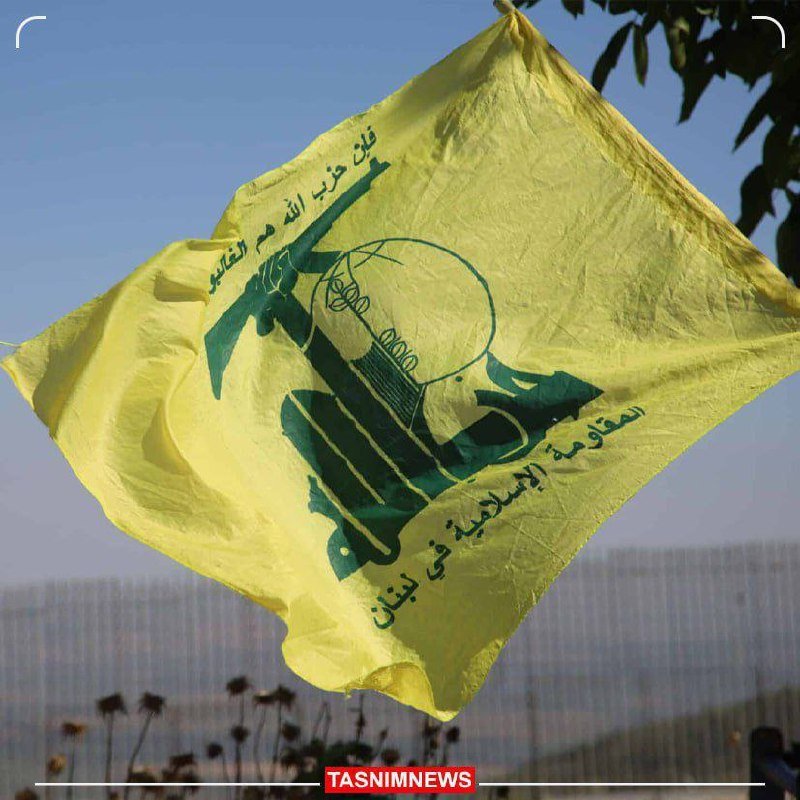
Israeli fighters struck the city of Baalbek in eastern Lebanon on 17 May 2026, according to multiple reports from regional media outlets monitored that evening. One person was reported killed in the initial strike on the al-Basatin neighbourhood, and Hezbollah announced ten separate operations against Israeli military positions within a 24-hour window — the highest single-day tally of cross-border attacks since the ceasefire arrangement of November 2024 began fraying at its edges.
Baalbek is not a military installation. It is a Roman-era metropolis whose temple complex — a UNESCO World Heritage Site — drew pilgrims and tourists for centuries before the current conflict rendered most of Lebanon's territory unvisit-able. That Israel chose this location for escalation is not incidental. It is a message: that the geographic constraints the ceasefire imposed are provisional, and that the buffer zone Israel claims along the Lebanese frontier extends further north than any internationally recognised boundary.
The Architecture of a Shaky Ceasefire
The November 2024 ceasefire was built on a fiction. Washington and Paris brokered an arrangement that required Hezbollah to withdraw its forces north of the Litani River — roughly 30 kilometres from the Israeli border — while Israel agreed to halt offensive operations inside Lebanese territory. In practice, both sides have been testing the arrangement's edges for months. Israeli drone overflights continued. Hezbollah probes along the demarcation line persisted. Neither side formally withdrew from the deal, but neither side fully honoured it either.
What changed in recent weeks is the threshold for retaliation. Israel's northern communities remain largely evacuated; the original promise of a safe return within 60 days of the ceasefire has long since lapsed. Prime Minister Benjamin Netanyahu's government has faced sustained domestic pressure to restore security guarantees that the ceasefire demonstrably failed to provide. Striking Baalbek — deep inside Lebanese territory, far from the frontier zone — represents a significant escalation in signalling terms even if the physical damage is contained.
A Civilisation in the Crossfire
Hezbollah's response — ten operations in 24 hours — signals that the group interprets the Baalbek strike as a deliberate provocation rather than a proportional response to any specific provocation of its own. The sources describing this operational tempo come from Iranian state-adjacent media and must be read with appropriate scepticism about the precision of the figures. But the directional signal is consistent with what independent analysts tracking the border zone have documented: Hezbollah has maintained a standing capacity to resume high-frequency operations, and the ceasefire never fully degraded that posture.
The human stakes are straightforward and severe. Baalbek's pre-war population exceeded 80,000, and the surrounding Bekaa Valley hosts a substantial population of Syrian refugees — people who have already been displaced once and who have no capacity to move again on short notice. Initial reports of casualties remain unverified by international organisations, and the sources carrying this information carry their own political weight. This publication is reporting what is circulating in regional media channels; the casualty figure should be treated as preliminary pending confirmation from bodies with direct access.
The Regional Dimension
It would be convenient to read this exchange as a bilateral Israel–Hezbollah matter. It is not. The ceasefire was a product of American and French diplomatic capital, and its erosion is a test of whether that capital still carries weight in Beirut and Jerusalem. Hezbollah answers, at least in part, to Tehran — and Iran is currently navigating a delicate diplomatic moment with Western powers over its nuclear programme. A significant escalation on the Lebanese front complicates that diplomacy in ways that benefit hardliners on all sides.
Israel, for its part, is operating in an environment where its principal Western backer is reassessing its appetite for indefinite regional commitments. The past 18 months have produced enough open questions about American staying power that any Israeli government calculating whether it can act with reduced cover faces a genuinely ambiguous signal. The Baalbek strike may be read as an attempt to answer that ambiguity before it resolves against Israel's interests — to demonstrate that deterrence still operates on Israeli terms.
What Comes Next
The ceasefire is not dead. Neither side has formally withdrawn, and neither side appears to want a full-scale resumption of the 2006-style conflict that both survived but neither won. What has shifted is the floor — the level of violence both parties now apparently consider acceptable before returning to diplomatic channels. That floor has moved considerably higher.
The immediate risk is not a new war in the conventional sense. It is a slow normalisation of cross-border strikes that, over weeks or months, produces casualties on both sides sufficient to collapse the diplomatic architecture. The Litani River was always an arbitrary line in a landscape shaped by force. If the ceasefire's custodians in Washington and Paris cannot restore its credibility within the next several weeks, the next milestone will not be a diplomatic breakthrough — it will be another strike, another neighbourhood, another ancient city pulled into a conflict that was supposed to have ended.
This publication's wire feed on 17 May 2026 carried multiple regional sources reporting the Baalbek strike and Hezbollah's operational response. The thread presents Iranian state-adjacent and Lebanese resistance-linked sources as primary inputs — a framing constraint worth noting when weighing the precision of casualty figures and operational claims. Monexus will update as Western wire services confirm details from the ground.
Wire provenance
This editorial synthesis draws on the following public wire/social posts:
- https://t.me/alalamfa/124891
- https://t.me/alalamfa/124888
- https://t.me/JahanTasnim/124887
- https://t.me/JahanTasnim/124883
- https://t.me/alalamfa/124877