The Boeing Deal Cannot Conceal What the Trump-Xi Summit Actually Revealed
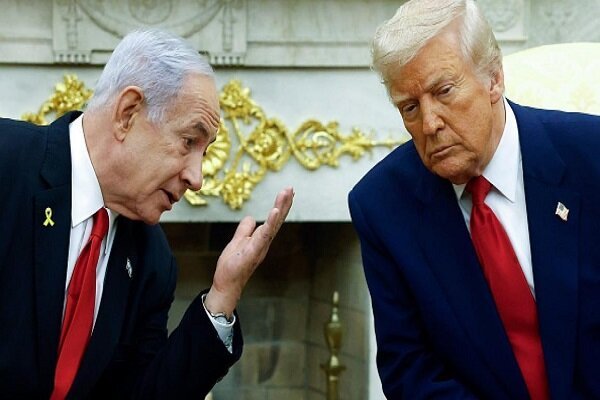
When the White House announced on 16 May 2026 that China had committed to purchasing 200 Boeing aircraft — the American aerospace manufacturer's most significant breakthrough in the Chinese market in years — the framing from Washington was predictable. A headline bilateral deal. A tangible sign of commercial rapport. Proof that personal diplomacy between Donald Trump and Xi Jinping, their second meeting in twelve months, was producing results.
That reading is not wrong. It is simply incomplete in ways that matter.
Reporting from outlets including Mehr News and financial wire services covering the summit makes clear that the aircraft purchase, while real, sat atop a substrate of persistent security tension and mutual distrust that the friendly communiqués could not disguise. The gap between what the two governments said publicly and what their military and intelligence establishments are calculating privately is not new. But the May 2026 summit, by all available accounts, made it sharper rather than softer.
The Deal, Disaggregated
Boeing's announcement deserves to be stated plainly: 200 aircraft, confirmed by both the company and the U.S. President, representing a commercial commitment worth several billion dollars at list prices — though actual aircraft contracts routinely include substantial discounts. For a manufacturer that has spent the better part of three years competing with Airbus for dominance in the single-aisle and wide-body segments, and losing ground in key overseas markets, the China order matters.
But commercial aviation contracts of this scale are not acts of geopolitical goodwill in any straightforward sense. They are supply-chain decisions with decades-long lead times, embedded in airline route planning, financing structures, and regulatory approval chains that predate any particular summit. The deal was likely in negotiation well before Trump and Xi sat down in Beijing. The announcement was timed to the summit; the substance was not created by it.
That is not a minor distinction. It is the difference between a diplomatic photo opportunity and a structural shift in bilateral economic relations. The available evidence points toward the former.
Taiwan: The Topic That Wouldn't Move
The most telling disclosure from pre-summit briefings was Trump's own. Speaking to reporters before the talks concluded on 16 May, Trump indicated that U.S. arms sales to Taiwan would be on the agenda. The statement was notable precisely because it represented no change in the longstanding American position — and Beijing's response to that position has not changed either.
Chinese state media and diplomatic channels have consistently characterised U.S. arms transfers to Taiwan as interference in internal affairs and a fundamental obstacle to improved bilateral relations. That characterisation has been the consistent official line through Democratic and Republican administrations alike. Trump's framing — that the issue was raised, discussed, and presumably not resolved — is the accurate one. The weapons transfers continue. The Chinese objection remains. The summit did not move the needle.
What changed? Very little, structurally. The Taiwan question sits at the intersection of U.S. commitments under the Taiwan Relations Act, Chinese sovereignty claims, and the broader Indo-Pacific deterrence architecture that both Washington and its allies maintain. No two-hour meeting between heads of state resolves that architecture. The Mehr News reporting, which characterised the visit as "full of security tensions and mistrust" despite the diplomatic choreography, captures something that the Boeing headline obscures.
Reading the Structural Reality
The summit took place within a context that neither side has much incentive to alter publicly. The United States faces a Chinese economy that is still, despite significant headwinds, the world's second-largest and a critical node in global supply chains that American businesses depend upon. China faces an American military presence in the Western Pacific that Beijing's strategic planners have spent two decades learning to deter and circumvent.
This is not a relationship that resolves through personal chemistry between leaders, however often the diplomatic language suggests otherwise. The talks proceed because both sides calculate that managed friction is preferable to uncontrolled rupture. The Boeing deal fits that logic: it gives each side something to point to, while the underlying strategic competition continues on its own terms.
That managed friction is not stability. It is a temporary arrangement that defers rather than resolves the core tensions — tensions that include but are not limited to Taiwan, the South China Sea, technology competition, and the dollar-based financial architecture that both governments are quietly, steadily working to hedge against.
The structural frame that observers from a range of perspectives — Western, Chinese, Global South — tend to converge on is straightforward: the current international order is in a period of renegotiation, and summits of this type are as much theatre as substance. The aircraft purchase is real. The mistrust is real. Treating one as proof that the other has been overcome is a misreading of how great-power diplomacy actually functions when interests genuinely conflict.
What Remains Unresolved
The sources consulted for this analysis do not fully specify what additional security concerns animated the Chinese side beyond Taiwan, nor do they provide detailed accounts of what was discussed in the closed sessions of the summit. What is clear is that the friendly messaging from both governments was accompanied by restatements of positions that are fundamentally incompatible — Chinese sovereignty claims over Taiwan that Washington does not endorse, and American security commitments to Taipei that Beijing does not accept.
The Boeing announcement will dominate headlines. The underlying tensions will continue in the background, shaping military deployments, technology export controls, and diplomatic engagement across the Indo-Pacific. Commercial relations and strategic competition are not opposites; they coexist. The question for analysts and policymakers alike is whether the current equilibrium is durable, or whether the gaps between what governments say and what they do will eventually produce a rupture that summits of this kind are designed to prevent.
The evidence from the May 2026 summit points toward managed instability rather than genuine normalisation. That is not nothing — managed instability is preferable to the alternative — but it is a long way from the triumph that the aircraft deal headline implies.
This publication covered the Boeing announcement and the diplomatic framing of the Xi-Trump summit alongside reporting from financial wire services and regional media. The tone of commercial optimism that dominated initial coverage was reflected in our lead; the structural tensions that Mehr News and other sources flagged were given equal weight in subsequent analysis.