The Brinksmanship calculus: Washington, Jerusalem, and the spectre of renewed strikes on Iran
As Israel and the United States elevate their alert posture amid renewed strike discussions, the diplomatic space between Washington and Tehran narrows to a dangerous sliver — and the rhetoric on both sides obscures a more complex strategic calculation.
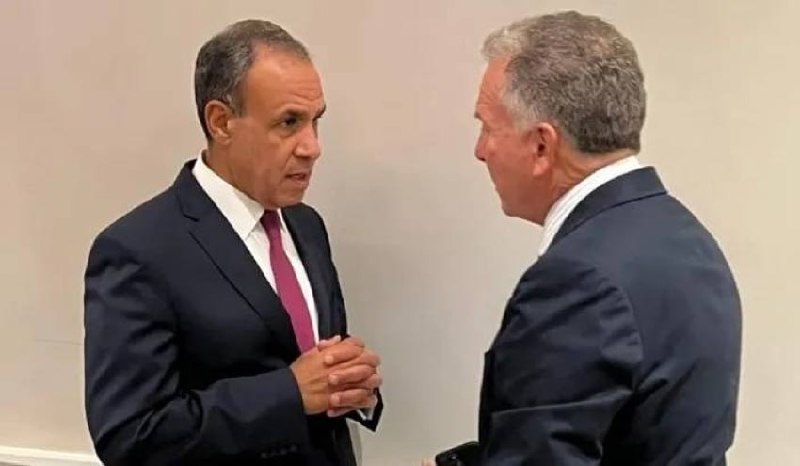
On 17 May 2026, Israeli and American officials quietly elevated their alert posture along the Persian Gulf corridor. The signal — conveyed through operational channels and picked up by regional wire services, including Kan News in Israel — was unambiguous: the possibility of renewed strikes on Iranian territory was no longer a contingency lodged in classified annexes. It was a live planning assumption.
Within hours, Iranian state media fired back. Tasnim News, a semi-official outlet with close ties to the Islamic Revolutionary Guard Corps, labelled President Donald Trump a «delusional» figure making «ridiculous claims» about Iran. A second IRGC-adjacent channel, Jahan Tasnim, ran near-identical language, characterising the President's public statements as an effort to deflect from domestic dissatisfaction. The exchange captures the shape of the moment: two governments talking past each other, each in the language of contempt, while the operational machinery of conflict creeps forward.
The question of whether strikes materialise is not, ultimately, a question of rhetoric. It is a question of whether the political calculus inside both Washington and Jerusalem — and the counter-calculus inside Tehran — has shifted sufficiently to make the use of force again thinkable after the tit-for-tat exchanges of 2025. What follows is an attempt to map the logic on each side.
What the alert-level signal means operationally
Alert-level changes in military posture are rarely cosmetic. When an air force elevates readiness for a specific target set — as appears to have happened here — it typically means one or more of the following: weapons have been drawn from reserve stocks and mated to delivery platforms; aerial refuelling and suppression-of-enemy-air-defences packages have been tasked; diplomatic deconfliction channels with neighbouring airspaces have been activated at the working level; and leadership authorisation chains have been reviewed for speed. These are not decisions made on the morning of a strike. They are made days or weeks in advance, and they generate a logistical footprint that is difficult to conceal from regional intelligence services.
The timing of the Kan report on 17 May is significant for another reason: it comes as the nuclear negotiations that defined the first half of 2026 have stalled, and as the Trump administration's public posture toward Tehran has hardened. The President, addressing supporters at a campaign-style rally in late April, stated that Iran should «be afraid» of his administration — language that regional analysts read as both a signal to Israel and a domestic positioning move, but which the Tasnim dispatch characterised as a «delusional brag» designed to mask declining public support at home.
Israeli defence officials have not commented publicly on specific strike planning. But the historical record is instructive: Israel's 2025 operations against Iranian nuclear sites were preceded by similar alerts, reported retrospectively as confirmation of what had been observed from the ground. The pattern suggests that when Tel Aviv and Washington are on the same operational page, the alert signal is designed as much to shape Iranian behaviour — and perhaps to extract a negotiating concession — as it is to prepare the actual strike.
Tehran's counter-calculation: defiance without miscalculation
Iranian state media's rapid pivot to characterising Trump's statements as delusional is, on one level, predictable domestic messaging. But it also reveals something about the strategic logic Tehran is applying. The Islamic Republic has consistently interpreted American pressure — including military positioning — through the lens of regime survival. In that framing, the purpose of an alert-level change is not necessarily to strike, but to coerce a concession on the nuclear programme or to generate leverage for a renewed deal on terms more favourable to Washington.
This reading is not irrational. Iran watched the United States extract significant concessions from the Taliban through pressure, extract partial denuclearisation commitments from North Korea through a combination of sanctions and summitry, and sustain a maximum-pressure campaign against Venezuela that produced negotiated openings without direct military intervention. Tehran knows that military positioning is frequently a bargaining tool, and its own doctrine — articulated consistently by IRGC commanders — holds that patience, strategic ambiguity, and the maintenance of a deterrent capability are the appropriate responses to American coercion.
The IRGC-adjacent framing of Trump's statements as domestically motivated is also analytically interesting. Iranian strategists appear to be betting that the President's domestic political pressures — flagging approval numbers, an economy showing strain from tariff volatility, a Congress increasingly divided on foreign interventions — constrain the willingness to order a strike that could spiral into a wider conflict. Whether that bet is correct is a separate question. But it is the bet Tehran appears to be making.
The structural context: what a renewed strike would mean for the nuclear architecture
Any analysis of the strike calculus must account for what has already happened. The 2025 Israeli strikes — carried out with American logistical support, though officially denied by Washington — degraded several Iranian nuclear facilities and killed a number of Iranian scientists. The International Atomic Energy Agency subsequently reported that Iran's enrichment activities had slowed but not stopped. Uranium enrichment at the 60-percent level continued, according to IAEA monitors, at facilities not targeted in the 2025 operations.
This is the context in which the current alert posture sits. The goal of a renewed strike would presumably be different from the 2025 operations: not degradation of existing facilities, but perhaps the complete destruction of the remaining enrichment infrastructure, or the elimination of the scientists and commanders who have continued the programme under sanctions. Whether such an operation is achievable without triggering a wider regional response — from Hezbollah in Lebanon, from Iranian proxies in Iraq, from Houthi forces in Yemen — is the central military uncertainty that both Jerusalem and Washington must be calculating.
The structural significance extends beyond the immediate military question. The nuclear architecture that the United States and its allies spent two decades trying to dismantle — through the Joint Comprehensive Plan of Action, through sanctions, through sabotage operations, and through direct strikes — is not functioning as designed. Iran has responded to every layer of pressure with advancement of its programme. The strikes of 2025 bought time. A renewed operation would buy more time. But the history of the past decade suggests that time bought through military strikes is a depreciating asset unless it is converted into a durable negotiated outcome.
Precedent and the risk of escalation spirals
The most relevant historical precedent is not the 2025 strikes, instructive as they are. It is the pattern established in 2019-2020, when the United States killed Quds Force commander Qasem Soleimani and Iran responded with a ballistic missile strike on Al-Asad airbase that injured over 100 American service members. Neither side wanted a war. Both sides ended up at the edge of one. The lesson, which both governments presumably absorbed, is that the first strike is the controllable variable. The response is not.
Iranian commanders have been explicit in recent months that any strike on nuclear facilities would be met with a response against American military assets in the Gulf, against Israeli civilian infrastructure, and against shipping lanes in the Strait of Hormuz. Whether that threat is credible in its entirety is debatable. The Strait of Hormuz threat is the most credible: Iran has demonstrated the capability to interdict tanker traffic and has the anti-ship missile inventory to make commercial shipping in the Gulf genuinely hazardous. The nuclear programme is a red line for Tehran in a way that other regional confrontations are not. A strike that eliminates the programme would represent, in the framing of Iranian leadership, an existential attack — and the response calculus for existential attacks operates on different logic than tit-for-tat exchanges.
What happens next: scenarios and stakeholders
Three broad scenarios emerge from the current posture. The first is a negotiated outcome — some form of last-minute deal in which Iran freezes enrichment in exchange for partial sanctions relief, brokered by intermediaries and presented as a face-saving formula for all sides. This is the preferred outcome of the European parties to the original JCPOA, of much of the Gulf Cooperation Council, and — despite the public posture of maximum pressure — possibly of segments of the Trump administration that understand the military and economic costs of a wider conflict.
The second scenario is a limited strike — designed to degrade the remaining enrichment capability without triggering the escalation chain. This is the scenario Israeli hardliners and some American hawks have advocated for in classified briefings, according to sources familiar with the deliberations. It is operationally achievable in the narrow sense. It is not achievable without a significant risk of the escalation spiral described above.
The third scenario is a prolonged regional conflict — initiated by a strike that Iranian leadership deems existentially intolerable and responded to with the full range of proxy and direct capabilities. This is the scenario that keeps Gulf states awake, that has moved oil traders to hedge positions, and that represents the tail risk that neither Washington nor Jerusalem appears to be openly acknowledging.
The stakes are unevenly distributed. A regional conflict benefits no state in the Gulf except, perhaps, Israel — if the goal is the permanent removal of the Iranian nuclear threat. It damages American interests in the short term by drawing resources from competition with China in the Indo-Pacific. It damages Chinese interests by disrupting energy flows. It benefits, paradoxically, the hardliners inside Tehran who have consistently argued that American threats are existential and that negotiation is capitulation. And it imposes costs on ordinary Iranians — already enduring severe sanctions — that will be described, in the language of state media, as the price of resisting American imperialism.
The Telegram-sourced alerts from 17 May 2026 were the first public confirmation of an operational shift that regional intelligence services had been tracking for at least a week. This publication treated those signals as credible indicators of planning activity rather than bluff — a distinction that is not always easy to make in real time, and that becomes clearer only in retrospect.
Wire provenance
This editorial synthesis draws on the following public wire/social posts:
- https://t.me/wfwitness/12451
- https://t.me/tasnimnews_en/38912
- https://t.me/JahanTasnim/22891
- https://en.wikipedia.org/wiki/Killing_of_Qasem_Soleimani