Cannes 2026 Opens Against a Backdrop of Geopolitical Whiplash
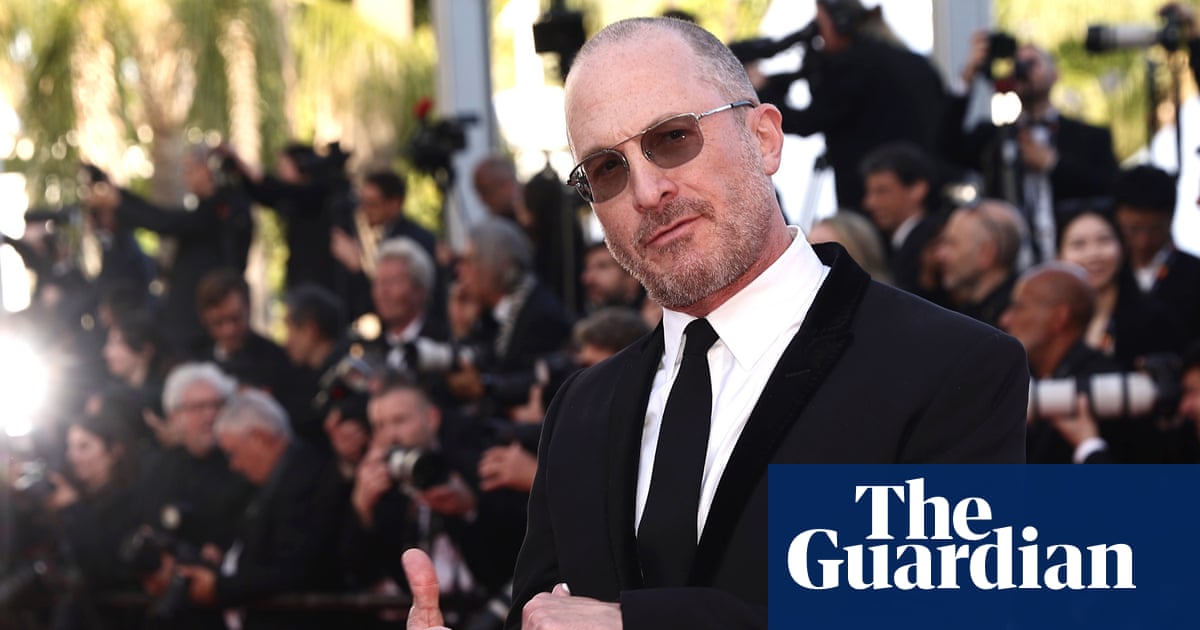
On the evening of 13 May 2026, the red carpet at the Palais des Festivals unspooled on the Côte d'Azur as it has for nearly eight decades — flashbulbs, couture, the ritualised glamour of cinema's premier commercial-art event. By then, the week's real news had already happened elsewhere: a US president had descended on Beijing for a state visit heavy on ceremony and light on concrete agreements, and Philippine police had reportedly conducted an operation inside the Senate complex in Manila involving shots fired, according to France 24 coverage of the week's events.
Cannes does not pause for the world. But the world entering that jury room — and the millions of festival-goers, press credentials, and industry delegates descending on a town of 74,000 — is not the same world that Cannes left behind in 2025. The festival that opens this week carries the accumulated weight of the past eighteen months: tariff escalations that reshuffled international trade flows, an administration in Washington that has treated cultural diplomacy as transactional rather than foundational, and a European cinema landscape still reckoning with the structural collapse of traditional financing models.
The Festival as Geopolitical Signal
Cannes has never been purely about films. Since the Palme d'Or's inception in 1955, the festival has functioned as a barometer of which nations can project soft power through culture, and which industries have the capital to back that projection. The selection committee's decisions — which national cinemas dominate the competition, which streaming platforms receive legitimacy — carry diplomatic freight that studios prefer not to name directly.
The 79th edition arrives in a moment when that soft-power calculus has become unusually explicit. Beijing's state visit to the United States, concluded just days before Cannes opened, was covered by global wire services as an event defined by ceremonial excess and limited deliverables. That framing has a cultural parallel: Chinese cinema has invested heavily in international festival presence over the past decade, yet remains at a structural remove from the Euro-American critical establishment that still largely determines which films generate global conversation. The Cannes selection signals whether that distance is narrowing or calcifying.
The Philippines Senate incident — described by France 24 as a shootout linked to an International Criminal Court operation — lands in a different register entirely. Southeast Asian cinema has historically occupied a marginal position at Cannes, with occasional breakthrough selections generating outsized attention precisely because they are rare. An active security incident in Manila raises questions about press access, jury travel logistics, and whether any Southeast Asian-selected films will see their intended premiere proceed without disruption.
What the Industry Reckons With
Strip away the geopolitics and the Cannes apparatus faces a set of structural challenges that the red carpet is designed to obscure. The dominant studios have spent years using the festival as a launchpad for awards-season contenders while simultaneously lobbying against the European regulatory frameworks that govern content quotas and platform obligations. The paradox is structural: Hollywood needs Cannes for prestige, but the prestige depends on an independent cinema ecosystem that studio economics have spent decades hollowing out.
The competition lineup — selected from thousands of submissions across dozens of national cinemas — will determine whether the festival's curatorial apparatus can still surface voices capable of changing the conversation. Festival director Thierry Frémaux has repeatedly insisted that Cannes exists to platform work that cannot find audiences through conventional distribution. Whether that claim holds in 2026 depends on whether the selection committee prioritised star vehicles or the kind of formally rigorous, commercially marginal filmmaking that built the festival's reputation in the first place.
The streaming question remains unresolved. Netflix, Amazon, and Apple have all at various points treated Cannes as a content-acquisition marketplace rather than a cultural institution — premiering work that has already been algorithmically verified, using the festival's brand to legitimise algorithmic output. Frémaux has pushed back, imposing theatrical-release requirements for competition entries. The 2026 selection will test whether that boundary holds or whether the platforms have found new arrangements.
The Backdrop in Beijing — and Why It Matters for Culture
The Trump administration's approach to China during this week's state visit was characterised by observers as transactional: a show of relationship management without the policy substance that bilateral summits traditionally produce, per France 24's coverage of the week's images. That transactional framing has a direct cultural analogue. For years, American cultural exports to China operated under an implicit bargain — access to a 1.4-billion-person market in exchange for content that passed Chinese regulatory review. The Chinese entertainment industry, in turn, sought to use international festival presence as proof of quality sufficient to cross back into domestic prestige.
That bargain has frayed. Chinese regulatory pressure on both domestic and foreign content has intensified; American studios have faced increasing friction in clearing product for Chinese release. The result is a bifurcated cultural economy: spectacle cinema designed to travel regardless of bilateral friction, and prestige cinema that operates in a parallel universe where Cannes, Venice, and Berlin still set the agenda.
This matters for Cannes because the festival has historically served as a bridge — a space where Chinese-language cinema could reach Western critics and vice versa, with diplomatic implications that were never officially acknowledged but always operative. Whether that bridge is still intact in 2026, and what cargo it carries, will be one of the under-discussed stories of this year's festival.
Stakes and Forward View
The Palme d'Or announcement on 24 May will settle the competition's narrative. But the real stakes of Cannes 2026 extend beyond the prize. The festival must demonstrate that it can still function as a platform for cinema that challenges rather than confirms — that it has not fully converted into a luxury goods showcase for streaming platforms and franchise apparatus. The geopolitical backdrop makes that case simultaneously harder and more necessary.
In a week when a state visit produced more ceremony than commitments, and an ICC-linked operation produced gunfire inside a legislature, the red carpet on the Croisette is an act of insistence: that stories, images, and the conversations they generate still matter as political acts in their own right. Whether the festival's programming justifies that insistence is the only question that matters when the lights go down on 24 May.
This article was filed from Paris on 17 May 2026.
Wire provenance
This editorial synthesis draws on the following public wire/social posts:
- https://t.me/france24_fr