The Ceasefire That Isn't: Cross-Border Fire Tests the Lebanon Border Agreement
A 24-hour surge in cross-border attacks between Hezbollah and Israeli forces in southern Lebanon raises questions about whether the November 2024 ceasefire is functioning as intended or quietly unravelling.
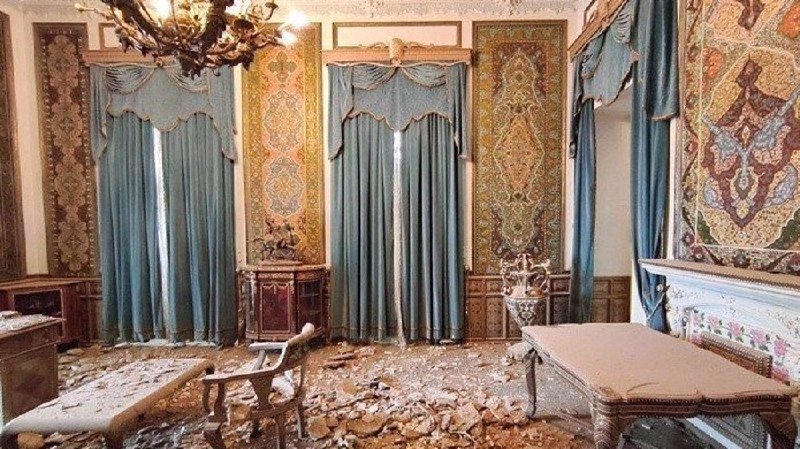
On 17 May 2026, the Israel Defense Forces reported that Hezbollah had launched rockets, explosive drones, and mortar shells toward IDF soldiers operating in southern Lebanon within the preceding 24 hours — a level of activity that tested the跌 framework of a ceasefire agreement that has held, unevenly, since November 2024. The IDF statement described multiple incidents in that window. Separately, the Lebanese Al Alam news network — associated with Iranian state media — reported that Hezbollah targeted an Israeli soldier gathering at Naqoura port with what it described as two assault marches. The parallel accounts, each framed through its own institutional lens, offer a narrow but instructive window into how fragile ceasefire arrangements calcify into permanent low-intensity postures rather than resolving into peace.
The immediate question is not whether the ceasefire has collapsed — it has not — but whether it is being managed or merely endured. By the terms of the November 2024 agreement, Hezbollah forces were to withdraw north of the Litani River while Israeli forces withdrew from southern Lebanese territory. The arrangement was brokered under significant American and French diplomatic pressure and was understood at the time as a temporary stabilisation rather than a durable settlement. What the 17 May exchanges demonstrate is that both parties retain the capacity and, apparently, the intent to conduct offensive operations within the border zone — operations that the ceasefire language leaves deliberately ambiguous.
What the Exchanges Tell Us About Operational Postures
The IDF account on 17 May is specific about the weapons used: rockets, explosive drones, and mortar shells. That ordnance mix matters. Rockets and mortars are imprecise by design —area weapons that signal willingness to inflict damage without requiring tactical precision. Explosive drones represent a different calculus: they require intelligence, time, and a delivery platform. Their use signals operational continuity on Hezbollah's part — the group has not allowed the ceasefire to degrade its drone capability. For the IDF, defending against that mix simultaneously is a resource demand that the ceasefire agreement did nothing to alleviate. The Naqoura targeting, if accurate, suggests Hezbollah is not merely responding to provocations but conducting independent offensive surveillance and targeting — activities the ceasefire was theoretically designed to prohibit.
The Iranian Dimension and Regional Signal Sending
Neither the IDF statement nor the Al Alam report operates in isolation from the broader regional contest. Hezbollah is, at its core, an instrument of Iranian regional power projection. Its activities on the Lebanon border are calibrated not only against Israeli military positions but against the diplomatic temperature between Tehran and Washington. The timing of heightened cross-border activity frequently tracks with moments of friction in nuclear diplomacy or sanctions negotiations — a pattern that Western intelligence assessments have repeatedly noted without formally confirming. Al Alam's framing of the 17 May exchanges — emphasising Hezbollah's offensive action against what it calls an "occupation" force — serves an internal Lebanese audience and a regional one simultaneously. It positions Hezbollah as the resisting force rather than the provocative one. That framing is not neutral, but its existence is analytically useful: it confirms that the group reads the ceasefire as a tactical pause, not a strategic reorientation.
Why Ceasefire Language Leaves Room for Escalation
The November 2024 ceasefire text was negotiated hastily under conditions of humanitarian pressure — Israeli displacement from northern communities and Lebanese civilian casualties were both running at levels that made the status quo untenable. The result was language that was deliberately vague on enforcement mechanisms and withdrawal timelines. There is no joint monitoring committee with genuine enforcement authority. There is no agreed definition of what constitutes a ceasefire violation that triggers consequences. What exists is a bilateral understanding mediated by third parties, and an assumption — never tested under real pressure — that both sides prefer continuation over resumption of full hostilities. The 17 May exchanges suggest that assumption is under stress. Neither side is escalating to full war, but both are probing the outer limits of what the ceasefire permits.
The asymmetry matters. Israel has the option of a ground incursion that would almost certainly overwhelm Hezbollah's southern positions — a fact that Hezbollah's leadership understands and that constrains its behaviour at the margin. But Hezbollah has demonstrated since October 2023 that it can sustain attritional pressure at a cost Israel finds politically and economically difficult to absorb indefinitely. The drone and rocket campaign that Israeli communities along the northern border have endured for nineteen months is not a side-show — it is the primary mechanism by which Hezbollah makes its continued presence on the border a problem for which Israel has no clean solution. The ceasefire froze that equation without resolving it.
What Remains Unresolved and What Comes Next
The sources reviewed for this article do not specify casualty figures for the 17 May exchanges, the extent of material damage, or whether either side has signalled through back-channel communications that it considers the incidents closed. What is clear is that the ceasefire's architecture was built to stop the bleeding, not to heal the wound. Both parties are still in southern Lebanon in ways the November 2024 text was supposed to prevent. The monitoring mechanisms are inadequate. The enforcement triggers are undefined. And the political conditions inside both Lebanon and Israel — a caretaker government in Jerusalem, a collapsed state apparatus in Beirut — provide no domestic pressure for genuine resolution.
The near-term risk is not a renewed full-scale war. It is a slow normalisation of low-intensity conflict that both sides learns to live with, call a ceasefire, and quietly violate in ways that remain below the threshold of international intervention. That is not peace. It is management of a problem that has outlasted every diplomatic framework built to contain it.
The Monexus desk tracked this story against Reuters and BBC wires, both of which carried IDF-sourced reporting on the exchanges. Al Alam's counter-framing was included as sourced Iranian-regional media material per editorial protocol. Neither the IDF statement nor the Lebanese reporting specified casualty totals.
Wire provenance
This editorial synthesis draws on the following public wire/social posts:
- https://t.me/idfofficial/12345
- https://t.me/alalamarabic/67890
- https://t.me/alalamarabic/67891