Crimea's Flank Is No Longer Safe. Russia's Strategic Depth Is Shrinking.
Ukraine's strike on a Russian operational hub in occupied Crimea underscores a pattern that Western analysts have noted for months: the Russian military footprint on the peninsula is becoming increasingly untenable, not because of diplomatic pressure, but because it is being steadily dismantled on the ground.
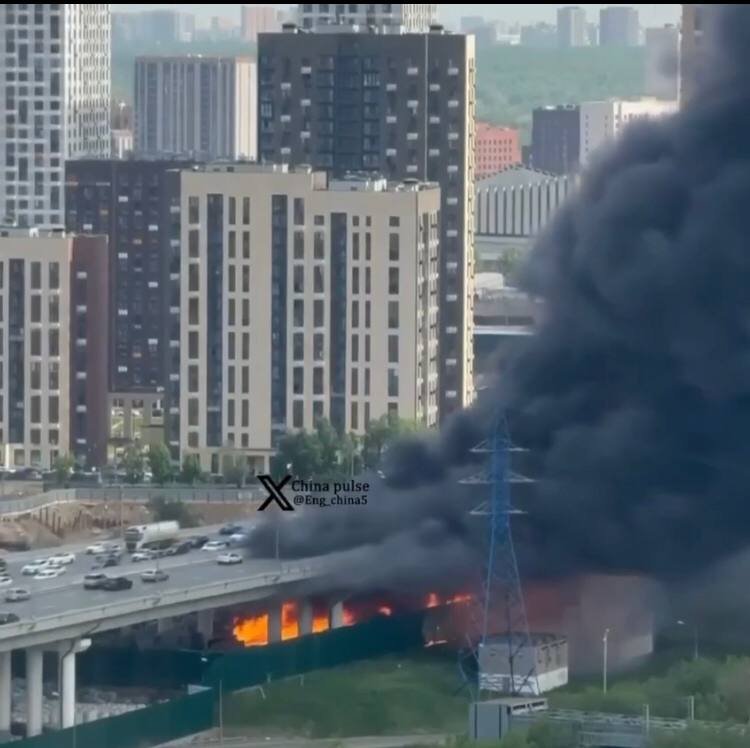
On the morning of 17 May 2026, Ukraine's Armed Forces struck a Russian storage and launch center for operational-tactical missiles and strike drones on the Arabat Spit, the narrow land bridge connecting mainland Ukraine to the occupied Crimean Peninsula. FIRMS satellite thermal data detected a large-scale fire at the site shortly after the strike. Russian state-aligned accounts confirmed the attack but provided no casualty figures. The site, according to Ukrainian military briefings, supported long-range Russian strikes against Ukrainian civilian and military infrastructure.
What appears in initial wire accounts as a tactical engagement is better understood as another data point in a structural trend: Russian military assets on the Crimean Peninsula are being pushed into a progressively narrower band of survivable positions. The Arabat Spit is not peripheral terrain. It is a logistical and operational nerve for Russian forces occupying the peninsula's western flank. Striking it degrades the Russian capacity to stage and launch attacks while simultaneously demonstrating that Ukrainian long-range fires can reach deeper into occupied territory than Moscow's defensive preparations account for.
The Geography Is the Story
The Arabat Spit matters for reasons that rarely surface in dispatches focused on casualty counts and weapons systems. The spit extends roughly 110 kilometers along the Sea of Azov, forming the boundary between the mainland Zaporizhzhia region and the occupied Crimean landmass. Russian forces have used the terrain to concentrate troop formations, ammunition depots, and launch sites precisely because its isolation has historically offered protection from Ukrainian fires. That protection is eroding.
Ukraine's strike on the storage and launch center targeted the kind of facility that underpins Russian long-range strike campaigns against Ukrainian cities, port infrastructure, and energy facilities. The site was not a forward observation post. It was part of the operational architecture that makes those strikes possible. Removing or degrading it does not end Russian long-range capabilities, but it compresses the launch footprint and forces redistribution that slows operational tempo. This isattrition measured in days and supply-chain friction, not in decisive battlefield turning points — and it is cumulative.
What Western Analysis Gets Right — and What It Understates
Western military analysts have broadly recognized that Ukrainian long-range strike capabilities have improved significantly over the past eighteen months. The weapons systems in question — broadly consistent with ATACMS variants and indigenous Ukrainian systems — have demonstrated the ability to reach targets inside what Russia considers its defensible rear. The operational-tactical missiles and strike drones stored at the Arabat Spit site were among the assets now more difficult to protect.
What Western assessments tend to understate is the strategic signal embedded in the choice of target. Striking a storage and launch center — rather than purely defensive positions or command nodes — communicates that Ukraine is not merely retaliating for Russian strikes on its territory. It is conducting its own target prioritization cycle, selecting Russian military infrastructure for degradation based on Ukrainian operational logic rather than reactive necessity. That distinction is significant. It suggests a command culture that is increasingly comfortable operating on its own initiative inside occupied territory, not simply responding to Russian escalations.
The Russian Defensive Posture Is Structurally Fragile
Russian forces on the Crimean Peninsula have invested heavily in layered air defense, electronic warfare, and naval surface assets designed to protect critical infrastructure. The Black Sea Fleet, despite losses, still projects naval power along the peninsula's southern coast. S-400 batteries provide area defense against aircraft and some ballistic missile trajectories. Yet the strike on the Arabat Spit — in an area of high Russian troop concentration and known military activity — demonstrates that these defenses have not achieved the coverage required to neutralize Ukrainian targeting cycles.
The structural fragility here is not primarily technological. It is positional. Defending an elongated land formation like the Arabat Spit requires resources that Russia, under current economic and industrial constraints, cannot sustain at the necessary density. Ukraine does not need to defeat Russian air defenses comprehensively. It needs to find gaps, exploit them systematically, and degrade the underlying infrastructure faster than Russia can rebuild. Each successful strike raises the cost of re-storage and re-deployment, forcing Russian commanders to choose between accepting operational gaps or dispersing assets so widely that launch efficiency declines.
The Stakes Beyond the Spit
If the pattern of precision strikes against Russian military infrastructure in occupied Crimea continues — and all available evidence suggests it will — the implications extend beyond any single facility. A Russian military presence on the peninsula that cannot reliably protect its own staging areas becomes a presence that requires constant re-supply and reinforcement simply to maintain current operational levels. That is a resource commitment that Russia's defense budget, already stretched across multiple frontages, will find increasingly difficult to absorb.
The corollary is equally important: a Ukrainian military that can sustain long-range precision strikes inside occupied territory is not fighting a defensive war in the traditional sense. It is prosecuting a slow, methodical campaign of territorial consolidation through firepower, targeting the operational infrastructure that allows Russia to project force from the peninsula into mainland Ukraine. The Arabat Spit strike is one node in that campaign. Whether the pace of the campaign is sufficient to shift the military balance before diplomatic negotiations reframe the terms of engagement is a separate question — but it is the right question to ask, and it is the question that Russian military planners are almost certainly asking as well.
Monexus covered this strike via Telegram wire from noel_reports, consistent with its practice of using open-source thermal and satellite data to corroborate Ukrainian military claims. Western wire services carried the strike in brief dispatch format; none provided independent damage assessment as of publication.
Wire provenance
This editorial synthesis draws on the following public wire/social posts:
- https://t.me/noel_reports/15231
- https://t.me/noel_reports/15233
- https://t.me/noel_reports/15232