The Castro surname is gone. The dynasty may not be far behind
Betting markets are pricing a 65% chance that Miguel Díaz-Canel loses his post before year-end. That is a remarkable signal — and one that U.S. policy has yet to reckon with.
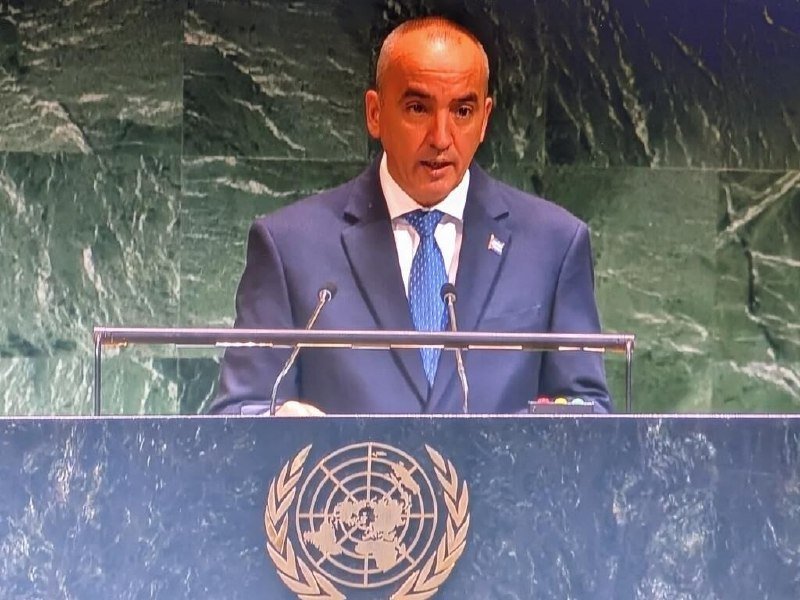
The question circulating in trading circles is not whether Cuba changes, but whether the man at the top of it survives. Polymarket — the prediction-market platform that has become an unlikely institutional fixture in Washington's policy conversations — is carrying a 65% implied probability that Miguel Díaz-Canel is removed as Cuba's president before the end of 2026. A second market, launched in May, prices a 51% chance of a direct U.S.–Cuba diplomatic meeting within the next six weeks. The two odds do not contradict each other. They may be describing the same event from different angles.
This publication finds that the market signals are credible — not because prediction markets have a reliable track record, but because the structural conditions they are pricing are real. Díaz-Canel is the first post-revolutionary Cuban president with no direct link to the 1959 revolution, which once conferred an unchallengeable legitimacy. That legitimacy deficit has compounded with each year of economic failure. Blackouts in Havana now last eight, ten, twelve hours at a stretch. Food shortages are systemic, not cyclical. The second Trump administration — arriving with an explicitly transactional approach to hemispheric relations — may find in the Cuban moment an opening that neither Obama nor Biden chose to exploit.
A president without a founding myth
Díaz-Canel assumed the presidency in October 2018, inheriting a system that Raúl Castro still nominally controlled as first secretary of the Communist Party. By 2021, he had absorbed that final role too. But the architecture of legitimacy was always borrowed. Unlike Fidel, who commanded a revolution, or Raúl, who managed its aftermath, Díaz-Canel has only managed decline. The economic data — independently collected by the World Bank, the UN, and private researchers working with Cuban civil society networks — shows GDP per capita contracting in real terms for four consecutive years. Remittances from the Cuban diaspora, once a stabilising pressure valve, have faced increasing U.S. Treasury enforcement under renewed sanctions. The government's response to chronic fuel shortages has been to ask citizens to stay home — an admission that the state's logistics infrastructure has failed.
The migration crisis has added a political layer that the regime cannot easily manage. According to U.S. Customs and Border Protection figures, encounters with Cuban nationals at the southern border have run at historically elevated levels throughout 2025 and into 2026. Each boat that leaves the island is a visible rebuttal of official state media's narrative of besieged but stable sovereignty. The diaspora is not just sending money — it is sending testimony.
For a government whose authority rests on the claim of serving the people, a sustained humanitarian crisis is a legitimacy crisis. The market is pricing the conclusion that the internal pressure has reached a threshold that may force a resolution — whether through managed succession, factional reshuffle, or something less orderly.
What a second Trump administration changes
Obama's 2014 normalisation was conditioned on a prisoner exchange and a ballistic-missile freeze. Biden maintained sanctions while quietly easing remittance restrictions through executive action. Neither administration treated Cuba as a live diplomatic priority. Trump 2.0 — having re-entered office with a governing philosophy that prizes bilateral deals over multilateral pressure — may be the first White House in thirty years to see Cuba as a usable variable.
The 51% odds on a diplomatic meeting before the end of June reflect genuine market perception that something is moving. A senior Cuban economic official told a regional outlet in early May that the island was exploring 'creative mechanisms' for dialogue — language that, in diplomatic translation, means exploring whether the Trump administration will accept partial compliance in exchange for a visible win. Whether that translates into an actual meeting — or a tweet with a handshake photo — remains uncertain. Markets price the likelihood of an event, not its outcome. A meeting could be the start of a thaw, or it could be a performance. The distinction matters for policy; it matters less for the market's odds.
The structural logic, however, is coherent. Cuba is proximate, broke, and diplomatically isolated — which is, historically, the precise combination that produces American engagement rather than American containment. The Helms-Burton Act constrains normalisation formally, but formal constraints have never stopped executive discretion in foreign policy. The question is whether Trump sees a Cuba deal as a manageable prestige event — the kind of transactional win he has shown a preference for across multiple theatres.
The geopolitical floor beneath the moment
Cuba's strategic significance is not merely historical. Russian intelligence vessels have operated from Havana's port on and off since the early 2020s. Chinese foreign direct investment — concentrated in mining, port infrastructure, and renewable energy — has expanded steadily, even as U.S. sanctions were tightened. This is not a Cold War replay; it is a lower-intensity version of the same structural competition for regional footholds that has persisted since the 1960s. The difference is that the current incumbents in Havana have fewer resources to extract from that competition and more desperation.
If Díaz-Canel falls, the succession question matters to Washington as much as to Havana. A successor faction with a stronger economic-reform mandate — one that might seek IMF engagement or dollarisation in the style of Argentina's Javier Milei — would be deeply inconvenient for Beijing and Moscow. A successor faction that doubles down on the socialist model and deepens security ties with Russian intelligence would be deeply inconvenient for Washington. Neither outcome is guaranteed. Prediction markets are better at identifying pressure than at mapping its resolution.
What is clear is that the current equilibrium — a Cuban government that is neither integrated nor contained, neither reformist nor stable — has run out of road. The 65% odds on a leadership change before December 2026 are not a statement about what should happen. They are a statement about what the structural conditions of a bankrupt, isolated, legitimacy-depleted state tend to produce. The question for U.S. policy is not whether to engage with a post-Díaz-Canel Cuba — it is whether to be in the room when the succession happens, or to watch it from a distance that looks increasingly like irrelevance.
The betting markets have done their probability assessment. The policy apparatus has not done its contingency planning. That gap is the actual story here.
Wire provenance
This editorial synthesis draws on the following public wire/social posts:
- https://en.wikipedia.org/wiki/Miguel_D%C3%ADaz-Canel
- https://en.wikipedia.org/wiki/United_States%E2%80%93Cuba_relations
- https://en.wikipedia.org/wiki/Helms%E2%80%93Burton_Act