The Drone Corridor to Moscow: Legitimacy, Escalation, and the Language of War
Ukraine's expanding drone strikes into Russia's heartland are being recast as provocation by critics who applied no such standard to three years of Russian bombardment. That framing deserves scrutiny.
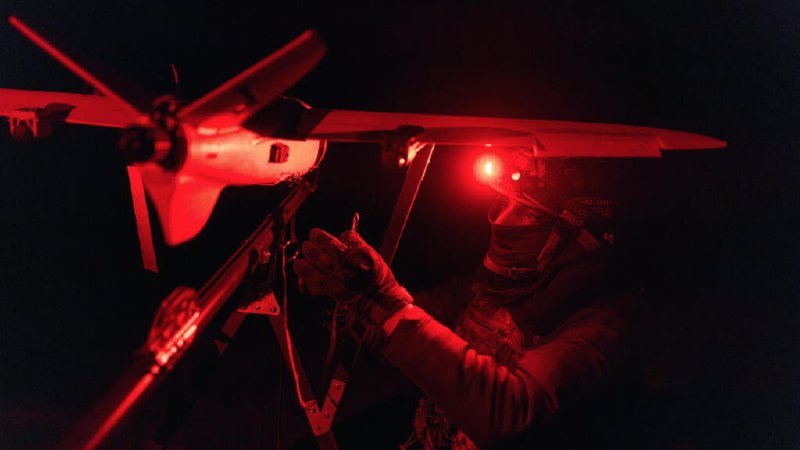
On the night of 16–17 May 2026, Ukrainian unmanned aerial vehicles reached Russia's Moscow region from multiple vectors. Explosions were reported in Klin and Zelenograd; debris from intercepted drones struck residential buildings and a parking area in Zelenograd, and an oil-products filling station in the village of Durykino was hit, according to reporting from the Moscow region. Air defense systems were active across the area throughout the incident. The strikes marked the third consecutive night of drone activity targeting the capital's hinterland — and prompted the familiar chorus of hand-wringing in Western capitals about escalation.
That chorus deserves harder scrutiny than it typically receives.
A Legitimate Response to Unprovoked War
Ukraine is not the aggressor in this conflict. Russia launched its full-scale invasion in February 2022, annexed Ukrainian territory by force, and has conducted a sustained campaign of missile and drone strikes against Ukrainian cities, energy infrastructure, and civilian populations for over three years. That is not a contested factual claim — it is the settled position of international law, the United Nations General Assembly, and every democratic government in the world that has formally recognized Ukraine's sovereignty.
When a defending state strikes military-relevant targets inside the aggressor's territory, that is not escalation. It is the logical extension of a legitimate right to self-defence. The targets chosen — an oil products facility, infrastructure supporting Russia's military logistics — are not random. They are systemic. Ukraine has been explicit that its long-range drone programme targets the logistics chain sustaining Russia's ability to project force. That is precisely what the laws of armed conflict permit.
The language of "escalation" has been applied so promiscuously to Ukrainian military actions over the past two years that it has lost analytical content. When Russian forces strike a Ukrainian hospital, Western officials use clinical language about "the ongoing conflict." When Ukrainian drones reach an oil depot inside Russia, the same officials reach for "escalation." The asymmetry is not subtle.
The Fragile Sanctimony of Western Caution
The standard critique runs as follows: Ukrainian strikes inside Russia risk provoking a Russian response that could overwhelm Western support for Kyiv, invite direct NATO–Russia confrontation, or cross some undefined red line that the critics themselves have drawn without reference to any legal or strategic framework.
There is a version of this argument that is internally coherent. It holds that Western governments have calculated that certain thresholds must not be crossed in order to maintain the political coalitions sustaining military aid. If that is the argument, it should be made plainly: Western governments are limiting Ukraine's military options to preserve domestic political stability in donor countries. That is a real trade-off, and it deserves honest debate.
What should not pass without challenge is the pretense that there is a principled distinction between strikes on Russian territory and strikes on Ukrainian territory. There is no such distinction in the laws of armed conflict. A state defending itself against armed attack may conduct operations against military targets in the territory of the aggressor. This is not controversial; it is foundational.
The critique of Ukrainian drone strikes as escalation is, in this light, a critique of Ukrainian sovereignty — of the proposition that Ukraine gets to decide how it defends itself, against which targets, using which means. The critics may genuinely believe that Western political constraints justify limiting Ukrainian targeting choices. That is a defensible position. But it should not be dressed up as a legal or moral principle when it is, in fact, a statement about Western comfort levels.
What the Moscow Strikes Actually Signal
The strikes of 16–17 May are not an anomaly. They are the visible surface of a systematic Ukrainian effort to extend the range and frequency of operations inside Russia. The pattern over recent months suggests a deliberate, escalating campaign — not toward civilian targets for their own sake, but toward infrastructure that degrades Russia's ability to sustain its military machine.
Oil and petroleum products are the circulatory system of any modern military. Russia's invasion of Ukraine depends on a logistics network that runs through Russian territory. Ukrainian drones are probing that network with increasing range and precision. The strikes on facilities in the Moscow region — hundreds of kilometres from the front line — demonstrate that this capability is maturing.
This is, from Ukraine's perspective, a rational response to a fundamental strategic asymmetry: Russia can launch missiles and drones against Ukrainian cities from safe territory inside Russia, while Ukraine has been expected to absorb those strikes without reciprocal response. The introduction of long-range Ukrainian drones does not create this asymmetry. It begins, slowly and unevenly, to correct it.
Whether Western governments welcome that correction or find it uncomfortable, the trajectory is set. Ukraine has demonstrated the capability. It has demonstrated the willingness. And it has demonstrated — in the selection of military-relevant targets, in the precision of strikes, in the evident care to avoid mass-casualty civilian incidents — that it is using this capability in a manner consistent with the laws of armed conflict. That is more than can be said for Russia's conduct of this war.
The Stakes Ahead
The debate about Ukrainian drone strikes inside Russia is, at bottom, a debate about what kind of war the West is prepared to support Ukraine in fighting. If the answer is a war of attrition in which Ukraine absorbs unlimited Russian strikes on its territory and civilian population while restricting its own operations to occupied Ukrainian land, then Western governments should say so clearly and accept the consequences of that choice.
If, alternatively, the goal is to bring this war to a conclusion that respects Ukraine's sovereignty and territorial integrity, then the systematic degradation of Russia's logistics — including infrastructure inside Russia — is not provocation. It is strategy. It is, moreover, the only strategy available to Ukraine that does not depend on an indefinite escalation of Western military commitments.
The drone corridor to Moscow is not a sign that Ukraine has lost its grip on proportionality or abandoned its values. It is a sign that Ukraine is adapting to the war it is in, not the war its critics wish it were fighting. Whether that adaptation leads to a negotiated settlement, a battlefield breakthrough, or a prolonged grinding attrition depends on factors well beyond the range of any drone. But the strikes of 16–17 May are not the problem. They are a response to a problem — one that three years of Western restraint has done nothing to solve.
This publication covered the overnight drone activity as reported by open-source monitors and Telegram channels tracking the Moscow region. Western wire reporting on the strikes was not available at time of writing.
Wire provenance
This editorial synthesis draws on the following public wire/social posts:
- https://t.me/intel_slava
- https://t.me/intel_slava
- https://t.me/intel_slava
- https://t.me/intel_slava