The Drone's Eye: How Open-Source Footage Rewrote the Rules of Conflict Reporting
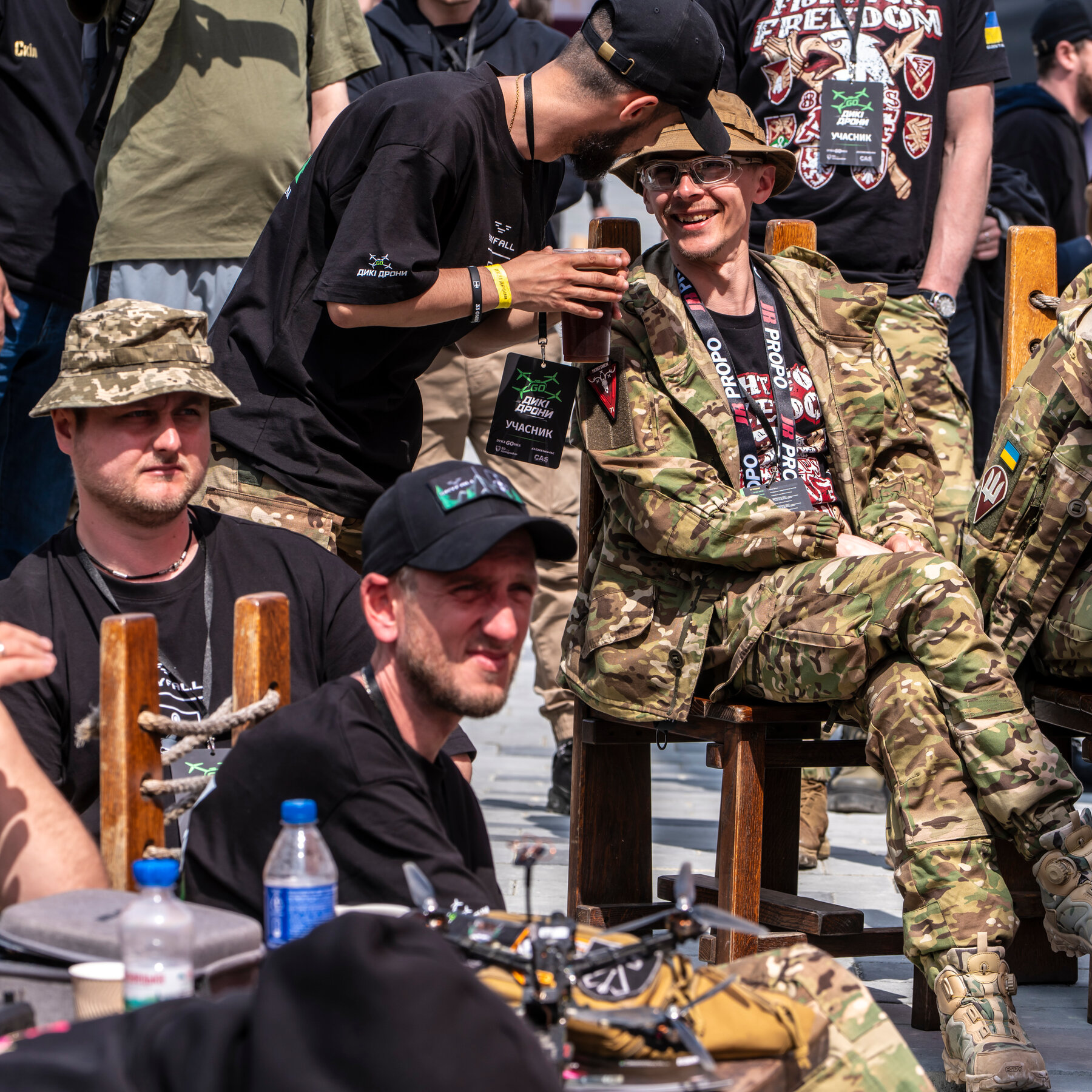
On 17 May 2026, an SSO unit operating under the call sign UA_REG_Team uploaded footage to Telegram showing its operators destroying Russian personnel with FPV drones. The clip ran less than two minutes. Within hours it had been clipped, reposted, and debated across X and Telegram. Observers in London, Lagos, and Sydney were watching a tactical strike in near-real time. The footage was filmed by the operators who conducted it — a reversal of the traditional information order that placed cameras in the hands of embedded journalists or military public affairs offices.
What UA_REG_Team posted is now routine. Ukrainian and Russian forces alike use drone-drop footage, thermal imaging from surveillance UAVs, and GoPro clips from FPV strikes as routine communication tools. The shift is not merely technical. It is structural. The institutions that once mediated between warfare and public understanding — military briefings, official press releases, embedded correspondent programs — have not disappeared, but they now compete with a vast, unfiltered archive of footage produced by the combatants themselves.
Ukraine entered the full-scale invasion in 2022 with one of the most sophisticated information operations in modern conflict history. Its strategy was not invented wholesale — it built on open-source intelligence work developed during the Russo-Georgian war in 2008 and refined through the Donbas conflict from 2014 onward, when researchers began using satellite imagery and social media geolocation to document troop movements and infrastructure damage independently of military or state sources. But the scale and intentionality of Ukraine's information strategy in 2022 was new. The Telegram channel of the Ukrainian General Staff, the United24 fundraising platform, and the deliberate seeding of drone footage to OSINT analysts and military bloggers were deliberate policy choices. The objective was not simply morale — it was audience-building, diplomatic pressure, and arms-support argumentation conducted in public.
The result was a generation of Western audiences who received their primary visual impressions of the conflict not from broadcasters but from drone operators, Ukrainian military bloggers, and open-source analysts who geolocated and annotated footage before wire services had filed their first dispatch. The shift altered how parliaments debated weapons shipments, how intelligence committees assessed battlefield claims, and how editorial desks at major outlets framed their coverage. Military public affairs offices, designed for an era of managed information release, found themselves operating in a media environment where a single drone operator with a Starlink terminal could reach ten million viewers faster than any press release.
The counter-narrative is not that military forces are passive recipients of this disruption. Both Ukraine and Russia have sought to weaponise the same dynamic. Russian milbloggers — popular Telegram channels with audiences numbering in the hundreds of thousands — have published footage of Ukrainian positions, strikes on supply convoys, and commentary purporting to show the limits of Western-provided systems. Ukrainian military bloggers perform a parallel function, curating OSINT data, translating it for foreign audiences, and arguing — often in real time — against claims made by Russian state media. The platforms that carry this content are not neutral conduits. Telegram's combination of public channels and private group chats allows both sides to reach broad audiences while maintaining operational security in smaller circles. X's algorithmic amplification rewards content with high emotional resonance and rapid engagement, which tends to privilege raw footage over contextualised analysis.
The question of who controls the frame is not abstract. On 17 May 2026, a post on X claiming a fire in Moscow was the result of a Ukrainian drone strike circulated widely before analysts identified the location as a paint storage yard — a mundane industrial facility — and attributed the fire to causes unrelated to military action. The correction, when it came, reached a fraction of the original audience. This is not a new problem in media studies, but the speed and scale of misattribution in conflict contexts has no recent precedent. A decade ago, the lag between event, recording, and broadcast provided a buffer for verification. The infrastructure of open-source documentation has compressed that lag to minutes, outpacing the institutional verification mechanisms that most newsrooms still rely on.
The structural frame here is not about the ethics of drone warfare, important as that debate is. It is about what happens to public understanding when the primary visual record of a conflict is produced by its participants. Military public affairs offices have not been dismantled — they have been supplemented and, in certain registers, superseded by an ecosystem of combat footage, OSINT analysis, and military blogging that operates largely outside the editorial norms of professional journalism. Credibility, in this environment, is not conferred by institutional affiliation but by perceived access to original sources and the reputation of individual analysts for accuracy. The quality control mechanisms of professional journalism — editorial review, source corroboration, legal review — do not apply to a Telegram post from a drone operator at the front.
Ukraine has not been the sole beneficiary of this shift. The dynamic has given Russian-aligned channels comparable access to global audiences, allowing state-adjacent media to publish footage of Ukrainian positions and strikes that would have required diplomatic negotiation to access in the broadcast era. The information environment is more saturated than any previous conflict, but it is not more coherent. Audiences are exposed to more raw footage than at any previous point in military history, yet the interpretive frameworks available to make sense of that footage have not expanded proportionally. The result is a paradox: more visual evidence of war than ever before, and a public comprehension of war that is arguably more fragmented.
The stakes are not confined to media ethics. Democratic governments making decisions about weapons shipments, sanctions, and diplomatic engagement operate within information environments shaped by this footage. Parliaments in Germany, Poland, and the United States have debated arming Ukraine partly on the basis of drone footage circulated on social platforms — footage that influenced public sentiment before formal intelligence briefings had reached classified committees. This is not a malfunction of the system. It is the system operating as designed, which raises the more uncomfortable question of whether the institutions of democratic accountability — built around controlled information release and professional mediation — are adequate to a media environment where combatants publish their own footage directly to global audiences.
What the sources do not yet resolve is whether the OSINT ecosystem is structurally biased toward one side or another. Ukraine's more sophisticated use of digital platforms in the conflict's early years gave it a first-mover advantage in audience-building, but Russian state media and milbloggers have invested heavily in comparable infrastructure. The quality and frequency of drone footage from both sides has equalised significantly since 2023, making it harder to argue that the information environment systematically advantages one combatant. The more defensible claim is that it advantages whichever side has the more active, technically sophisticated, and internationally networked information operation — and that this advantage is now contested ground rather than Ukrainian monopoly.
The desk note explains the editorial framing: the article treats OSINT as a structural phenomenon common to both sides of the conflict, without implying moral equivalence between an invaded and an invading power. Ukraine's information strategy is covered as a wartime communication policy, not as a justification for any particular military tactic. The footage from UA_REG_Team is presented as a document of a documented practice, not as a celebration of its content.
Wire provenance
This editorial synthesis draws on the following public wire/social posts:
- https://t.me/ua_regteam
- https://t.me/ButusovPlus
- https://x.com/brianmcdonaldie/status/2055994000889290753
- https://x.com/sknerus_/status/2056056696124878848