The Drone War Comes to Moscow — and the West's Comfortable Narratives Collapse With It
Ukrainian drones struck deep inside Russian territory on 17 May 2026, killing three and wounding sixteen in the Moscow region. The strikes raise uncomfortable questions about which lives the international order considers worthy of protection — and whether the West's selective outrage reflects principle or convenience.
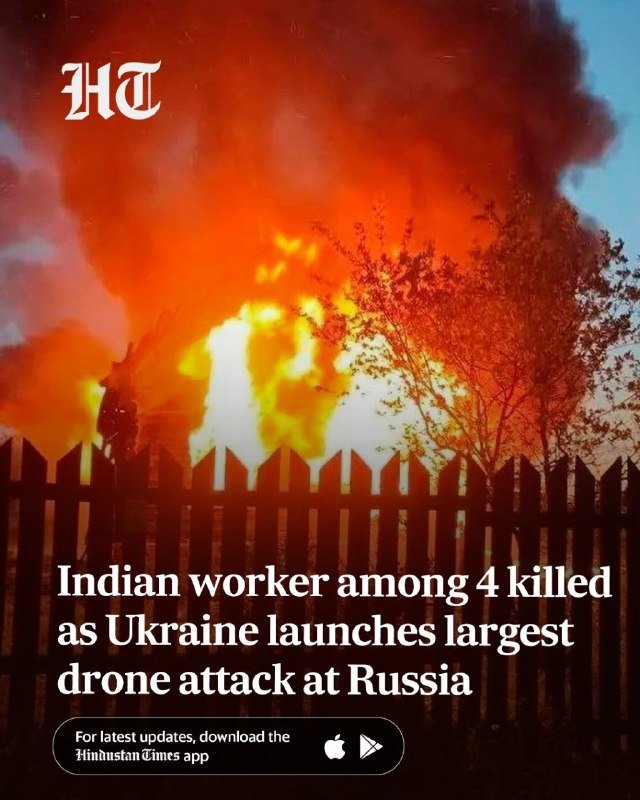
The images circulated within hours of each other. On one side of the frame, civilian infrastructure in Ukraine reduced to rubble by Russian missiles. On the other, smoke billowing from an oil refinery in the Moscow region after Ukrainian drones punched through air defenses that Moscow had long insisted were impenetrable. By the end of 17 May 2026, three people were dead and sixteen wounded in the attacks, which also struck Sheremetyevo International Airport, according to initial accounts from Russian authorities and the Moscow mayor's office. Twelve people were injured near the refinery, the mayor confirmed.
The strikes are not a moral puzzle. Ukraine is the country under illegal occupation. Ukraine is the country whose civilians have been killed, whose cities have been flattened, whose sovereignty has been violated by a full-scale military invasion. That Ukraine would reach deeper into Russian territory to degrade the infrastructure feeding Russia's war machine is not aggression. It is the logical extension of the right to self-defense — a right the West endorses in principle and then quietly revises when Ukraine exercises it too effectively.
A War That Refuses to Stay Contained
The narrative that Ukraine's conflict with Russia is a contained, resolvable dispute between two parties requiring negotiated compromise has always required selective amnesia. Russia launched a full-scale invasion in February 2022. Russia has bombed Ukrainian hospitals, civilian apartments, and grain infrastructure. Russia has occupied Ukrainian territory by force and absorbed it into its own administrative structure. Ukraine did not choose this war. But Ukraine did choose, reasonably, not to lose it.
The escalation of drone strikes into Russian territory over the past two years represents not a departure from Ukrainian strategy but its maturation. Western partners supplied the weapons on the condition they not be used to strike Russian soil — a restriction that told Moscow it could launch its invasion from airfields and staging grounds inside Russia with impunity while Ukrainian civilians bore the consequences. When Kyiv began systematically breaching that red line, the sky did not fall. The sun rose on a Russia suddenly forced to reckon with the fact that its own territory has front lines too.
The 17 May strikes on the Moscow region suggest that Ukrainian drone capability has matured to the point where quantity and precision are no longer the constraint. Hitting an oil refinery — critical logistics infrastructure — and an international airport serving millions of passengers is not a symbolic act. It is the methodical application of military pressure on a state that has experienced almost none on its own soil since the Second World War.
The Geography of Moral Concern
What is striking is not that Ukraine strikes Russian territory but that Western commentary treats every such strike as a potential escalation requiring restraint. When Russian strikes kill Ukrainian civilians, the response is calibrated to avoid further inflaming Moscow. When Ukrainian strikes kill Russian civilians — or fail to do so, as the relatively low death toll on 17 May suggests — the response is calibrated to distance Kyiv from its own actions.
This is not a callous observation about Western hypocrisy, though the pattern is real. It is a structural point about how the international order determines whose suffering merits urgent concern. Russian civilians have been told for decades that their security depends on projecting power outward, that threats must be addressed before they materialize on Russian soil. Ukrainian civilians have been told, more quietly, that their security depends on Western goodwill — a commodity with an expiry date.
The 17 May attacks killed three people in the Moscow region. Russian strikes on Ukrainian cities have killed hundreds in a single night. The arithmetic of suffering is not a competition, but the asymmetry in how each death is discussed in Western capitals is itself a form of editorial judgment. When Russian officials claim the strikes constitute terrorism, they are using language that, if applied consistently, would indict their own air campaign over Kyiv, Mariupol, and Kharkiv many times over.
The Drone That Changes the Calculus
Drone warfare has flattened the cost curve of military action in ways that planners on both sides are still processing. A single operator in a hardened shelter can now direct a $20,000 platform into a target worth hundreds of millions of dollars. The asymmetry that once allowed larger, richer militaries to strike with impunity at ranges that kept their own forces safe has eroded sharply.
Ukraine has absorbed this lesson faster than Russia. Ukrainian drone units have developed strike capabilities, range, and operational tempo that have forced Russia to redeploy air defense assets from the front lines to protect rear infrastructure — exactly the kind of operational pressure that degrades a military's offensive capacity over time.
The strikes on Sheremetyevo and the Moscow refinery on 17 May are not isolated incidents. They are part of a sustained campaign that has seen Ukrainian drones reach oil terminals, power stations, and military installations across western Russia. Each successful strike reinforces the operational learning curve and extends the range at which Ukrainian planners can credibly threaten.
What the West has not yet grappled with is what this means for the endgame. A Russia that can no longer assume its own territory is safe from Ukrainian response will face pressure to negotiate from a position it never expected to occupy. That is not the diplomatic outcome Western capitals have been pushing for — an outcome in which Ukraine trades territory for peace while Russia retains the capacity to threaten again. It is a different outcome, one in which the costs of continued occupation become unbearable for the occupier.
What Remains Uncertain
The sources reviewed for this piece do not specify the precise models of drone used in the 17 May strikes, nor do independent outlets provide independent confirmation of damage assessments beyond what Russian authorities have stated. Ukrainian military officials have not publicly claimed responsibility, though the operational signature — long-range drone strikes targeting energy and transport infrastructure — is consistent with patterns established over the preceding months. Russian claims of successful interceptions (Moscow Mayor Sergei Sobyanin reported nine drones destroyed en route to the capital) suggest partial rather than total effectiveness in the attack.
The human cost on 17 May — three dead, sixteen wounded in the broader attack, twelve injured specifically near the refinery — remains preliminary. Final casualty figures from an incident of this scale typically take days to reconcile.
Monexus published this piece on the morning of 17 May 2026, hours after the strikes. The wire framing led with Russian government claims of a thwarted attack; this article leads with the confirmed outcomes — the dead, the wounded, the struck infrastructure — and works backward to the operational reality. The asymmetry is intentional.
Wire provenance
This editorial synthesis draws on the following public wire/social posts:
- https://t.me/alalamarabic
- https://t.me/alalamarabic
- https://t.me/wfwitness
- https://t.me/alalamarabic