The Economics of Terror: Why Russia's Su-57 Defense of Moscow Is the Real Story
Ukraine's drone campaign against Moscow exposes a cost asymmetry that may prove more strategically decisive than any single strike on the capital itself.
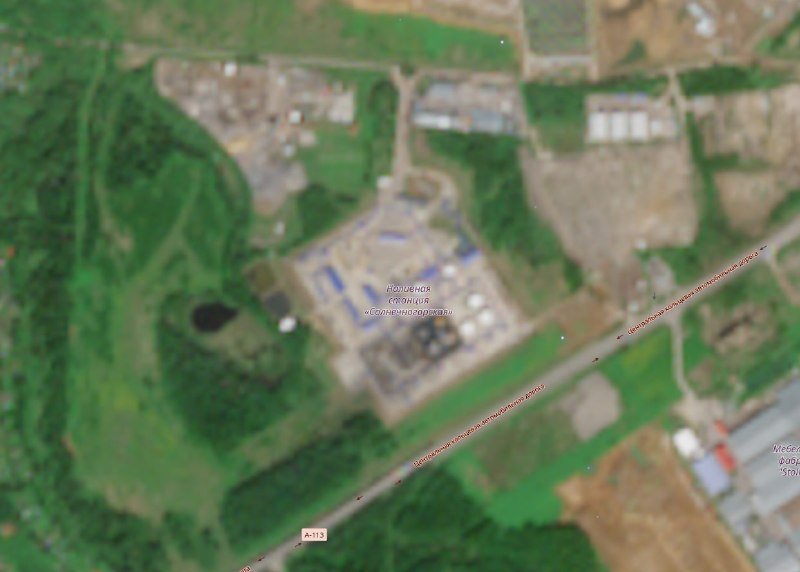
For the third time this month, a Ukrainian drone penetrated Moscow's air defense perimeter and delivered ordnance over the Russian capital's outer reaches. The strike on the Solnechnogorskaya oil loading station in Moscow region sent flames skyward in footage circulated on 17 May 2026, a visceral reminder that the war has reached Russia's administrative and economic heart. But the more consequential detail from the overnight operation was what happened next: Russia scrambled fifth-generation Su-57 aircraft to intercept the incoming threat.
That choice of asset is the real story. Not the strike itself, which joins a growing catalogue of Ukrainian deep-strike operations, but the cost calculus behind the Russian response — a calculus that reveals something important about where this conflict is heading economically, if not morally.
When an F-35 Costs More Than the Thing You're Shooting At
The Su-57 is Russia's most advanced combat aircraft, a platform the Kremlin has invested heavily in and deployed sparingly. It is not designed for drone interception. It is designed to clear the skies of adversary fighters and degrade integrated air defense networks. Sending a twin-engine, low-observable aircraft to chase disposable Ukrainian drones — many of them built from off-the-shelf commercial components and armed with unguided munitions — is the kind of tactical mismatch that would embarrass a peacetime air force. That the Russian Air Force did it anyway tells us something about the pressure Moscow's air defenses are under.
Ukrainian drones have evolved from slow, short-range platforms lobbed at front-line positions into sophisticated systems capable of 500-plus kilometer transits, GPS-guided navigation, and payload delivery in contested airspace. Russia's layered air defense network — built around S-300 and S-400 systems optimized for aircraft and ballistic missiles — is poorly calibrated for swarms of low, slow, radar-evasive drones flying nap-of-the-earth profiles. The Su-57, with its advanced AESA radar and datalink architecture, was supposed to fill the gap. The result is a cost exchange ratio that heavily favors Ukraine.
A single Ukrainian strike drone, depending on configuration, can be assembled for anywhere from a few thousand to several tens of thousands of dollars. A Su-57 flight hour — accounting for maintenance, fuel, crew rotation, and the opportunity cost of removing a strategic asset from high-readiness status — runs into tens of thousands of dollars at minimum, and by some estimates substantially more given Russia's limited production run and the sanctions-constrained supply chain for advanced avionics. The exchange rate — shot for shot — is unfavorable to Moscow regardless of whether the intercept is successful.
The Oil Station Strike and the Energy Dimension
The Solnechnogorskaya station is not a civilian home or a residential neighborhood. It is a logistics node in Russia's oil infrastructure — a facility that moves product, not people. Ukraine has made deliberate choices about which Russian energy assets to target, and this one fits the pattern. The campaign against Russian refinery capacity has been one of the more underreported dimensions of the conflict: Ukrainian long-range strikes have periodically disrupted Russian petroleum processing, affecting output and, by extension, export revenue.
The strategic logic is straightforward. Russia's wartime economy is heavily dependent on hydrocarbon export receipts — they fund the military budget, service debt obligations, and sustain the currency. Every refinery outage, however temporary, translates into a measurable economic pressure point. The Solnechnogorskaya strike was modest in absolute terms; but it joins dozens of similar operations in a cumulative campaign that has not gone unnoticed in Moscow. The deployment of Su-57s — an aircraft that represents a significant share of Russia's limited fifth-generation fleet — is in part a response to the recognition that existing air defenses cannot protect energy infrastructure at scale without committing assets that have other strategic roles.
The Escalation Ladder Moscow Is Climbing
The Su-57 deployment is noteworthy not because it is escalatory in isolation — Russia's nuclear doctrine remains the actual escalation threshold — but because it illustrates how the conflict is forcing Moscow into suboptimal tactical choices. Every time a fifth-generation aircraft is diverted to drone interception duty, it is unavailable for other tasks: suppression of enemy air defenses, strategic airfield strikes, or the kind of high-intensity air superiority operations the Su-57 was designed to perform.
This is not a symmetric response. Ukraine has been clear that it views strikes on Russian territory — including infrastructure and logistics nodes — as legitimate responses to Russian aggression against Ukrainian cities and energy infrastructure. The framing from Kyiv has been consistent: Russian civilians in Russia are not the targets; Russian military and economic assets that enable the war machine are. That distinction is operationally meaningful, even if it is not always analytically clean.
What the Su-57 episode exposes is a structural asymmetry that has been building for months. Ukraine has developed a distributed, resilient drone manufacturing and deployment capacity that is difficult to interdict through conventional means. Russia has responded by committing increasingly expensive assets to a defense that is, by any rational cost-benefit analysis, inefficient. The question is not whether Ukraine can strike Moscow — clearly it can, in limited numbers — but whether Russia can sustain a defense posture that actively degrades its most capable military platforms through attrition of the mundane.
What This Means Going Forward
The war is not being won or lost on the economics of drone interception. The decisive factors remain front-line firepower, artillery supply, manpower rotation, and the political sustainability of Western support in the United States and Europe. But economic pressures compound. Every Su-57 flight hour committed to Warsaw suburb defense is a flight hour not spent on training for higher-intensity operations, on pilot proficiency, or on the kind of missions that would actually degrade Ukrainian combat effectiveness.
Ukrainian planners are aware of this. The drone campaign against Russian energy infrastructure and the capital is not designed primarily to inflict material damage — though that damage is real — but to force Moscow to spend defensively in ways that are strategically wasteful. An army that burns money faster than its opponent on a cost-per-intercept basis is an army on a long-term disadvantage, particularly when the defending side's economy is under greater structural pressure from sanctions and isolation.
The fire at Solnechnogorskaya will be extinguished. The drones will continue to fly. And somewhere in a Russian operations center, someone will be doing the arithmetic on whether the cost of protection is beginning to exceed the cost of the attacks it prevents — and finding, uncomfortably, that the math does not resolve in Moscow's favor. The war has always been about attrition. This particular episode confirms that attrition now operates on multiple axes simultaneously, and that Russia's ability to sustain spending on all of them is not unlimited.
This publication's approach to the Solnechnogorskaya strike versus the wire's emphasis on the fire itself reflects a deliberate editorial choice: the symbolic weight of a Moscow-region energy facility catching fire matters less, analytically, than the cost structure of the defense Russia mounted against it. The wire framed the story as spectacle; the structural argument is that spectacle is now part of Moscow's problem.
Wire provenance
This editorial synthesis draws on the following public wire/social posts:
- https://t.me/noel_reports
- https://t.me/Tsaplienko