Forty-Two Students Taken in Northeastern Nigeria as Mass Kidnapping Pattern Persists
Armed gunmen abducted 42 students from an educational institution in Nigeria's northeast on 17 May 2026, in an incident that follows a well-established pattern of mass kidnappings targeting schools in a region where multiple armed groups operate.
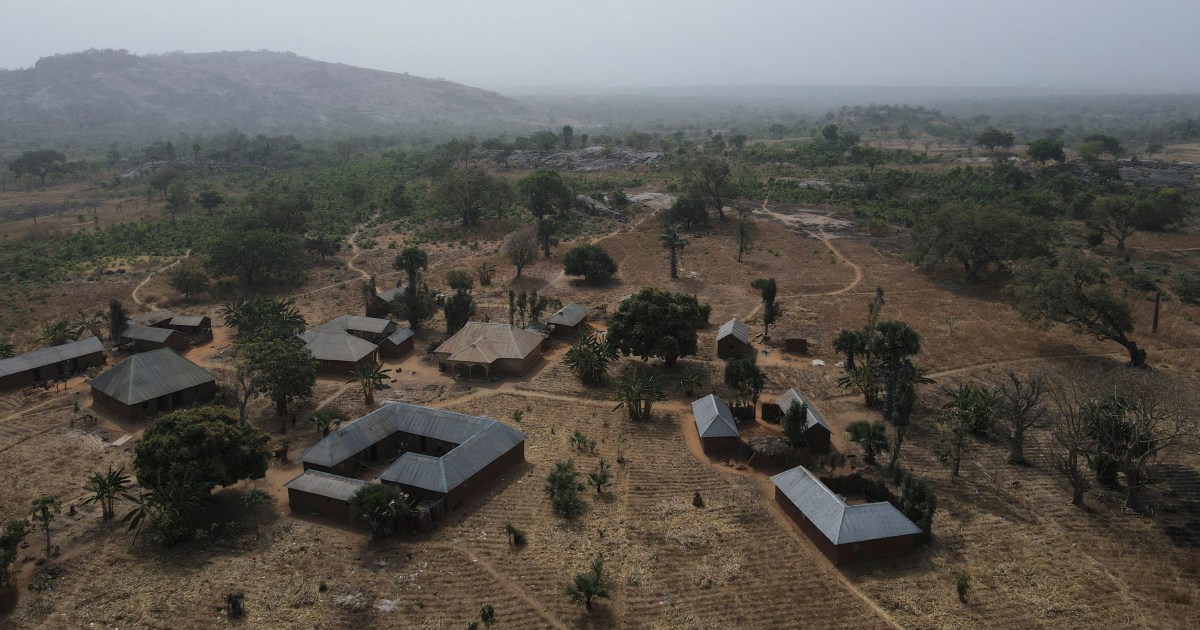
Armed gunmen abducted 42 students from an educational institution in northeastern Nigeria on 17 May 2026, according to initial reports from the region. The abduction took place in an area where both Boko Haram and the Islamic State West Africa Province have operated for years. No group had publicly claimed responsibility as of filing time.
The attack fits a pattern that has made Nigeria's northeast one of the most dangerous places on earth for schoolchildren. Since 2014, mass kidnappings from schools and universities in the region have become a recurring feature of the security landscape — each incident following a roughly similar script of armed incursion, collective capture, and a period of uncertainty before ransom negotiations begin or a military operation is confirmed.
Immediate Context: A Recurring Script
The northeast of Nigeria has experienced waves of mass student kidnappings that began with Boko Haram's 2014 abduction of 276 girls from Chibok and have continued in various forms since. Gunmen arrive in numbers, overrun or bypass minimal security infrastructure, and depart with a large group of hostages into terrain that complicates law enforcement response. The motives typically combine fundraising through ransom with intimidation — targeting institutions of learning carries symbolic weight in a region where armed groups have framed formal education as incompatible with their own vision of social order.
In the current incident, the sources do not specify which institution was hit, the precise location beyond northeastern Nigeria, or the timeline between abduction and the first public reports. That opacity is common in the immediate aftermath of such events; Nigerian authorities and security forces frequently impose information controls during the initial hours of a crisis response, citing operational sensitivity. What is clear from the available reporting is the scale: 42 students taken in a single incident.
The Counter-Narrative: Why Does This Keep Happening
The dominant framing in Western coverage tends to treat these kidnappings as a product of ideological extremism — a straightforward consequence of Boko Haram's existence. That framing, while not wrong, elides the structural conditions that make the pattern self-perpetuating. The northeast remains chronically under-policed, its population centres separated from state security infrastructure by vast distances and poor roads. Local communities often lack the communications equipment or early-warning networks that might shorten response times. Kidnappers have learned that the payoff from a single abduction can exceed what armed groups extract from other criminal activities.
There is also the question of what these kidnappings reveal about the Nigerian state's capacity and priorities. Successive governments in Abuja have pledged to end the crisis. Security spending in the northeast has increased. But the pattern persists, which suggests either that the security response has structural limits — too few troops, too little intelligence, too much terrain to cover — or that political calculations sometimes favour quiet resolution over costly military outcomes. Both possibilities deserve scrutiny.
Structural Frame: The Economy of Abduction
Mass kidnapping in Nigeria's northeast has evolved into something resembling an industry. The mechanics are well-understood: identify a target with low physical security, execute a rapid in-and-out operation, move hostages into a displacement zone where追踪 becomes difficult, then open negotiations through intermediaries. The demand is usually money, though in some cases armed groups have used hostages as leverage against specific government actions.
What sustains the industry is the intersection of poverty, weak governance, and a market for ransom payments that flows from families, communities, and occasionally government intermediaries willing to pay to secure releases. The students taken on 17 May 2026 are almost certainly being held in conditions that reflect the humanitarian neglect characterising the region's displacement camps. Their families will face the calculation that defines this industry: payment versus pressure.
The broader structural significance is that these kidnappings operate as a low-overhead revenue stream for armed groups that have proved resistant to military elimination. Killing a fighter creates a recruitment argument. Taking a hostage creates an economic transaction. The calculus favours abduction in a way that complicates purely military responses to the northeast's security crisis.
Stakes: The Students, the State, and the Future
Forty-two students are in captivity. Their immediate fate depends on decisions made in the coming hours — whether the Nigerian security apparatus can locate and isolate the holding group, whether intermediaries can open negotiations, and whether those negotiations produce a result before conditions deteriorate. Each day of captivity in the northeast carries genuine risk of malnutrition, exposure, and abuse.
For the Nigerian state, the incident underscores a persistent failure: despite years of dedicated security expenditure and international support, armed groups retain the capacity to conduct complex operations in areas nominally under government control. The longer-term political cost accrues in Abuja's credibility with the region's voting public, and in the international community's willingness to fund counter-insurgency programmes that produce limited results.
For the Sahel-wide picture, the northeast kidnapping adds to a regional ledger of mass abductions — from Burkina Faso's schools to Mali's displacement camps — that suggests a common structural feature across states that have lost effective administrative control over large swathes of territory. The pattern is not Nigeria's alone, but Nigeria's scale makes it the most visible example.
What Remains Uncertain
The sources consulted for this article do not provide the name of the educational institution, the precise location within northeastern Nigeria, or the identities of the abducted students. They do not indicate whether security forces have launched a rescue operation or whether negotiations have commenced. The absence of a claim of responsibility leaves open the question of whether this abduction was conducted by Boko Haram, ISWAP, a local criminal network, or a group that has not previously appeared in incident reporting. Monexus will update this article as verified information becomes available.
This publication covered the student abduction in the context of regional security patterns rather than leading with ideological framing of armed groups — a choice that reflects the structural reality that poverty, weak governance, and the economics of ransom sustain the cycle regardless of the stated motivations of individual organisations.
Wire provenance
This editorial synthesis draws on the following public wire/social posts:
- https://t.me/tasnimnews_en/
- https://t.me/JahanTasnim/
- https://en.wikipedia.org/wiki/Boko_Haram