Gaza's Medical Infrastructure Under Fire, Again
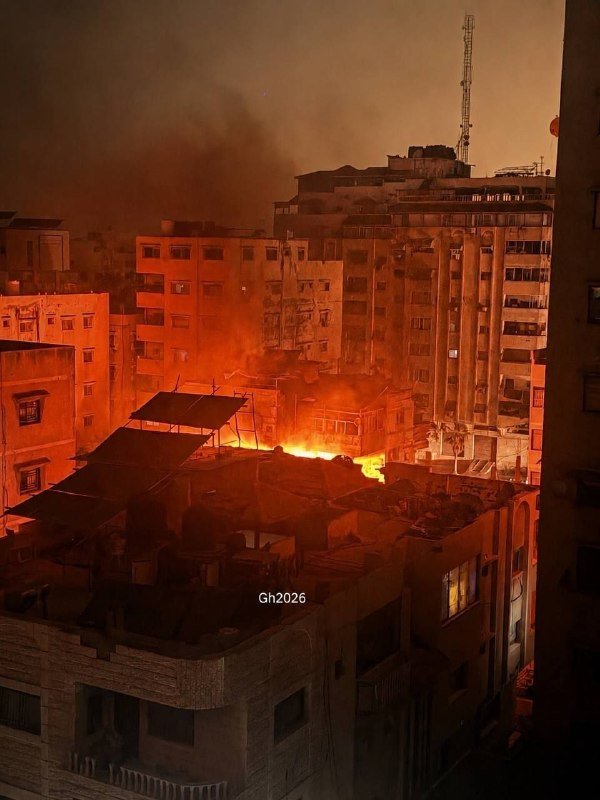
On May 17, 2026, an Israeli strike near Al-Aqsa Hospital in Deir al-Balah, central Gaza Strip, killed at least one person and injured at least two others at a hospice on adjacent land, according to Gaza-based channels reporting the incident. A separate strike hit a kitchen belonging to a Turkish aid organization in the same vicinity. The casualty figures are small enough to risk disappearing into the daily wire summary. They should not. This is a medical facility — again.
Medical infrastructure in Gaza has become a recurring target during this conflict, and each incident, catalogued individually, risks appearing tolerable. The aggregate does not. Under the Geneva Conventions, protected status for hospitals and hospices is not optional; it is foundational. The World Health Organization has documented dozens of confirmed attacks on healthcare facilities in recent years. A UN special rapporteur on the right to health described the situation as a collapse of the healthcare system — not a temporary disruption, a structural failure. When a hospice treating the terminally ill is struck, the calculus of harm extends beyond the dead and wounded: it includes every patient who loses a bed, every family that loses a place of last resort, every medical worker who loses a site they can send patients to safely.
The Accountability Void
International humanitarian law is clear on the prohibition against targeting medical units. It is equally clear on what happens when that prohibition is violated — investigation, prosecution, compensation. It is silent on what happens when none of that occurs. For Gaza's medical infrastructure, the answer has been silence.
Investigations into specific incidents have not produced accountability. Arms transfers to the relevant state have continued through periods when formal war crimes investigations were announced. Calls for independent investigation have been met with denials, not cooperation. This is not a failure of international law — the legal architecture exists. It is a failure of political will to enforce it. Without consequences, the prohibition does not deter. It merely awaits the next strike.
Precision, Location, and Intent
It is worth addressing the argument that strikes on medical facilities are unintentional — the fog of war, misidentification, contested coordinates. This argument becomes harder to sustain as the pattern accumulates. Healthcare facilities in Gaza have fixed, registered, internationally known locations. They are marked. They are communicated. The targeting systems in modern military operations have a level of precision that makes "mistake" a claim requiring evidence, not a default assumption.
The simultaneous strike on a hospice and a humanitarian kitchen — two separate facilities, adjacent to the same hospital complex — is not easily explained as coincidental navigation error. The specific coordinates matter. The pattern of medical facilities being struck across multiple cities and multiple months is not easily explained as coincidence at all.
The International Response Problem
The strike near Al-Aqsa Hospital on May 17 adds to a list that includes field hospitals, ambulances, and facilities whose locations were shared with the relevant parties as required under the laws of armed conflict. The international response to previous incidents has been statements, not mechanisms. Mechanisms would include suspension of military assistance pending investigation, referrals to appropriate judicial bodies with enforcement pathways, or concrete pressure for ceasefire agreements that allow medical workers to operate without fear.
None of those mechanisms are currently active. What is active is the flow of arms, the diplomatic shielding at multilateral bodies, and a media cycle that processes each new strike as an isolated data point rather than part of a cumulative assault on civilian infrastructure.
The dead near Al-Aqsa Hospital this week deserve the same response that would be expected anywhere else: a genuine investigation, accountability for those responsible, and a commitment that the next hospice, the next hospital, the next ambulance is not next week's casualty report. The world knows what it must do. The question is whether it will do it.
Gaza's medical infrastructure has been under sustained pressure throughout this conflict. Monexus has previously covered strikes on Al-Aqsa Martyrs Hospital in Deir al-Balah and field hospitals in southern Gaza.
Wire provenance
This editorial synthesis draws on the following public wire/social posts:
- https://t.me/alalamarabic/987654
- https://t.me/alalamarabic/987653
- https://t.me/abualiexpress/123456