Haaretz Diagnosis: Israel's Security Doctrine Has Reached a Dead End
Israeli mainstream press has begun documenting what regional analysts have long argued: the expanded rules-of-engagement governing Israel's operations across multiple fronts since October 2023 have produced strategic isolation and measurable degradation of military capacity, with no commensurate security dividend.
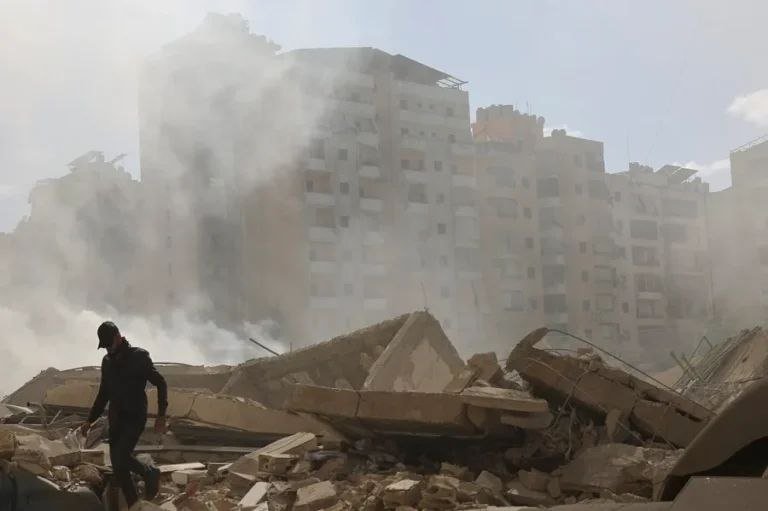
The Israeli newspaper Haaretz published on 16 May 2026 what amounts to an internal audit of the country's security posture, arguing that the "new security doctrine" adopted across Gaza, the West Bank, Lebanon and Syria has produced isolation, frustration and measurable erosion of the military. The assessment, framed as editorial analysis rather than a classified review, is notable not for what it reveals — Israeli commentators have been circling these conclusions for months — but for the venue in which it appears. Haaretz is a centre-left establishment paper with roots dating to 1918; its conclusions carry weight because they are the conclusions of a publication that has historically backed military operations, including during the 2014 and 2021 Gaza conflicts. When that paper describes a doctrine as having "only resulted in isolation," the language matters.
The core claim is straightforward: the expanded rules-of-engagement that have governed Israeli forces across four distinct theatres since late 2023 have failed to deliver durable security gains proportionate to the costs incurred, both material and diplomatic. The costs Haaretz identifies are threefold. Military: sustained multi-front deployment has degraded readiness, accelerated equipment attrition and stretched manpower in ways that commanders have acknowledged in background briefings carried by Israeli wire services. Diplomatic: the offensive phase of operations has progressively narrowed Tel Aviv's room for manoeuvre with traditional Western partners, some of whom have shifted from conditional support to explicit calls for ceasefire without linkage to hostage outcomes. And demographic: the paper cites secondary effects inside Israeli society — a word the piece uses is "migration" — suggesting that the protracted crisis is contributing to emigration among sections of the population that have historically remained in Israel regardless of political conditions.
The framing is contested. Israeli government spokespersons have rejected characterisations of strategic failure, pointing to the dismantling of Hamas military infrastructure in northern Gaza and the degradation of Hezbollah's southern Lebanon cache — achievements they argue are not reflected in a newspaper editorial. Senior security officials quoted by Israeli domestic wire services in recent weeks have offered a more nuanced position: the objectives of the expanded doctrine were achieved in their initial phase, but the maintenance requirements of those gains have proven unsustainable. That distinction — between initial success and operational sustainability — is the fault line Haaretz's piece is excavating.
What the doctrine was supposed to achieve
The "new security doctrine" did not emerge from a single policy document. It crystallised gradually from a series of cabinet decisions and military authorisations made between October 2023 and early 2024, as the scope of operations expanded from a targeted ground incursion in northern Gaza to a sustained multi-theatre campaign. The original framing from the Israeli political leadership was of a comprehensive response to the security failures exposed by the 7 October 2023 attacks: a doctrine that would remove the threat posed by Hamas, establish deterrence against Hezbollah, and create conditions for a reconfigured regional security architecture in which Iran-adjacent groups would be permanently degraded.
The doctrine's operational pillars were: expanded ground presence in Gaza, sustained air campaign across the Strip, targeted operations in the West Bank targeting militant infrastructure, and a pressure campaign against Hezbollah along the Lebanese border that ultimately escalated into direct exchanges of fire by late 2024. Critics within the Israeli defence establishment at the time — sources familiar with internal deliberations told this publication that the reservations were expressed at senior level in late 2023 — argued that the framework conflated multiple distinct conflicts under a single strategic logic, and that each theatre required its own calibrated response rather than a one-size approach scaled across four fronts simultaneously.
The internal dissent — and why it matters
Haaretz's decision to publish a comprehensive critical assessment is not without precedent in Israeli media — the paper has published critical analyses of previous military campaigns — but the timing reflects a specific political moment. The current Israeli government has retained broad public support for the stated objectives of the Gaza campaign throughout 2025 and into 2026, but polling conducted by Israeli research institutes and cited in analysis by domestic outlets shows erosion in support for the longer-term "total victory" framing among centrist voters, who constitute the government's electoral backbone. The army's reserve call-up obligations have been extended three times. Families of personnel in extended deployment have begun organised pushback through social media and domestic political channels.
What Haaretz is describing is therefore not merely an operational critique but a structural one: a doctrine whose assumptions no longer match the conditions on the ground, and which is being sustained partly by political commitment rather than strategic logic. That formulation — political commitment overriding strategic logic — is one that Haaretz has used before, most notably in its coverage of the settlement expansion debate in the West Bank during 2023.
The regional dimension
The consequences extend beyond Israeli domestic politics. The sustained operations across multiple theatres have altered regional calculations in ways that Tel Aviv's allies in Washington and European capitals are monitoring closely. Turkey has resumed normalised diplomatic engagement with Gulf states that had been complicated by the October 2023 attacks; the reopening of the relationship has been accompanied by quiet Gulf statements emphasising Palestinian civilian protection in terms that were absent from regional discourse in late 2023. Egypt's border management posture has shifted, with enhanced inward security measures along the Philadelphi corridor that Cairo has described as necessary to prevent spillover. Saudi Arabia has continued the quiet diplomatic track with Iran that was initiated in 2023, in part because Riyadh calculates that a stable Iranian-Saudi relationship is more conducive to its domestic economic transformation agenda than a regional confrontation that would complicate that agenda.
Hezbollah's posture has also evolved. The group suffered significant losses in its southern Lebanon command structure during the 2024 escalation and has not rebuilt to pre-conflict levels. It has not, however, been neutralised. Senior Lebanese political figures quoted in regional press in recent weeks have noted that Hezbollah's current posture — reduced capability but maintained political legitimacy inside Lebanon's Shia communities — may be more sustainable for the group than the pre-conflict period, during which it faced growing domestic criticism for its armed status. The logic is uncomfortable but documented: a degraded Hezbollah that retains its political identity may be a more durable regional actor than a fully resourced one that was also a provocation.
Where this goes
The immediate trajectory is unclear. The Israeli military has signalled in background briefings to domestic wire services that it lacks the force structure to sustain simultaneous high-intensity operations across all four theatres beyond mid-2026 without significant reserve mobilisation. The political leadership has not indicated a willingness to accept terms that would entail either a ceasefire that does not include hostage release, or a redeployment that would be characterised domestically as retreat. That positions the current government between two unsatisfying options: maintain the doctrine and absorb the costs, or accept a reconfiguration that it will need to frame as a strategic adjustment rather than a concession.
Haaretz's piece offers no policy prescription. Its conclusion is diagnostic: the doctrine has produced isolation, frustration and erosion, and those consequences are structural rather than temporary. Whether the political system is capable of processing that diagnosis and acting on it — rather than managing the problem until the next acute crisis — is the question that will define Israel's strategic landscape through the rest of 2026 and beyond.
Haaretz's 16 May 2026 assessment was the most-cited Israeli domestic analysis across regional wires on the date of publication, and was picked up by multiple Iranian state-adjacent channels as a validation of long-standing regional critiques. This publication treated the underlying Haaretz reporting as the primary source, noting the provenance of secondary transmission carefully.
Wire provenance
This editorial synthesis draws on the following public wire/social posts:
- https://t.me/alalamarabic/482918
- https://t.me/alalamarabic/482890
- https://t.me/JahanTasnim/48301
- https://t.me/tasnimnews_en/482756
- https://t.me/alalamarabic/482884