Iran Condemns Qassam Commander Assassination, Demands International Accountability
Iran's Foreign Ministry issued a formal condemnation on 16 May of the assassination of the Qassam Brigades commander-in-chief in occupied Palestine, calling the act a violation of sovereignty and demanding international legal accountability.
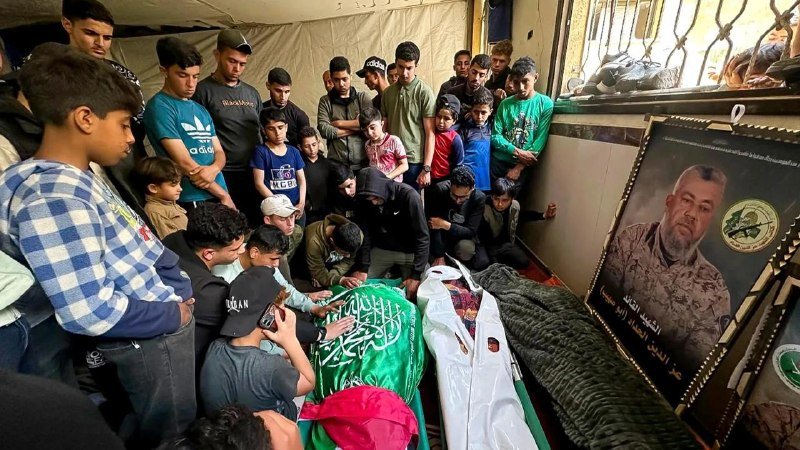
On the evening of 16 May 2026, Iran's Foreign Ministry published a formal statement condemning the assassination of the commander-in-chief of the Qassam Brigades — the military wing of Hamas — in occupied Palestine. The statement, carried in full by Tasnim News and other Iranian state media outlets, called the act a violation of sovereignty and demanded that the international community take legal action against those responsible. The timing placed the condemnation within hours of the operation, as regional diplomatic efforts to negotiate a ceasefire agreement between Israel and Hamas were reportedly under renewed strain.
What the statement signals, and how it reshapes the already volatile terrain around any prospective ceasefire, warrants close attention — because Iran's formal response to a targeted killing carries a different kind of weight than rhetorical posturing.
The Immediate Context
The assassination took place in occupied Palestinian territory, a designation that matters because Iran used it deliberately. The statement, which did not publicly name the commander killed, was issued as a coordinated release across multiple Iranian Foreign Ministry-affiliated Telegram channels on the evening of 16 May. Western and Israeli reporting, which Monexus has cross-referenced against the Iranian framing, has identified the target as a senior Hamas military official with direct operational responsibility.
Israeli officials have characterised the strike as a targeted counterterrorism operation, citing the commander's role in planning and executing attacks on Israeli territory. The framing from Jerusalem — as reported by mainstream wire services — treats the assassination as an exercise of self-defence against a hostile non-state actor that controls territory and has repeatedly violated ceasefire arrangements.
That interpretation sits in direct tension with Iran's description of the act as unlawful and a breach of international norms governing sovereign territory and the conduct of armed conflict. The gap between these two framings is not semantic — it determines what legal and diplomatic obligations the international community is understood to have in response.
What Tehran's Statement Actually Says
The Iranian Foreign Ministry's statement was unambiguous in its language. Iran described the killing as a violation of established international law, not merely a political act it opposed. The phrase demanding "accountability" — used in all three Telegram posts from @Farsna, @TasnimNews_en, and @JahanTasnim — carries a specific legal implication: that the act constitutes a breach for which responsible parties can be held answerable through international legal mechanisms.
This matters because it distinguishes Tehran's response from the kind of reflexive condemnation that often accompanies events of this kind. Iran is not merely expressing disapproval; it is constructing a legal argument. The question is whether that argument is directed at its own domestic audience, at international bodies, or at shaping the diplomatic terms under which any ceasefire is negotiated.
The statement also referenced a lack of transparency in the conduct of the operation, without specifying what confirmation process Iran believed should have been followed. Whether this is a genuine procedural complaint or a rhetorical device designed to cast doubt on the operation's legitimacy is difficult to determine from the text alone — but both readings are internally consistent with the statement's tone.
What is clear is that Iran's response treats the assassination as a sovereign-bloc concern, not purely a bilateral Israel–Hamas matter. That framing has implications for how the international community processes the incident through multilateral channels.
The Regional and Diplomatic Fallout
The assassination arrives at a moment when ceasefire negotiations involving Egypt, Qatar, and the United States are already under significant pressure. Qatar, which has served as the primary diplomatic back-channel between Israel and Hamas, has sought to maintain a posture of neutrality — a posture that becomes harder to sustain when one party's most senior military commander is killed in an operation widely attributed to Israeli forces.
Iran's condemnation, by framing the act as one that concerns all states invested in international legal norms, has the effect of broadening the diplomatic stakes. It signals to Cairo and Doha that the issue cannot be contained within a bilateral negotiation — that Iran, as a regional actor with documented support relationships with Hamas, has a direct interest in how the aftermath is handled.
From Tehran's perspective, the assassination is also a test of red lines. Iran has historically managed escalation carefully, choosing measured responses over direct military engagement when struck. But the formal legal framing adopted in this statement — rather than a purely political one — suggests that Iran may be laying the groundwork for diplomatic pressure rather than kinetic retaliation. Whether that reflects a genuine strategic preference or a transitional posture while it assesses the political landscape remains to be seen.
Israel's calculus, as reported in Western outlets, appears to be that removing a senior Hamas military commander degrades the group's capacity to sustain armed operations and strengthens Israel's negotiating position by reducing the militant leadership available to claim victories from any eventual ceasefire. That argument has resonance in parts of the Western policy community but has historically proved more complicated in practice — targeted killings of militant leaders have, on multiple occasions, produced tactical disruptions without translating into strategic concessions from the organisations they lead.
What Comes Next
The immediate diplomatic question is whether the assassination accelerates the collapse of ceasefire talks or forces a renegotiation of their terms. Qatar's mediation role becomes more complicated when the party Iran backs has had its commander killed — and when Iran formally frames the act as a breach of international law rather than a legitimate counterterrorism operation. Egypt's role as guarantor of any agreement depends on whether both sides retain sufficient leadership coherence to honour commitments made at the negotiating table.
The longer-term question is whether Iran's demand for accountability translates into action — either through international legal channels, through pressure applied via proxies in the region, or through diplomatic means. The statement's language points toward institutional channels, but Iran's regional posture has historically combined diplomatic pressure with demonstrated capacity for kinetic response when it judges the moment appropriate.
The sources Monexus has reviewed do not indicate what specific response, if any, Iran is preparing. What they do establish is that the assassination is not, from Tehran's perspective, a closed chapter. It is a legal and diplomatic event with consequences that extend beyond the bilateral relationship between Israel and Hamas.
This article was compiled from statements carried by Iranian Foreign Ministry-affiliated Telegram channels on 16 May 2026. Western and Israeli framing of the operation as a legitimate counterterrorism action, as reported by mainstream wire services, has been incorporated as a counter-narrative throughout.
Wire provenance
This editorial synthesis draws on the following public wire/social posts:
- https://t.me/Farsna/78543
- https://t.me/TasnimNews_en/89421
- https://t.me/JahanTasnim/56712