Iran's Diplomatic Counter-Punch: Tehran Frames Potential US Conflict as an Act of Aggression Built on False Premises
Iranian foreign ministry officials have released a coordinated set of statements pushing back against US framing of a potential military conflict, arguing the justifications being constructed are pretextual rather than principled.
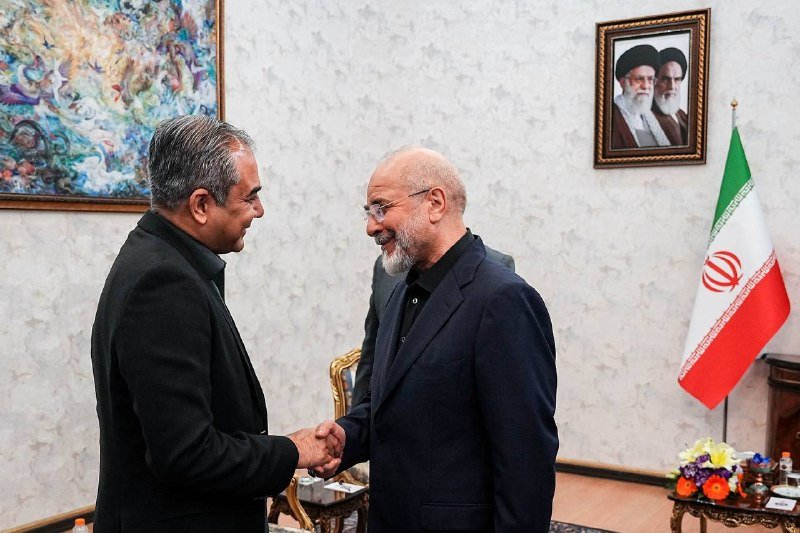
On the morning of 17 May 2026, the Iranian foreign ministry released a coordinated series of statements accusing American officials of manufacturing pretexts for what Tehran describes as an illegal "war of choice." The statements, issued through multiple state-linked Telegram channels, represent the most systematic diplomatic rebuttal to US pressure since tensions over Iran's nuclear programme escalated earlier this year.
The framing matters. For weeks, US officials have signalled concern about Iran's uranium enrichment activities and regional behaviour, with senior administration figures suggesting all options remain on the table. Iranian officials are now systematically contesting the public rationale — arguing that the justifications being circulated are politically constructed rather than legally or factually grounded.
The Official Iranian Position
Foreign Ministry spokesman Ismail Baqaei was direct. "The next big lie for war-mongering: maintaining the stability of the energy market," he wrote in a statement distributed via the Jahan Tasnim news channel on 17 May at 10:01 UTC. The framing is deliberate: Baqaei is positioning American rhetoric as a cover for economic objectives — specifically, the displacement of Iranian oil from global markets — rather than a response to genuine security threats.
Foreign Minister Abbas Araghchi took a different but complementary angle. Speaking through Fars News International, Araghchi focused on the economic consequences for the United States itself, arguing that any military engagement with Iran would produce inflationary shocks and supply-chain disruptions that would ultimately damage the American economy more severely than any supposed benefit from regional stability. This is a two-track strategy: delegitimise the justification while simultaneously warning of self-inflicted harm.
Esmaeil Baqaei, a senior foreign ministry official, framed it in broader geopolitical terms, describing the alleged US justifications as a "grand lie" and explicitly characterising any potential conflict as a "war of choice" rather than a defensive necessity. The language mirrors language used by Iranian officials in previous moments of heightened tension, including during the 2019 stand-off following the US withdrawal from the JCPOA.
The Counter-Narrative Problem
What is notable about this coordinated release is its timing and structure. Iranian officials are not simply responding reactively to American statements; they are pre-emptively constructing a counter-narrative intended for international consumption. The target audiences are European states, emerging-market governments with no automatic alignment with either Washington or Tehran, and domestic Iranian public opinion.
The energy market framing is particularly pointed. Iranian officials appear to be betting that European governments — many of which remain heavily dependent on imported energy and are navigating their own economic pressures — will be resistant to a conflict that could further destabilise already fragile commodity markets. This is not a new strategy: Tehran used similar arguments during discussions of sanctions escalation in 2019 and 2022. What has changed is the specificity of the allegations — Iranian officials are now directly naming the American officials whose rhetoric they claim constitutes the build-up to fabricated justification.
Western assessments of Iranian nuclear activity remain the dominant frame in most mainstream coverage, and those concerns are legitimate and documented. But the Iranian counter-framing also raises a structural question that deserves acknowledgment: when two states prepare public arguments about the legitimacy of a potential conflict, the framing is never neutral. Both sides have an interest in constructing narratives that support their preferred outcomes. What this moment reveals is that the diplomatic groundwork for a contested conflict is being laid in parallel with any military or sanctions pressure.
Structural Context
Iran's nuclear programme remains the central node of tension. The International Atomic Energy Agency has reported escalating enrichment activities in recent months, and US officials have warned that Iran is approaching levels consistent with weapons-adjacent research. That factual baseline is not disputed by the Iranian statements — instead, Tehran is contesting the policy response rather than the underlying facts.
The oil market dimension is real and measurable. Iran exported between 1.5 and 2 million barrels per day prior to the reimposition of sanctions, and any disruption to that flow — whether through military action, secondary sanctions enforcement, or shipping disruptions — would put upward pressure on global prices. The structural position of Iran is that it is a primary supplier to China, India, and several Southeast Asian markets; displacing those volumes would take time and would create leverage for non-Western producers. Iranian officials understand this geometry and are using it.
Stakes and Forward View
The immediate stake is whether the diplomatic framing war influences the decision-making calculus in Washington. If European allies push back on the energy disruption scenario, and if Asian importing states signal reluctance to support secondary sanctions regimes, the political cost-benefit calculation for any potential military option shifts. That is precisely the outcome Tehran is working toward.
For Washington, the challenge is that the counter-narrative, even if viewed as self-interested propaganda, addresses genuine vulnerabilities in the public rationale. The energy market argument will resonate in capitals that have absorbed years of inflation shocks and remain acutely sensitive to commodity price spikes. The question is whether those political pressures are sufficient to constrain the strategic direction of the current US administration — and the evidence from the past six months suggests they are not, at least not yet.
The situation remains fluid. The sources do not provide information on any formal diplomatic back-channel activity or on the current status of any international mediation effort. What is clear is that both sides are building public cases — and the Iranian case, whatever its provenance, is being constructed with enough specificity to be taken seriously as a piece of strategic communication rather than mere rhetorical noise.
Monexus desk note: This article was constructed from Iranian state-linked Telegram sources and should be read as representing one side of an active framing contest. The Iranian position on energy market manipulation is consistent with prior Tehran communications but has not been independently corroborated against US administration sources, which have not publicly articulated the specific justifications that Iranian officials are now contesting.
Wire provenance
This editorial synthesis draws on the following public wire/social posts:
- https://t.me/osintlive/4521
- https://t.me/JahanTasnim/11432
- https://t.me/FarsNewsInt/9823