Iran's Diplomatic Meme: Tehran's The Apprentice Clip and the Weaponisation of Pop Culture in Foreign Policy
Iran's Foreign Ministry has posted a clip from a 2024 film about Donald Trump, claiming it illuminates his approach to power. The choice of a Hollywood production over direct commentary reveals something about how Tehran calibrates its public messaging to Western audiences.
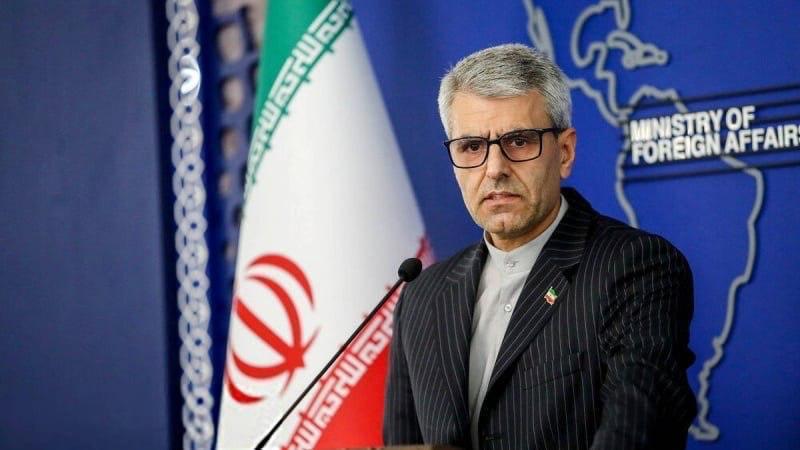
On 17 May 2026, Iran's Foreign Ministry spokesperson shared a clip from a 2024 film depicting Donald Trump's early business career, presenting it as a window into the former and possibly returning president's approach to negotiation, power, and adversary relationships. The post was not framed as an attack. It was framed as context — a piece of evidence, rather than an indictment.
The distinction matters. By reaching for a Western cultural artefact rather than crafting original condemnation, Tehran sidesteps the charge of naked propaganda. A film produced for commercial audiences in the United States carries a different credibility weight, in Tehran's calculation, than a statement from a Foreign Ministry briefing room. The spokesperson did not say "Trump is X" — they showed a scene and implied the viewer could draw their own conclusions. This is diplomatic communication calibrated for an audience that has grown alert to state messaging.
The incident crystallises a broader shift in how states deploy cultural material as soft-power infrastructure. Hollywood, Netflix, streaming archives — these are no longer simply entertainment channels. They are evidentiary reservoirs that governments can mine when constructing narratives for foreign publics.
**The Strategic Grammar of the Clip
**
The choice to cite a biographical drama rather than issue a direct statement follows a recognisable communications logic. Primary-source propaganda — official condemnation, state-media editorials — tends to be discounted by target audiences, particularly in the United States and Europe, where state-adjacent media carries obvious institutional fingerprints. A film clip, by contrast, arrives pre-packaged as entertainment, which creates what communications researchers sometimes call peripheral route persuasion: the argument lands through association rather than assertion.
Iranian officials have demonstrated facility with this approach before. The Islamic Republic's state media apparatus has long targeted both domestic and international audiences with carefully edited footage, strategic silence, and selective amplification of Western criticism. What is new is the directness with which Tehran is now using commercial cultural products as diplomatic punctuation — treating a Hollywood production as a primary source in a Foreign Ministry communiqué.
The spokesperson's framing — presenting the clip as explanatory rather than accusatory — also reflects a calculated ambiguity. Tehran can claim it is simply informing international observers. Critics can argue it is delegitimising a negotiating partner. The deniability is structural to the move itself. Whether that ambiguity serves Iran's interests depends on where nuclear talks currently stand, and on whether the intended audience — Western diplomatic establishments, international press, or domestic Iranian viewers — reads the post as reassurance or threat.
**What the Film Provides — and What It Doesn't
**
The production in question, a 2024 biographical drama, joins a small library of commercial works that have addressed Trump's career. Such films occupy an awkward middle ground: they are not documentaries, but they are not pure fiction either. They traffic in recognisable personalities and disputed histories, inviting audiences to treat dramatised scenes as windows into real psychological patterns.
Iran's use of the clip presupposes that viewers will recognise the figure on screen, accept the characterisation as broadly credible, and update their beliefs about the man accordingly. That presupposition tells us something about Tehran's read of its audience's priors. The spokesperson appears to be betting that the target readership — international media consumers, diplomatic observers — already holds a view of Trump's negotiating style that the clip will confirm rather than construct. The film is a prompt, not a proof.
For audiences less familiar with the production or more inclined to view its use as manipulation, the post may backfire. The inverse inference — that Tehran is so desperate for rhetorical ammunition that it must cite a two-year-old Hollywood drama — is not difficult to construct. Whether the net effect is persuasive or self-undermining depends on factors the post itself cannot control: the prevailing political mood, the state of nuclear negotiations, and the degree to which Western audiences are receptive to framing from Tehran at all.
**The Architecture of Diplomatic Signal
**
What is structurally significant about this episode is less the content of the clip than the act of sharing it. Governments have always cited each other's statements, leaked documents, and recorded admissions as evidence in arguments. The novelty here is the genre: a commercial entertainment product, produced for profit, repurposed as a Foreign Ministry source. It is the diplomatic equivalent of quoting a review to settle a legal dispute.
This repurposing reflects deeper changes in the information environment that surrounds international relations. As official institutions have lost credibility across the political spectrum in Western democracies, the evidentiary commons has expanded to include cultural production, social media documentation, and independent journalism — alongside, and sometimes in place of, formal government statements and treaty texts. Tehran is navigating that environment on its own terms, reaching for whatever materials carry weight with the audience it is trying to reach.
The episode also raises questions about the responsibilities of cultural producers whose work is incorporated into diplomatic messaging. A film made to entertain — or to explore a historical figure — does not consent to becoming an instrument of foreign policy. That the production's creators almost certainly did not anticipate this use is, in the logic of the incident, beside the point. Cultural artefacts, once distributed, are no longer fully controlled by their origins.
**Domestic Audiences and the Limits of the Signal
**
Inside Iran, the post's reception likely follows a different grammar. For domestic audiences, the clip functions less as analysis than as confirmation — a moment of state-endorsed recognition that Trump is a known quantity, that Tehran has done its homework, that the relationship is being managed with attention and intelligence. That signal has domestic political value, particularly in a moment when the Islamic Republic is navigating economic pressure and regional uncertainty.
For the international audience, the signal is more ambiguous. Tehran has demonstrated that it follows American cultural production closely enough to cite it in diplomatic communication — which is both unremarkable and, in the context of nuclear talks, potentially useful context. Whether the implied characterisation of Trump serves or undermines Tehran's negotiating position depends on the current state of those talks, which the sources do not detail as of this publication.
What is clear is that the Foreign Ministry spokesperson did not issue the post in a vacuum. The clip appeared on 17 May 2026. Its timing, placement, and framing were deliberate. Whatever the short-term diplomatic calculus, the move reflects a government that has grown comfortable operating in the space between entertainment and geopolitics — and that is prepared to let a Hollywood production do some of its talking for it.
This publication's coverage of Iranian diplomatic communications differs from Western wire reporting primarily in its attention to the structural logic of media strategy, rather than treating individual posts as isolated provocations. The wire focused on the clip itself; this article examines the infrastructure of the choice.
Wire provenance
This editorial synthesis draws on the following public wire/social posts:
- https://t.me/osintlive/4895
- https://t.me/ClashReport/8473