Iran Just Hit Reply With a Movie Clip — The Clock Trump Ticks Has No Geneva Arrow
Tehran's Foreign Ministry shared a clip from a 2024 film depicting Donald Trump's mindset as a businessman and outsider. The response, theatrical as it is pointed, tells its own story about how Iran reads Washington's negotiating posture.
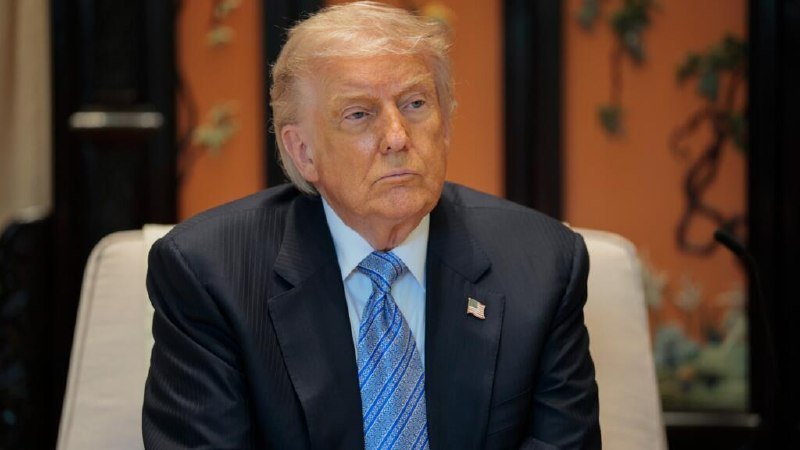
There is a particular genre of diplomatic signal that communicates less through its words than through the act of sending them. On 17 May 2026, Iran's Foreign Ministry spokesperson shared a clip from a 2024 film — one depicting a young Donald Trump navigating the Manhattan real estate circuit as a transactional operator with no ideological anchor. The post did not narrate. It did not editorialize. It simply played, letting the imagery do the work of characterization.
The timing was deliberate. Hours earlier, Trump himself had posted that "the clock is ticking" for Iran to strike a nuclear deal. Two messages, two audiences, two entirely different registers of communication — and the gap between them reveals something uncomfortable about where the current US-Iran standoff actually stands.
The Movie as Mirror
Tehran's choice of clip is itself an argument. The film in question — a 2024 production exploring Trump's early career — portrays its subject as a creature of leverage: someone who negotiates by exhausting the other party's alternatives rather than building shared ones. By posting it, Iran's Foreign Ministry is signaling that it reads Washington's approach not as good-faith diplomacy but as calibrated pressure designed to isolate Tehran until capitulation looks like the only option.
That reading is not unreasonable. The Trump administration's posture toward Iran across its two terms has been consistently maximalist on sanctions and consistently vague on what a negotiated off-ramp would actually look like. Tehran has watched the North Korea file, the Taliban file, and the Ukraine file — all contexts where Washington's negotiating partners eventually found themselves holding the shorter end of a deal that kept shifting. The film clip is Tehran's way of saying it has not missed the pattern.
Clock Diplomacy and Its Limits
Trump's "clock is ticking" formulation has become a signature of his negotiating style — a public ultimatum designed to concentrate minds and compress timelines. It works in contexts where the counterparties have few external options and internal cohesion. It works less well against a regime that has spent forty years building redundancy into its survival architecture.
Iran knows that time, for it, is not uniformly a liability. Each round of sanctions has produced domestic adaptation rather than regime rupture. Each external pressure campaign has, paradoxically, reinforced the nationalist logic that keeps the Islamic Republic's coalition intact. Tehran has survived "maximum pressure" once already; the assumption that it cannot do so again is one Washington keeps making and keeps finding incorrect.
The defense training sessions Iran is reportedly holding for civilian men and women in mosques across several cities — per reports on 17 May 2026 — add a dimension the clock rhetoric does not address. This is not the posture of a regime preparing to fold. It is the posture of a regime preparing its population for a longer contest.
The Domestic Preparation Layer
Mosque-based civil defense training is not new in Iranian political history. What is notable is the timing: concurrent with a renewed American pressure campaign and a public ultimatum. Tehran appears to be pursuing a dual-track strategy — maintaining whatever diplomatic channel exists while simultaneously reinforcing the domestic resilience narrative that has carried it through previous cycles of maximum pressure.
The message to ordinary Iranians is straightforward: prepare for turbulence, do not expect the government to absorb external shock without distributing some of its weight outward. That distribution is a political act as much as a security one. It binds the population to a shared preparation narrative, which makes subsequent economic or social strain easier to frame as external in origin.
What Comes Next
The structural reality here is one both sides understand but neither says plainly: a full military conflict serves neither Washington's nor Tehran's interests, but the diplomatic space between sanctions relief and nuclear constraints has never been satisfactorily resolved. Every negotiating cycle returns to the same fault line — what exactly Iran must give up, and what exactly the United States would offer in return — and every cycle finds that fault line immovable.
The movie clip is Tehran's way of raising the cost of misreading that immovability. The clock ultimatum is Washington's way of pretending the asymmetry is larger than it is. What gets lost in the exchange is the third actor in the room: the deal that both sides claim to want but neither has found a formula to produce.
Until that formula surfaces, the clip-and-clock exchange will repeat — each side talking past the other with increasing theatrical conviction, and the gap between them remaining exactly where it has always been.
Monexus published this analysis on 17 May 2026. Western wire coverage of the Trump post focused on its ultimatum framing; ClashReport's Telegram thread carried the Iranian Foreign Ministry response first. The divergence in tone — American declaration versus Iranian cultural counter-signal — reflects the deeper asymmetry in how each side understands the other's incentives.
Wire provenance
This editorial synthesis draws on the following public wire/social posts:
- https://t.me/ClashReport/7891
- https://x.com/polymarket/status/1921876543212345678
- https://x.com/polymarket/status/1921865432109876543