Iran's Naval Blockade and the Industrial Supply Shock Reshaping Middle East Geometry
As US CENTCOM confirms 78 commercial vessels diverted from Strait of Hormuz approaches, the economic architecture of Middle East stability is under unprecedented strain — and manufacturers worldwide are scrambling for cover.
The Strait of Hormuz, the world's most consequential maritime chokepoint, has become the fault line of a new regional confrontation. On 17 May 2026, US Central Command confirmed that 78 commercial vessels had altered their trajectories to avoid Iranian-claimed territorial waters and declared exclusion zones — a redirection of shipping on a scale not seen since the tanker wars of the 1980s. The number, released by CENTCOM to regional wire services, represents a quiet admission that the blockade, whatever its precise legal status, is operational. Ships are steering clear.
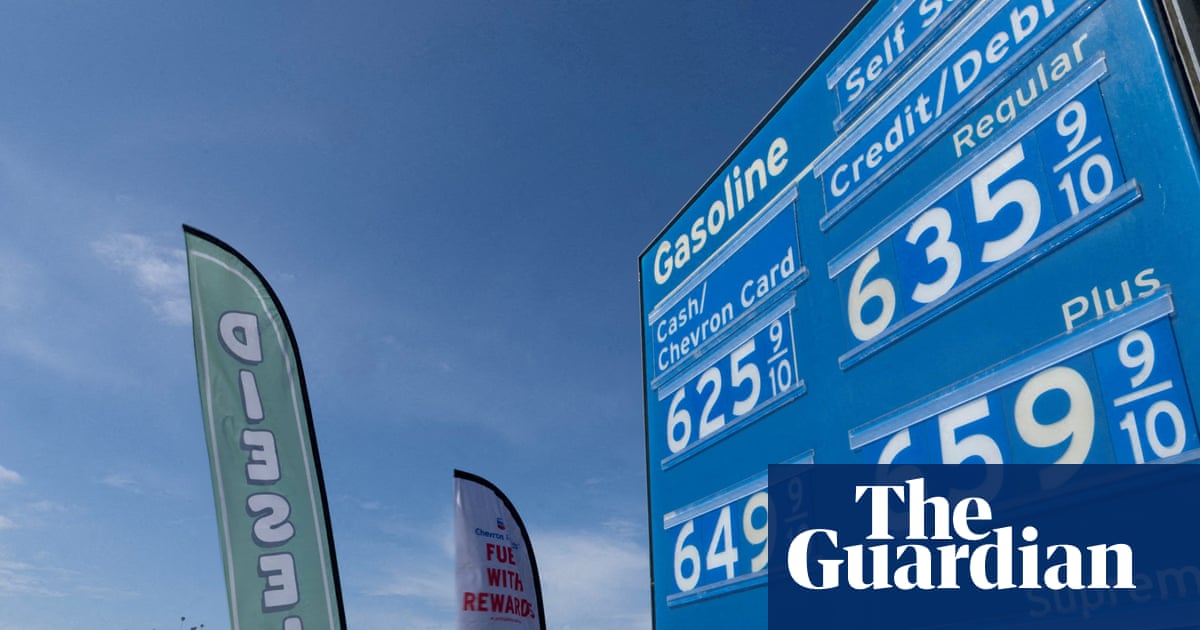
The immediate consequence is a supply shock with global reach. Roughly 20 percent of the world's oil and a significant share of liquefied natural gas pass through or adjacent to Iranian-claimed waters. Even partial disruption — managed disruption, the kind achieved by making insurers, owners, and charterers decide that the passage is not worth the premium — can move markets. On the morning of 17 May, energy analysts noted a 3.4 percent uptick in Brent crude futures, with tanker rates on the benchmark航线 climbing to their highest point since early 2024.
That figure, published by shipping intelligence platform Lloyd's List and picked up by regional wire services, captures only the first-order effect. The second-order consequences are still unfolding in boardrooms from Frankfurt to Shanghai.
The Blockade Is Operational, Whatever the Legal Label
Iran has not formally declared a blockade in the classical international-law sense — a declaration of intent to intercept and search vessels — and Tehran's representatives have consistently rejected the characterization. Iranian state media, cited by regional outlets including Middle East Eye, describes the naval presence as enforcement of existing territorial claims and a response to what Iran frames as illegal US and allied military encirclement. The distinction matters legally but matters less operationally: when a shipping lane is effectively impassable without unacceptable risk, the practical effect is the same regardless of the label attached to it.
US CENTCOM's count of 78 redirected vessels, published in its morning briefing on 17 May 2026, quantifies what the shipping industry had been reporting anecdotally for days. The figure includes bulk carriers, container vessels, and liquefied petroleum gas ships — a broad cross-section of commercial traffic rather than a single commodity class. That breadth suggests the disruption is structural rather than targeted, a distinction with significant implications for how the standoff might be resolved.
The legal ambiguity works in neither party's favour. International law governing naval blockades in non-international armed conflicts is genuinely contested, and Iran has been careful to position its operations within what its legal advisers presumably regard as defensible grey zones — enforcement of maritime sovereignty claims rather than classic blockade operations. Western powers, meanwhile, have been careful not to provide Tehran with the clear casus belli that a forceful challenge to the naval presence might constitute. The result is a managed crisis, one conducted largely through commercial and financial pressure rather than military confrontation.
That management has limits. As vessel redirections compound, the cumulative effect on insurance markets, transit times, and contractual delivery schedules becomes structurally significant. The question is not whether the blockade is real but whether anyone is willing to name it that way.
War Footing and Diplomatic Warnings
Alongside the naval operation, Iranian officials have issued unambiguous warnings about the country's willingness to resume active hostilities if current negotiations with Western powers collapse. According to reporting from Middle East Eye's live coverage on 17 May, Tehran's position — relayed through official channels — is that talks on the nuclear file have reached a critical juncture and that Iran retains the right to respond with military means if its core demands are not addressed. The framing positions Iran as the party responding to external pressure rather than the party initiating confrontation, a rhetorical strategy consistent with how Tehran has characterised its posture throughout the current escalation cycle.
The negotiations referenced are believed to involve indirect US-Iranian communication, with European intermediaries facilitating exchange on the scope of Iranian enrichment activities, sanctions relief, and the status of regional proxy forces. The terms remain private, but the substance — enrichment ceiling, financial sanctions architecture, regional deterrence posture — touches on grievances that have defined Iranian security policy since the 2018 US withdrawal from the Joint Comprehensive Plan of Action. That withdrawal, and the subsequent maximum-pressure campaign, is the structural foundation on which the current confrontation rests.
The timing of the naval activity and the diplomatic warnings is not coincidental. Iran's negotiating position is widely understood to be strengthened by demonstrated capability — the willingness to impose economic costs on the global economy via Hormuz disruption raises the stakes for any US or European administration seeking a negotiated outcome. Whether that capability is being exercised as leverage or as genuine preparation for conflict is a question the available sources do not fully resolve. What is clear is that Tehran believes it is operating from strength, not desperation.
The Manufacturing Response: Stockpiling and Strategic Rewiring
Global manufacturers have not waited for the diplomatic outcome. According to reporting from TSN_ua on 17 May 2026, industrial buyers across multiple sectors have moved to secure raw material supplies in advance of anticipated further disruption, with particular focus on commodities whose supply chains pass through or near contested maritime zones. The report, drawing on industry sources, describes purchasing patterns consistent with firms building strategic reserves rather than responding to current market conditions — a signal that the business community is pricing in sustained tension, not a near-term resolution.
The sectors most immediately affected include petrochemicals, aluminium, and steel — industries for which Persian Gulf feedstock and shipping routes are structurally embedded in global supply chains. Several European manufacturers with exposure to Iranian or Middle Eastern raw material inputs have reportedly activated contingency protocols, though the specific company names and volumes have not been publicly confirmed. Industry analysts quoted in regional financial coverage describe the current phase as a "supply shock rehearsal" — an acknowledgment that the disruption, even if it eases, has exposed the fragility of just-in-time manufacturing models when applied to geopolitically contested commodities.
The response is not uniform. Some buyers are absorbing the cost increase and passing it down the value chain; others are exploring alternative sourcing arrangements, with particular interest in Central Asian and North African suppliers who offer partial substitution for Persian Gulf inputs. Those alternatives come with their own constraints — quality consistency, contractual terms, transportation infrastructure — and are not available at scale on short notice. The industrial repositioning underway is real but partial, a hedge rather than a genuine supply chain rewiring.
What the manufacturing response reveals, beneath the specific commodity dynamics, is that the private sector has already drawn conclusions about the trajectory of the standoff. The cost of business-as-usual, even before any further escalation, has crossed a threshold that justifies extraordinary procurement measures. That threshold, once crossed, is politically significant: it means the economic interests affected by the standoff are no longer an abstraction but a concrete constituency with direct financial stake in the outcome.
Structural Context and the Limits of the Present Frame
The current confrontation sits within a longer arc of US-Iranian antagonism that predates the current negotiating cycle by decades. The sanctions architecture built since 2018 has degraded Iran's oil export capacity, constrained its banking system, and created structural economic pressure that successive Iranian governments have been forced to absorb. The nuclear programme, once a source of international concern focused on weapons-applicable enrichment, has become simultaneously a bargaining chip in negotiations and a symbol of national technological self-sufficiency — a dual character that makes compromise genuinely difficult for any Iranian government to sell domestically.
The naval dimension reflects a strategic logic in which Iran leverages geographic advantage — control of the northern shore of the Strait, proximity to key tanker traffic lanes, a naval culture shaped by asymmetric warfare thinking — to offset conventional military inferiority. This is not a new calculation. What is new is the scale of the commercial disruption and the degree to which it has forced a reckoning in Western policy capitals about the costs of the current architecture.
The framing of the standoff matters for how it gets resolved. If the dominant narrative is that Iran is behaving illegally and provocatively, the pressure is on Western governments to demonstrate resolve through force or the credible threat of force. If the dominant narrative is that a combination of maximum-pressure sanctions and regional military posture has cornered a country with real security grievances into corner behaviour, the space for negotiated compromise expands. Neither framing is complete; the truth contains elements of both. Iranian naval activity is genuinely disruptive; it is also a response to a strategic environment shaped by decisions made in Washington, Riyadh, Tel Aviv, and European capitals over which Tehran had no say.
Coverage of the standoff has been heavily shaped by sourcing from official US and Israeli channels — CENTCOM statements, IDF briefings, Western intelligence assessments — with Iranian and regional perspectives receiving less prominent placement in the dominant wire feeds. The result is a picture that accurately reflects the Western official position but systematically underweights the Iranian and broader Global South perspective on the structural grievances driving the confrontation. That asymmetry does not invalidate the Western framing but it does mean that a complete picture of the dynamics at work requires deliberate attention to what is absent from the dominant narrative.
Stakes and Forward View
The stakes of the current standoff are asymmetric but significant across multiple dimensions. For Iran, the outcome shapes the durability of its economic isolation, the viability of its nuclear programme, and its regional standing after years of attrition. For the United States and its regional partners, the stakes include the credibility of maximum-pressure sanctions, the operational architecture of a Middle East security posture built around Israeli-Arab alignment, and the broader question of whether Iran can be permanently contained or must eventually be accommodated. For the global economy, the stakes are simpler and more immediate: the cost of energy and manufactured goods, and the stability of supply chains that underpin inflation, industrial output, and consumer confidence in economies already under pressure.
On the current trajectory — continued naval activity, stalled or failing negotiations, escalating commercial disruption — the most likely near-term outcome is not outright conflict but sustained managed crisis. That outcome is not stable; managed crises have a tendency to escape management when incentives align for miscalculation. The naval standoff raises the probability of an incident — a close encounter, a misunderstanding, an overreaction — that could accelerate a slide toward the confrontation all parties publicly claim to be avoiding.
The alternative — a negotiated settlement that eases sanctions pressure in exchange for verifiable constraints on enrichment and regional behaviour — remains available but appears increasingly distant. The conditions for such a settlement exist: both sides have incentives to avoid the costs of open conflict, and both have shown, in the JCPOA period, that deals are possible when political will exists. What is lacking is not technical feasibility but political sustainability in Tehran, Washington, and the regional capitals whose buy-in any settlement requires.
The 78 redirected vessels are a statistic. What they represent — a commercial world adjusting to the possibility that the Strait of Hormuz cannot be taken for granted — is a structural shift. The question for policymakers, analysts, and the manufacturers now stockpiling raw materials is not whether that shift can be reversed in the next few weeks but whether anyone in a position of authority is prepared to do the sustained diplomatic work that reversal would require.
The sources do not yet provide a clear answer. What they provide is a clear-eyed picture of where the situation currently stands — and an implicit argument that the costs of the alternative, whatever one calls it, are already being paid.
This publication's coverage of the Iran naval standoff foregrounds CENTCOM-confirmed figures and shipping-industry data to establish the operational scope of the disruption, while noting where Iranian-state framing and Global South perspectives on the structural drivers of the confrontation are underrepresented in dominant wire feeds. Subsequent reporting will track commercial disruption metrics and diplomatic contact.
Wire provenance
This editorial synthesis draws on the following public wire/social posts:
- https://t.me/IRIran_Military
- https://t.me/TSN_ua