Iran and Pakistan Test the Limits of Regional Partnership
A ministerial handshake in Tehran masks deeper structural tensions between two neighbors who share a border, a cultural inheritance, and a complicated mutual interest in regional stability.
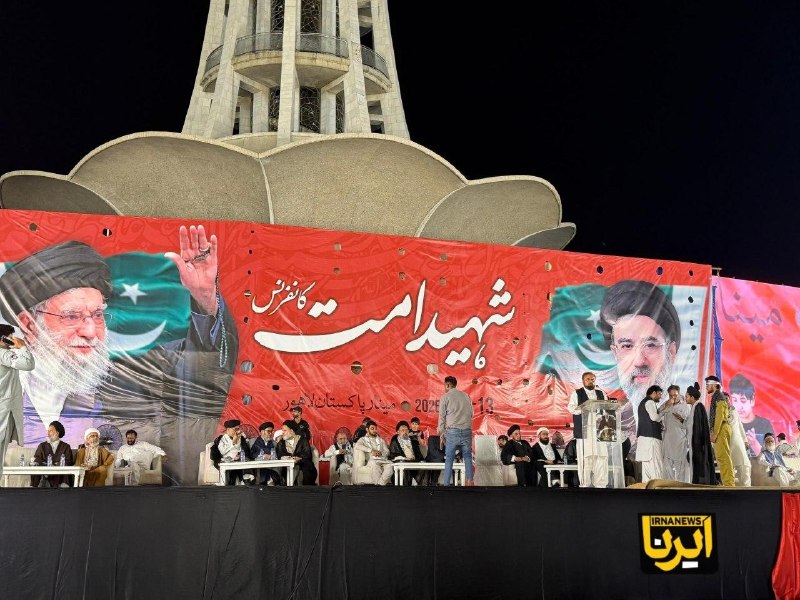
On the evening of 17 May 2026, Syed Mohsen Naqvi, Pakistan's Interior Minister, sat across from Mohammad Bagher Qalibaf, Speaker of Iran's Islamic Consultative Assembly, in a meeting whose public framing emphasized cooperation against shared security threats. Minutes earlier, Iranian President Masoud Pezeshkian had called again for regional unity among nations bordering what Tehran describes as terrorists and aggressive powers. The optics were deliberate. The substance remained opaque.
What these two events, reported within the same hour by Iranian state agencies, reveal is a relationship that has spent decades oscillating between stated strategic partnership and operational mistrust. The handshake in Tehran is the visible tip of a much older negotiation—one conducted through proxies, trade corridors, and competing regional alignments that neither government fully controls.
A Relationship Carved by Geography and History
Iran and Pakistan share a 959-kilometer frontier running through some of the most contested territory in contemporary geopolitics. Balochistan on the Pakistani side, Sistan and Baluchestan on the Iranian. Both provinces host ethnic Baloch populations who straddle the border, and both have historically served as transit corridors for narcotics, arms, and—depending on which government is speaking—insurgent movements.
The official record shows that bilateral trade between the two countries has grown incrementally over the past five years, with border markets and customs agreements occasionally easing friction. But the structural reality is that Tehran and Islamabad have long pursued competing regional strategies. Pakistan's security architecture has leaned heavily on Gulf Arab partnerships, particularly with Saudi Arabia and the UAE. Iran remains outside that orbit, aligned instead with resistance-axis logic that places it in direct institutional competition with Gulf monarchies.
For Naqvi, sitting across from Qalibaf on this particular evening, the Internal ministry brief includes border security, immigration enforcement, and—critically—the management of Baloch militant activity that Tehran has repeatedly blamed on external incitement. The meeting agenda, as reported by Mehr News, was described as wide-ranging but focused on "cooperation mechanisms." What that phrase covers in practice remains undisclosed.
The Counter-Narrative: Why the Partnership Keeps Stalling
Western analysts have long noted that Iran-Pakistan ties are systematically undercut by three forces. The first is the Saudi-Iranian regional rivalry, which pulls Islamabad away from any institutional closeness with Tehran. The second is the U.S. relationship with Pakistan—a partnership the State Department has renegotiated repeatedly since 2001 but has never abandoned as a structural anchor. The third is Baloch politics itself: both governments face insurgencies they attribute partly to each other's tolerance of the other's disaffected ethnic minorities.
This context is not speculative. It is visible in the diplomatic record. When cross-border incidents occur—artillery exchanges near Taftan, Iranian complaints about Jaish al-Adl operations launched from Balochistan, Pakistani concerns about Iranian Revolutionary Guard activity near the border—the official cooperation narrative recedes quickly.
Pezeshkian's call for regional cooperation, as reported by IRNA on 17 May, lands against this backdrop. The phrase "terrorists and aggressive powers" is a familiar formulation in Iranian official rhetoric, one the Foreign Ministry deploys reflexively to signal both threat perception and diplomatic openness simultaneously. It tells the listener: we want partners, but we are surrounded by forces that complicate partnership.
The question the Naqvi-Qalibaf meeting raises is whether Pakistani civil security interests are sufficient to override the structural gravity pulling Islamabad toward Gulf-based alignments. The Interior Minister's portfolio is domestic. His presence in Tehran suggests Islamabad is testing whether operational cooperation on border management can be decoupled from the larger geopolitical alignment question. Whether that decoupling is achievable is precisely what neither side has been able to resolve.
The Cultural Dimension Tehran Wants You to Notice
There is a deliberate soft-power layer in how Iran presents these encounters. The IRNA dispatch on Pezeshkian's statement emphasized "unity and cooperation among regional nations." Mehr News framed the Naqvi-Qalibaf meeting with a photograph. State media in both countries treat ministerial visits as moments of cultural display—a visual assertion of shared civilization that the formal cooperation agreements are meant to underwrite.
This matters because it reveals what Tehran is actually selling. It is not primarily offering military partnership to Pakistan. It is offering an alternative regional grammar: one where shared Persian Gulf heritage, overlapping historical corridors, and civilizational continuity provide the substrate for cooperation that transcending the Gulf monarchies' security architecture would require.
Whether Islamabad finds that grammar useful depends on calculations that go well beyond the Interior Ministry's brief. The Pakistani foreign policy establishment is accustomed to hedging. It has maintained relationships with both Tehran and Riyadh simultaneously despite their institutional rivalry. The question is whether that hedge is sustainable as regional alignments harden.
What Comes Next
The immediate practical output of the Naqvi-Qalibaf meeting is unknown. The sources do not disclose any signed agreements, memoranda of understanding, or concrete security commitments emerging from the session. What can be said with confidence is that both governments are signaling willingness to talk, which is itself a position in a relationship where silence often signals escalation.
The structural stakes are clear. If Iran and Pakistan can deepen functional cooperation on border security and counter-narcotics without it becoming a formal alignment, both governments extract operational benefits. If the cooperation deepens into a full diplomatic reorientation—Pakistan moving toward a more balanced Gulf position—the regional balance of power shifts meaningfully. That shift would register first in energy corridors, then in the proxy dynamics that run through Afghanistan and the Persian Gulf littoral.
The 17 May 2026 meeting in Tehran is not a rupture. It is a test of whether the stated willingness to cooperate can survive contact with the interests that have kept these two neighbors in managed friction for decades.
This piece was prepared from Iranian state-media wire reports. Monexus notes that IRNA and Mehr News, as instruments of the Iranian government, present cooperation narratives in their strongest available form; independent corroboration of the substance of the Naqvi-Qalibaf discussions was not available at time of publication.
Wire provenance
This editorial synthesis draws on the following public wire/social posts:
- https://t.me/Irna_en/85432
- https://t.me/mehrnews/11847