Iranian State Figure Laments War Martyredom at Tehran University as Tensions Simmer
A public lamentation ceremony near Tehran University on 17 May 2026, in memory of a war-era martyr, signals the Iranian state's continued mobilisation of sacred memory as regional pressures mount.
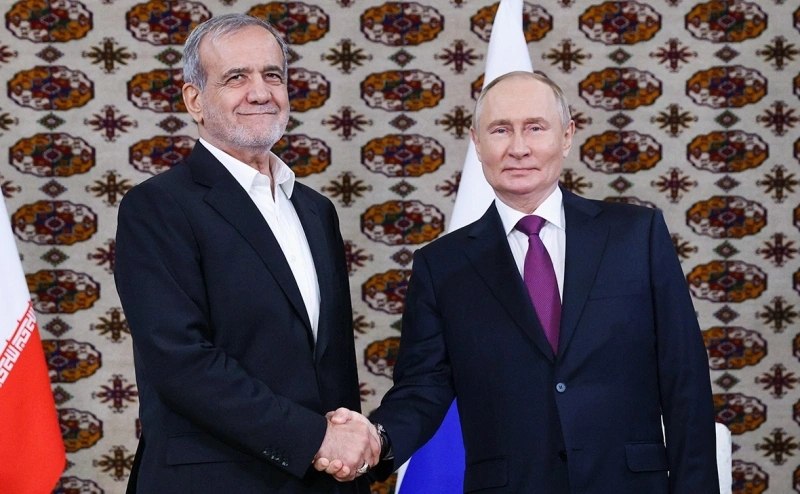
On 17 May 2026, Mehdi Rasouli stood before Tehran University and lamented. The ceremony, broadcast by Iranian state-affiliated outlets including Mehr News and Farsna, memorialised a figure identified only as Avini — a martyr, by the framing of the event, whose identity maps most closely onto Iranian military personnel killed during the eight-year war with Iraq. What appeared on the surface to be a devotional act of mourning was, by its very staging at one of Tehran's most symbolically loaded public spaces, something more calculated.
The choice of location is not incidental. Tehran University has been a faultline of Iranian political life since 1979 — a site of both revolutionary ferment and, more recently, state-sanctioned ceremonies designed to counterbalance that legacy. A public lamentation there, filmed and distributed through official channels, is a signal as much as it is a ritual. It arrives at a moment when Iran faces simultaneous pressure on multiple fronts: unresolved negotiations over its nuclear programme, continued Western sanctions, and an increasingly contested regional position as normalisation agreements reshape the Gulf architecture.
The Iranian state has long weaponised martyr commemorations. The families of war dead are granted formal recognition and material support; their memory is invoked in official speeches, incorporated into school curricula, and performatively invoked at moments of geopolitical stress. This is not unique to Iran — states across the Middle East, including those backed by Western powers, routinely invoke sacrificial narratives during periods of tension — but the consistency and institutionalisation of the practice in Tehran is notable. What is less clear from the available footage is whether Rasouli's lamentation was spontaneous grief or a choreographed contribution to a broader narrative of national unity under pressure.
The martyr in question — Avini — almost certainly refers to one of the thousands of Iranian soldiers killed between 1980 and 1988, a conflict that Tehran has never fully de-emphasised in its official historiography. The Iran-Iraq war remains a foundational myth of the Islamic Republic: it provided the regime with existential stakes that justified repression, and it produced a generation of veterans whose political weight remains significant. Invoking that legacy now, in 2026, suggests the regime believes it needs to refresh its connection to that foundational story — or at least wants its opponents to believe it still can.
The footage shows Rasouli in a moment of open grief before the university gates, with surrounding participants. Mehr News distributed the clip at 22:48 UTC on 17 May; Farsna followed shortly after at 22:04 UTC the same day. Both outlets, while editorialising in their framing, are part of the state-aligned media ecosystem and their coverage reflects the official read of the event. Neither outlet provided independent corroboration of Avini's specific identity or the precise context of the ceremony beyond its commemorative purpose.
That framing gap matters. What the sources cannot tell us is whether this event was initiated by a state institution, a paramilitary group, a private individual with state ties, or a semi-autonomous cultural organisation with overlapping interests. The Iranian state apparatus is not monolithic; Revolutionary Guard cultural foundations, Basij-affiliated groups, and formally state-run media organisations sometimes act in loose coordination rather than strict hierarchy. The lamentation could represent a coordinated message or a locally initiated gesture that was subsequently amplified.
There is a structural logic to the timing, however. The nuclear talks that have periodically threatened to collapse and reform since 2023 remain in a delicate holding pattern. Whether or not direct negotiations resume, the broader uncertainty creates pressure on Tehran to demonstrate that its population remains behind a hardening line. Commemorations of war martyredom are one of the regime's most legible tools for doing so: they invoke sacrifice, unity, and resistance without requiring any specific policy commitment. They also serve to remind the Gulf normalisation states — and their Western backers — that Iran retains a population that has historically tolerated considerable suffering in defence of national interests.
The event's domestic function may matter as much as its international signal. Public ceremonies of this kind reinforce a social compact in which the state's authority is partially derived from its willingness to recognise and mourn its own war dead. For a younger Iranian generation whose relationship to the 1980s conflict is largely inherited rather than experiential, the efficacy of that compact is contested. But the ceremony's reach extends beyond its immediate participants: distributed through social media and state channels, it enters a national conversation about what the Islamic Republic's founding sacrifices mean in 2026.
What remains unclear from these sources is how widely the event resonated beyond its immediate attendees, whether it was replicated in other cities, and what official bodies — if any — directed or endorsed it. The footage is a data point, not a trend. The regime's ability to translate such moments into durable political energy depends on factors these sources do not illuminate: economic conditions, youth mobilisation, the state of the nuclear talks, and the pace of regional realignment.
This publication's coverage of Iranian state rituals focuses on the instrumental function of officially sanctioned commemoration. The event's staging at Tehran University, rather than at a dedicated martyr's cemetery or religious site, is analytically significant given the institution's political history.
Wire provenance
This editorial synthesis draws on the following public wire/social posts:
- https://t.me/Mehrnews/99999
- https://t.me/farsna/88888
- https://en.wikipedia.org/wiki/Iran%E2%80%93Iraq_War
- https://en.wikipedia.org/wiki/Martyr