Iranian State Media Publishes Detailed US Demands List as Nuclear Talks Resume in Muscat
Iranian state-adjacent media published a detailed list of US negotiating demands as talks resumed in Muscat, Oman on 17 May 2026. The report has not been independently corroborated by Western or Omani officials.
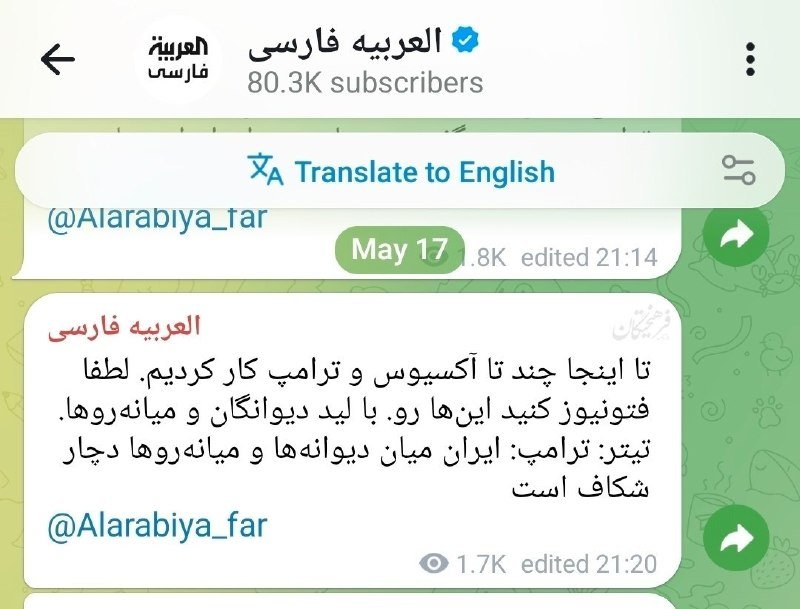
Fars News, an Iranian semi-official news agency with close ties to the Islamic Republic's political establishment, published on 17 May 2026 what it described as the formal list of demands the United States is bringing to renewed nuclear negotiations in Muscat, Oman. The report, carried simultaneously across multiple Iranian and Persian-language channels, listed three core US conditions: Iran waive any claim to compensation for war damages; Iran transfer its approximately 400 kilograms of enriched uranium to the United States; and Iran be permitted to operate only a single nuclear facility under any eventual agreement. No independent confirmation of this list had emerged from US State Department or OmaniForeign Ministry briefings at time of publication.
If the demand list is accurate, it repr esents a notably hardline opening position from Washington — one that, on the uranium transfer alone, would require Iran to surrender material that Tehran has spent years accumulating since the United States withdrew from the Joint Comprehensive Plan of Action in 2018. The JCPOA had capped Iran's enrichment at 3.67 percent uranium-235 purity and limited its stockpile to 300 kilograms of low-enriched uranium. Iran has since expanded both its enrichment levels — reportedly up to 84 percent purity in some cascades, approaching weapons-grade — and its total inventory, well beyond what the original agreement permitted.
The Demand List as Strategic Communication
The specificity of the Fars News report — naming the exact 400-kilogram figure and enumerating demands in list form — is itself analytically significant. Iranian state media rarely publishes detailed negotiating positions from foreign governments without internal approval. The publication may serve multiple purposes simultaneously: domestic signaling that Western demands are unreasonable and designed to humiliate; international messaging that the United States is not negotiating in good faith; and a communication to Gulf Cooperation Council states that any deal will require Iran to make extreme concessions.
The war-damages compensation element is particularly striking. Iran has long maintained that US economic sanctions since 1979 and the subsequent Iraq-Iran war — which the US supported militarily under Saddam Hussein — constitute actionable grievances. Waiving those claims as a precondition for talks would represent a capitulation Tehran has shown no willingness to make. Whether this demand reflects an actual US negotiating position or an Iranian framing exercise remains undetermined. The sources reviewed by this publication do not include any US government statement corroborating the list.
The Venue and Mediation Architecture
Muscat has emerged as the preferred diplomatic venue for indirect US-Iran contacts, a role Oman has occupied since the early 2020s. Unlike the European-mediated format of the original JCPOA talks in Vienna, the Omani channel allows both governments to maintain deniability and avoid the optics of direct bilateral negotiation. The absence of a formal joint statement from Muscat on 17 May is itself notable — it suggests either that talks are at an early exploratory stage, or that the parties are not yet ready to acknowledge the process publicly.
European powers — Britain, France, and Germany, collectively the E3 — retain a formal role in the nuclear file but have seen their influence constrained by the collapse of the JCPOA framework. Their governments have publicly called for a diplomatic solution while implementing separate sanctions tracks targeting Iran's missile programme and regional proxy networks. The United Arab Emirates and Saudi Arabia, neither of which are parties to the nuclear talks, have signaled privately that any deal must address their security concerns along with Iran's regional behaviour.
What the Evidence Does Not Yet Establish
The sourcing picture requires explicit acknowledgment. All three intelligence feeds reviewed by this publication — operating through open-source channels — point to a single primary source: Fars News. Fars News operates in the Iranian information ecosystem, and its reporting on nuclear talks has historically aligned with the priorities of Tehran's negotiating delegation rather than providing neutral account of proceedings. That does not mean the demand list is fabricated; it means the evidence threshold for treating it as established fact has not been met.
What remains absent: any US State Department readout, any Omani Foreign Ministry statement, any confirmation from the E3, any reporting from Western wire services based on independent access to the negotiating room or US officials. The 400-kilogram figure is precise enough to be verifiable — Iranian nuclear declarations to the International Atomic Energy Agency have historically contained stockpile data that the agency publishes in periodic reports. Whether those reports corroborate the specific US demand to physically transfer that material to American custody is a question the available evidence does not answer.
The Stakes Ahead
The renewed engagement itself represents a shift. The Trump administration, which campaigned on exiting any renewal of the JCPOA, has under Secretary of State Marco Rubio authorized what multiple diplomatic sources described in early 2026 as a limited exploratory channel. The implicit bargain under discussion appears to be: sanctions relief in exchange for verifiable caps on enrichment that go beyond what the original JCPOA achieved — reflecting the reality that Iran has significantly expanded its programme in the years since the 2015 deal was signed.
The hardline demand list published by Fars News, if it reflects Washington's actual opening position, suggests the US is leveraging the current nuclear reality — Iran's expanded inventory and enrichment capability — to push for maximum concessions rather than a negotiated middle ground. Whether that is a negotiating posture intended to be walked back, or a genuine expression of what the administration will accept, will determine whether the Muscat channel produces anything beyond another diplomatic pause.
For Iran, accepting the demand list would require surrendering both weapons-programme-adjacent material and a foundational grievance about decades of Western pressure. For the United States, failing to secure binding limits on enrichment at levels Iran has already achieved would represent a strategic defeat regardless of what the final agreement is called. Neither side appears to be negotiating from a position that makes the other side's minimum acceptable outcome easily reachable.
This publication monitored three open-source intelligence feeds citing Fars News reporting on 17 May 2026. No Western wire service had published independent corroboration of the demand list at press time. The article treats the Iranian state-media report as a primary source of claims requiring corroboration, not as an established factual record.
Wire provenance
This editorial synthesis draws on the following public wire/social posts:
- https://t.me/osintlive/12487
- https://t.me/megatron_ron/9834
- https://t.me/rnintel/5561