Iraqi Officials Confirm Second Israeli Military Position Discovered in Western Desert
Baghdad confirms a second covert Israeli installation in the western desert near the Syrian border, following initial disclosure in the Wall Street Journal, raising fresh questions about Iraqi sovereignty and the expanding geographic footprint of regional covert operations.
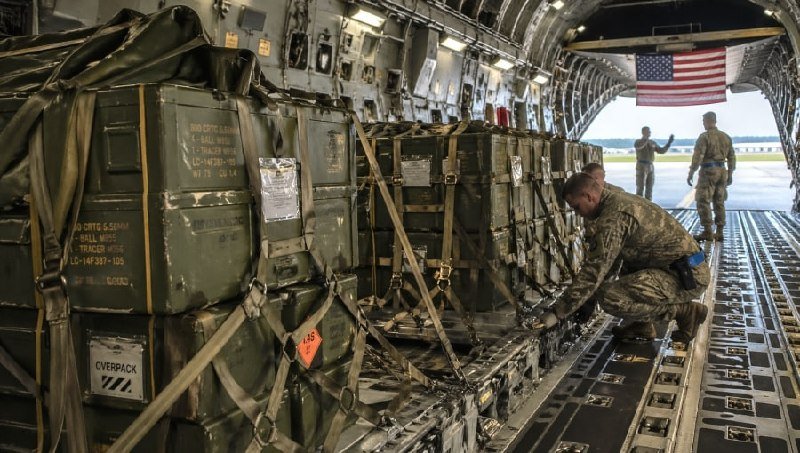
The New York Times reported on 17 May 2026 that senior Iraqi officials and regional sources have confirmed the existence of a second covert Israeli military installation in Iraq's western desert, in addition to a base first disclosed by the Wall Street Journal. The positions are located near the Syrian border in the Anbar region, according to Iraqi government-affiliated reporting. The installations are understood to have been used to stage strikes against Iranian targets—a dynamic that places Baghdad in an increasingly precarious position between its formal sovereignty obligations and the shadow architecture of a regional conflict it did not choose to host.
The disclosure complicates Iraq's already strained relationship with Tehran, which maintains significant political and military leverage inside the country through allied paramilitary formations. For Iraq's government, the revelation is unwelcome on multiple fronts: it validates long-circulating suspicions among political factions aligned with Iran, undermines Baghdad's stated neutrality, and hands Tehran a concrete grievance to deploy in its ongoing campaign to delegitimize any Western or Israeli security presence in the region.
What the Disclosures Reveal About Operational Scope
The initial Wall Street Journal reporting on the first base set off a chain of official responses in Baghdad. The second installation's confirmation suggests a more extensive logistical footprint than previously understood—consistent with an operation designed not for a single strike but for sustained intelligence collection and periodic action against Iranian infrastructure. Iraqi officials speaking to the New York Times described the facilities as embedded deep in the desert to minimize detection, using terrain and distance as camouflage.
Israeli military officials have not officially commented on the reports. The pattern, however, mirrors known Israeli operational doctrine: small-footprint forward positions, minimal personnel, and a focus on strategic depth rather than territorial control. The locations in western Iraq, close to the Syrian frontier, offer reach into eastern Syria and western Iran—areas that host significant Iranian Revolutionary Guard Corps infrastructure and weapons supply routes.
The Iranian angle is central. Tehran has repeatedly warned Iraq against allowing its territory to be used as a staging ground for operations targeting Iranian interests. The confirmation of not one but two installations gives those warnings new evidentiary weight. Iranian state-linked commentary, cited by regional outlets including Tasnim News Agency, has characterized the discovery as proof of a coordinated Israeli-American project to militarize Iraq's sovereign space.
Iraqi Sovereignty and Domestic Political Fallout
Iraq's government finds itself caught between competing pressures. Officially, Baghdad maintains that foreign military installations on Iraqi soil without government authorization violate sovereignty—a position it must sustain to preserve credibility with both its nationalist political base and its formal international standing. Unofficially, the political factions most hostile to Iranian influence may view the Israeli operations with more equivocation, even tacit acceptance.
The discovery will almost certainly intensify pressure on Prime Minister Mohammed Shia al-Sudani's administration to take visible action. Iraqi parliamentarians and tribal leaders in the Anbar region, where the installations are reportedly located, have demanded clarification. Some have called for investigations; others have framed the reports as evidence that Iraq's sovereignty has already been compromised by actors beyond government control.
The timing is awkward for Baghdad. Iraq is attempting to stabilize its economy, negotiate the restructuring of foreign debt, and maintain the delicate balance between Washington and Tehran that has kept it functional since 2003. A public confrontation with Israel risks provoking Iranian-aligned militias who have demonstrated willingness to attack U.S. and Western interests on Iraqi territory. A cover-up, if perceived as such, corrodes whatever remains of public trust in state institutions.
The Regional Architecture of Shadow Warfare
The broader pattern here is one of expanding operational geography. Israel's intelligence and military establishment has, over the past decade, systematically extended its reach beyond its borders—targeting Iranian nuclear scientists in Tehran, striking weapons convoys in Syria, and conducting long-range operations as far as Iraq. The cumulative effect is a de facto forward posture that operates in parallel to, and sometimes in substitution for, the explicit strategic partnerships Israel maintains with Gulf states.
This is not new. What has changed is the willingness of host governments—witting or otherwise—to acknowledge the costs. The Iraq case is particularly charged because Iraq itself is a sovereign state under international law, a fragile democracy attempting to maintain functional relations with both Iran and the United States, and a country whose territorial integrity has already been violated by multiple foreign powers in recent memory.
The structural logic is clear: in a regional security environment where no formal multilateral framework constrains Israeli or Iranian action, both sides operate through forward-deployed assets, proxies, and deniable capabilities. Iraq becomes terrain in a contest defined by others. The same dynamic applies, with local variations, in Syria, Lebanon, Yemen, and the Gulf. The disclosure of these bases does not create that architecture—it merely illuminates it.
What Remains Unconfirmed
The sources reviewed for this article do not specify the size of Israeli personnel at the installations, the specific strike operations the bases may have facilitated, or the degree to which Iraqi government officials were aware of the facilities' existence and purpose prior to the public disclosures. Iraqi officials quoted by the New York Times have not disclosed whether Baghdad was notified by the Wall Street Journal report or whether an internal investigation is underway. The precise legal status of the installations—whether they operate with any level of Iraqi government tolerance or are entirely covert from Baghdad's perspective—also remains unresolved in the public record.
Iranian state media framing treats the disclosure as confirmation of an established pattern. Iraqi nationalist politicians have called for accountability. The Israeli military has maintained its standard operational silence. What is not in dispute is that a second installation now exists in the public record—and that Iraq's government must answer questions it would prefer not to face.
This publication's wire coverage emphasized the sovereignty dimension and the bilateral Iraq-Iran implications. The dominant Western framing, led by the New York Times, foregrounded operational detail and regional security architecture. We have sought to hold both framings in view.
Wire provenance
This editorial synthesis draws on the following public wire/social posts:
- https://t.me/TheCradleMedia/12471
- https://t.me/TheCradleMedia/12470
- https://t.me/thecradlemedia/12471
- https://t.me/tasnimplus/12471