The Island That Could Ignite the Persian Gulf: Abu Musa, Gulf Coercion, and the Logic of Escalation
As Washington considers ceding a strategic Iranian island to the UAE, Tehran's parliament deputy speaker has warned that any attack on Iranian oil infrastructure will trigger regional retaliation — and the energy market implications are severe enough to demand a second look at the coercion calculus.
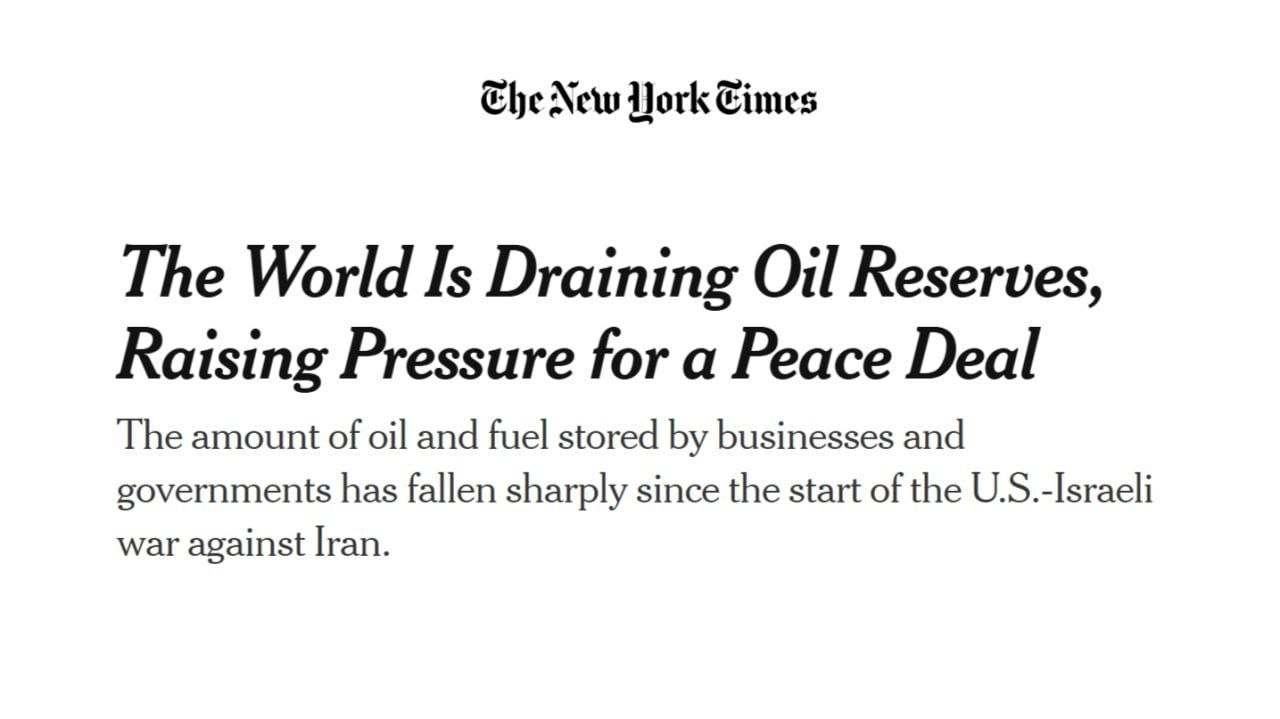
On 17 May 2026, Iranian President Masoud Pezeshkian offered a straightforward account of what he believes Washington and Tel Aviv are after. Their goal, he said, has been to spread insecurity inside Iran by supporting terrorist groups — a framing that places the ongoing military pressure campaign squarely in the language of internal subversion rather than classic deterrence. Hours earlier, a senior Iranian parliamentarian had delivered a starker warning: if Iran's oil facilities are hit, every oil facility in the region — friend and foe alike — will be struck in return. And according to reporting by The Cradle Media, Trump's inner circle has been urging the UAE to seize a strategically located Iranian island, with Abu Musa emerging as the focal point of those discussions. The conjunction of these three data points — a threatened regional oil blitz, an explicit counter-targeting commitment, and a territorial demand lodged through a third-party proxy — amounts to something more than the usual pressure cycle.
The Island and Its Strategic Weight
Abu Musa sits in the Persian Gulf, roughly 50 kilometers from the Iranian coast and about 80 kilometers from the UAE's Sharjah emirate. The island, along with the Greater and Lesser Tunb islands, has been a source of friction between Iran and the UAE since 1971, when Tehran asserted sovereignty over all three just before the British withdrawal from the Gulf. The UAE has never fully accepted that sovereignty, and the issue has been a dormant but persistent irritant in bilateral relations. What is new is the reported suggestion — emanating from Trump's inner circle, per The Cradle Media's sourcing — that Washington would actively encourage or enable Abu Musa's transfer to UAE control. The mechanism remains unspecified in the available reporting. Whether this involves a diplomatic quid pro quo with Iran, a coercive demand, or a reward for UAE cooperation in the broader pressure campaign against Tehran has not been clarified by any of the sources consulted.
What is clear is the island's military significance. Abu Musa hosts an airfield capable of accommodating military transport aircraft and is home to an Iranian Revolutionary Guard Corps presence. Control of the island would give whoever holds it radar and patrol coverage across a critical shipping lane — the approaches to the Strait of Hormuz, through which roughly a fifth of the world's oil passes. That is not an abstraction. It is a capacity that has real consequences for global energy logistics and for the naval posture of every power with interests in the Gulf.
Tehran's Calculus and the Red Line on Oil
The deputy speaker of the Iranian parliament, Ali Hajibabaee, made the counter-targeting threat on 17 May 2026. The scope of the commitment — that Iran would hit all regional oil facilities if its own are struck — is unusually broad. It encompasses facilities in countries Iran would typically classify as aligned with it, as well as those belonging to hostile states. The logic, such as it is, appears to be a saturation deterrent: if the threshold for Iranian retaliation is set low enough, and the target set wide enough, the costs of an initial strike become prohibitive for whoever is considering it.
That logic has limits. Deterrence by threat of massive retaliation works when the party being deterred believes the threat is credible and when escalation serves neither side's interests. The record of Iranian military statements over the past decade includes numerous instances of rhetorical escalation that did not produce proportional military responses. Whether this particular formulation represents a genuine red line or political posturing inside a fractious parliament is not knowable from outside. What is knowable is that Iranian oil infrastructure has been a live target in the minds of US and Israeli planners for years, and the introduction of a counter-threat covering all regional oil facilities adds a dimension that energy markets cannot afford to dismiss.
Pezeshkian's framing of US and Israeli intent as aimed at internal destabilization — terrorism support rather than conventional military defeat — suggests Tehran is preparing its domestic audience for a long confrontation while signaling to regional actors that the cost of alignment with Washington may be higher than they assume. If the goal is insecurity inside Iran, then every actor that facilitates that insecurity becomes a legitimate target in Tehran's framing. That includes states hosting US military assets, states providing financial or diplomatic cover for the pressure campaign, and states that open their territory to terrorist proxies, however those proxies are defined.
The UAE's Position and the Proxy Logic
The UAE has pursued a distinctive foreign policy over the past decade: nominally aligned with the United States on security matters, but increasingly asserting independent regional interests through the Abraham Accords and diplomatic initiatives across the Gulf and Horn of Africa. The suggestion that Trump's inner circle is urging Abu Musa's seizure places Abu Dhabi in a difficult position. The island is a longstanding territorial claim, and the UAE has pursued it through diplomatic channels at the UN. An opportunity to resolve that claim by coercive means — especially with Washington applying pressure on Tehran from multiple directions — might appear attractive to a government that has signaled willingness to deepen its partnership with the US and Israel.
But the cost calculus is not simple. Abu Musa's seizure, if it involves military action, would represent a direct assault on Iranian sovereignty. Tehran has made clear that it considers the island non-negotiable, and the Revolutionary Guard's presence there is not decorative. A strike that takes Abu Musa would require a significant military operation, not a political concession. And if Hajibabaee's counter-targeting threat is taken at face value, the UAE's own oil facilities — the infrastructure that underpins its economy and its ability to pay for the US security partnership — would be in the blast radius of any Iranian response. That is not a theoretical risk. It is a documented commitment made on the record by a senior Iranian official, on the same date as the reported US-UAE discussions.
The Abraham Accords normalized UAE diplomatic relations with Israel, and the partnership now includes intelligence sharing, defense cooperation, and joint positioning against Iran in various regional forums. That alignment has made the UAE a more valuable US partner in some respects, but it has also made Abu Dhabi a more central node in the Iran-containment architecture. If the current pressure campaign escalates to kinetic action, states in that architecture face costs they have not had to price in during the earlier phases of sanctions and covert operations.
Regional Escalation Dynamics and the Gulf States
The Gulf Cooperation Council states — Saudi Arabia, Kuwait, Bahrain, Qatar, Oman, and the UAE — occupy a peculiar position in this configuration. All have varying degrees of security dependence on the United States. All have oil infrastructure in the Gulf. And all have watched the US-Iran confrontation intensify without being asked directly to take sides in a military sense. That window may be closing.
If Iran's counter-threat is genuine and is understood as genuine by the GCC capitals, the logical response for those governments is to press Washington and Tel Aviv for restraint — or at least to establish privately that whatever happens, their own oil facilities are not legitimate targets. The problem is that Iranian deterrence theory, as articulated by Hajibabaee and others, does not differentiate between direct belligerents and peripheral participants. Any state that facilitates the pressure campaign, provides overflight rights, hosts intelligence assets, or participates in naval blockades could plausibly be classified as a co-belligerent. The GCC states are not passive observers. Their neutrality in a kinetic US-Iran conflict is not a given.
Saudi Arabia in particular has managed a careful equilibrium since the 2021 Riyadh-Riyadh talks reframed its relationship with Iran from pure hostility to managed competition. Riyadh and Tehran are not allies, but the direct confrontation that many analysts anticipated in 2022 and 2023 has not materialized. The Kingdom's oil facilities, attacked once by drones and missiles in 2019 in a strike widely attributed to Iran, remain a live memory. A renewed attack — this time as part of a regional oil infrastructure counter-strike — would be catastrophic for the Saudi economy and politically untenable for any government. That constraint operates whether Riyadh publicly acknowledges it or not.
The Energy Market Dimension
The Strait of Hormuz is the world's most critical oil choke point. Roughly 21 million barrels per day move through it, representing between a fifth and a quarter of global daily oil consumption. Disruption — whether from military action, naval interdiction, or facility damage — reverberates through energy markets immediately and through industrial economies within weeks. The 2019 attacks on Saudi Aramco's Abqaiq facility demonstrated what a targeted strike on Gulf processing infrastructure can do to global supplies: the immediate market spike was significant, and the psychological effect on traders lasted months.
Hajibabaee's threat to target all regional oil facilities, if carried out, would dwarf the Abqaiq strike. It would encompass Iranian facilities (already subject to sanctions and under sanctions-driven degradation), Iraqi facilities (partially rehabilitated after decades of war), Kuwaiti and Saudi coastal infrastructure, UAE offshore platforms, and possibly Qatari LNG facilities given their oil-adjacent status. The market impact of a coordinated strike across even a subset of those facilities cannot be calculated precisely, but any reasonable model would place it in the category of supply shock that forces global recession.
This is the leverage Tehran holds and has always held: not the ability to win a conventional military confrontation with the United States, but the ability to make the costs of conflict so widely distributed that the coalition of states willing to prosecute it becomes unstable. Every Gulf state, every Asian importer dependent on Gulf oil, every insurer and shipping company with exposure to the region — all of them become pressure points. That is not a strategy unique to Iran. It is the foundational logic of asymmetric deterrence in a hydrocarbon-dependent world.
What Remains Unresolved
The sources consulted do not establish the mechanism by which Abu Musa would be transferred to UAE control, the timeline under which any such transfer is being discussed, or the conditions under which Iran would consider accepting such a deal. The reporting from The Cradle Media identifies the suggestion as coming from Trump's inner circle, but does not specify which officials, what instruments of persuasion or coercion are being applied, or how the UAE has responded in private. The degree of seriousness attached to this proposal — whether it is a trial balloon, a negotiating gambit, or a genuine operational option — cannot be determined from the available evidence.
What can be determined is that the combination of a territorial demand lodged through a third-party proxy, an explicit counter-threat covering all regional oil facilities, and the Iranian President's framing of the conflict as an internal subversion campaign creates a configuration that is more combustible than the sum of its individual parts. Deterrence works when signals are clear and when the escalation ladder has rungs both sides are willing to climb. What we are observing in the Gulf right now is the systematic removal of those rungs — not by accident, but by design, from multiple directions at once.
The desk approach to this story has been to lead with the most specific and verifiable elements — the parliamentary statement, the presidential framing, the reported US-UAE discussions — rather than with the broader geopolitical narrative that usually accompanies Gulf coverage. The wire framing has focused on the military dimensions and on US-Israel positioning. This publication has tried to foreground the regional escalation logic and the energy market stakes that make a miscalculation particularly costly. The UAE's position, as the stated recipient of the island-transfer suggestion, carries particular weight precisely because it is the one Gulf state that has most visibly restructured its regional alignment over the past five years. Whether that restructuring includes willingness to absorb direct Iranian retaliation as the price of territorial gain is the central unresolved question — and it is one that neither Washington nor Abu Dhabi has answered in public.
Monexus Staff Writer
Wire provenance
This editorial synthesis draws on the following public wire/social posts:
- https://t.me/thecradlemedia/12345
- https://t.me/thecradlemedia/12345
- https://x.com/middleeasteye/status/123456789
- https://en.wikipedia.org/wiki/Abu_Musa
- https://en.wikipedia.org/wiki/Strait_of_Hormuz
- https://en.wikipedia.org/wiki/2019_Abqaiq_attack
- https://en.wikipedia.org/wiki/1971_Claim_of_Abu_Musa_and_the_Tunb_Islands
- https://en.wikipedia.org/wiki/Abraham_Accords